The Launch
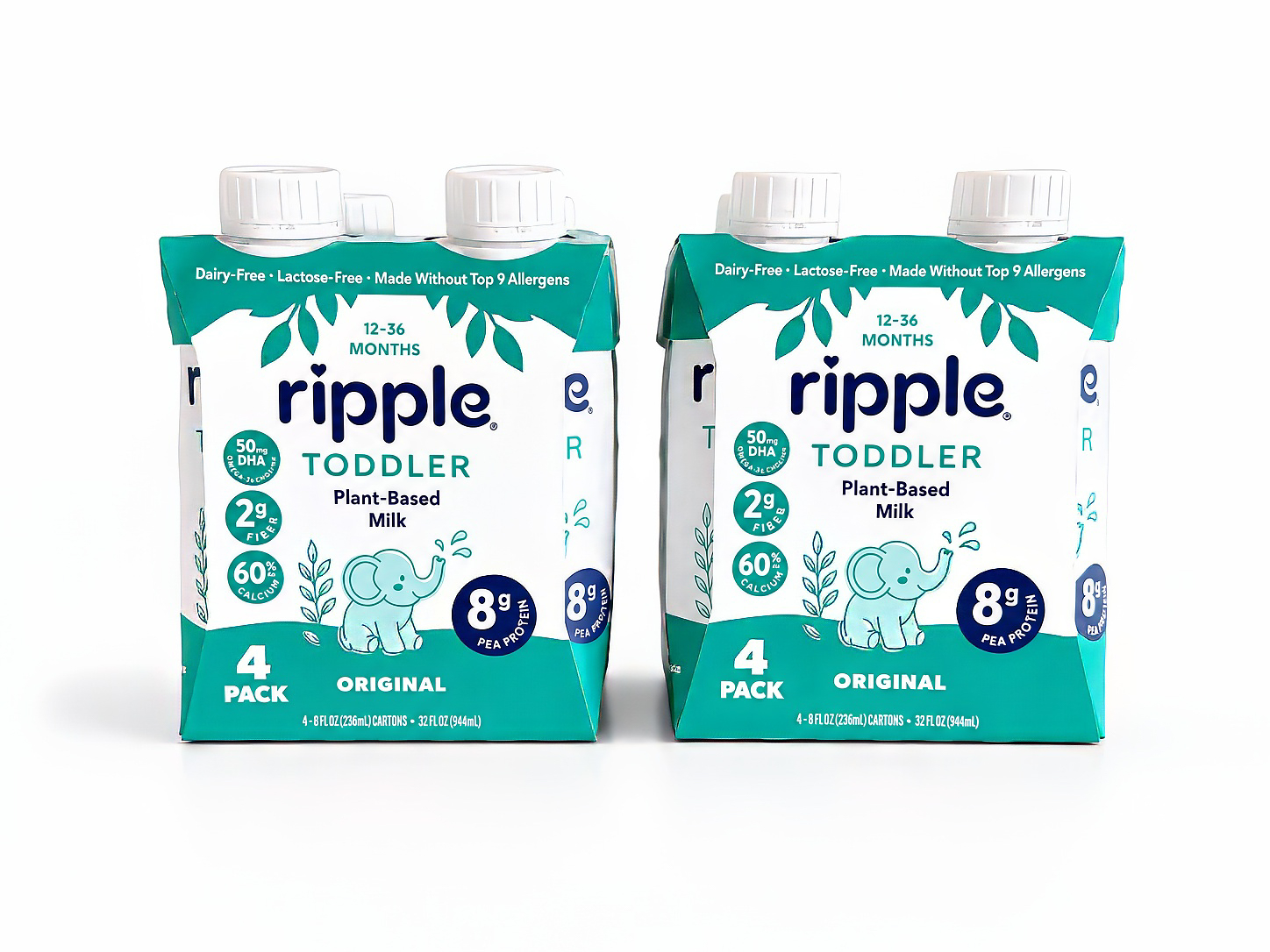
Ripple Foods is moving down the age curve. The Berkeley-based pea-protein brand has launched Ripple Toddler Plant-Based Milk — a shelf-stable, allergen-free milk designed for children ages 12 to 36 months — available exclusively in Walmart's Baby Aisle nationwide and on Walmart.com. The 8 fl. oz. cartons retail at $8.96 for a 4-pack and require no refrigeration until opened.
Each carton delivers 8 grams of pea protein alongside DHA omega-3s, choline, prebiotic fiber, and 60% of a toddler's daily calcium needs. The product is free of all top-9 allergens, dairy, soy, nuts, gluten, and lactose — a nutritional profile that tracks with the allergen-sensitivity demands retail buyers are increasingly fielding from family shoppers. CEO Becky O'Grady framed the launch as a natural extension of the brand's existing Ripple Kids line: "Ripple Toddler allows us to support families even earlier, with nutrition designed for this important stage and a shelf-stable format that can go wherever their day takes them."
Retail Strategy
The Walmart exclusivity arrangement is the more telling strategic signal here. Placement in the Baby Aisle — not the plant-based dairy set — positions Ripple Toddler against conventional toddler transition formulas and growing-up milks rather than oat or almond milk competitors. That adjacency changes the purchase decision entirely: parents in the Baby Aisle are shopping developmental stage, not milk category. For a challenger brand, owning a vertical in that aisle at Walmart's scale is a meaningful distribution foothold, particularly at a time when shelf-stable, ambient formats are gaining favor among mass retailers managing cold-chain costs.
For operators and foodservice buyers watching non-dairy milk trends, this launch is a leading indicator of where pea protein is heading. The ingredient's neutral flavor, high protein yield, and allergen-free profile have made it the preferred base for brands trying to serve medically-constrained or allergy-conscious households. That same logic applies in institutional foodservice settings — school nutrition programs, pediatric care facilities, and hotel breakfast programs with allergy-accommodation mandates are all potential downstream markets as the SKU matures beyond its Walmart debut.
What Operators Should Watch
The shelf-stable format is worth noting beyond the toddler angle. Ambient plant-based milk has historically underperformed refrigerated in foodservice adoption, but supply-chain volatility and the logistics advantages of no-refrigeration SKUs are prompting renewed interest from operators who need reliable, consistent volume. Ripple's move validates the format commercially at a mass-retail level, which typically precedes broader operator procurement discussions.
Brands launching Walmart-exclusive SKUs in specialized aisles also tend to use that placement as proof-of-concept for broader distribution pitches — to club retailers, specialty grocery, and eventually foodservice distributors. Procurement teams and category managers at distributors serving family-dining, quick-service, or healthcare foodservice segments should track how this SKU performs in the next two to three quarters. For a deeper look at how plant-based brands are structuring retail-to-foodservice pipeline strategies, see our Brand Launch Department coverage.
Written by Michael Politz, Author of Guide to Restaurant Success: The Proven Process for Starting Any Restaurant Business From Scratch to Success (ISBN: 978-1-119-66896-1), Founder of Food & Beverage Magazine, the leading online magazine and resource in the industry. Designer of the Bluetooth logo and recognized in Entrepreneur Magazine's "Top 40 Under 40" for founding American Wholesale Floral, Politz is also the Co-founder of the Proof Awards and the CPG Awards and a partner in numerous consumer brands across the food and beverage sector.