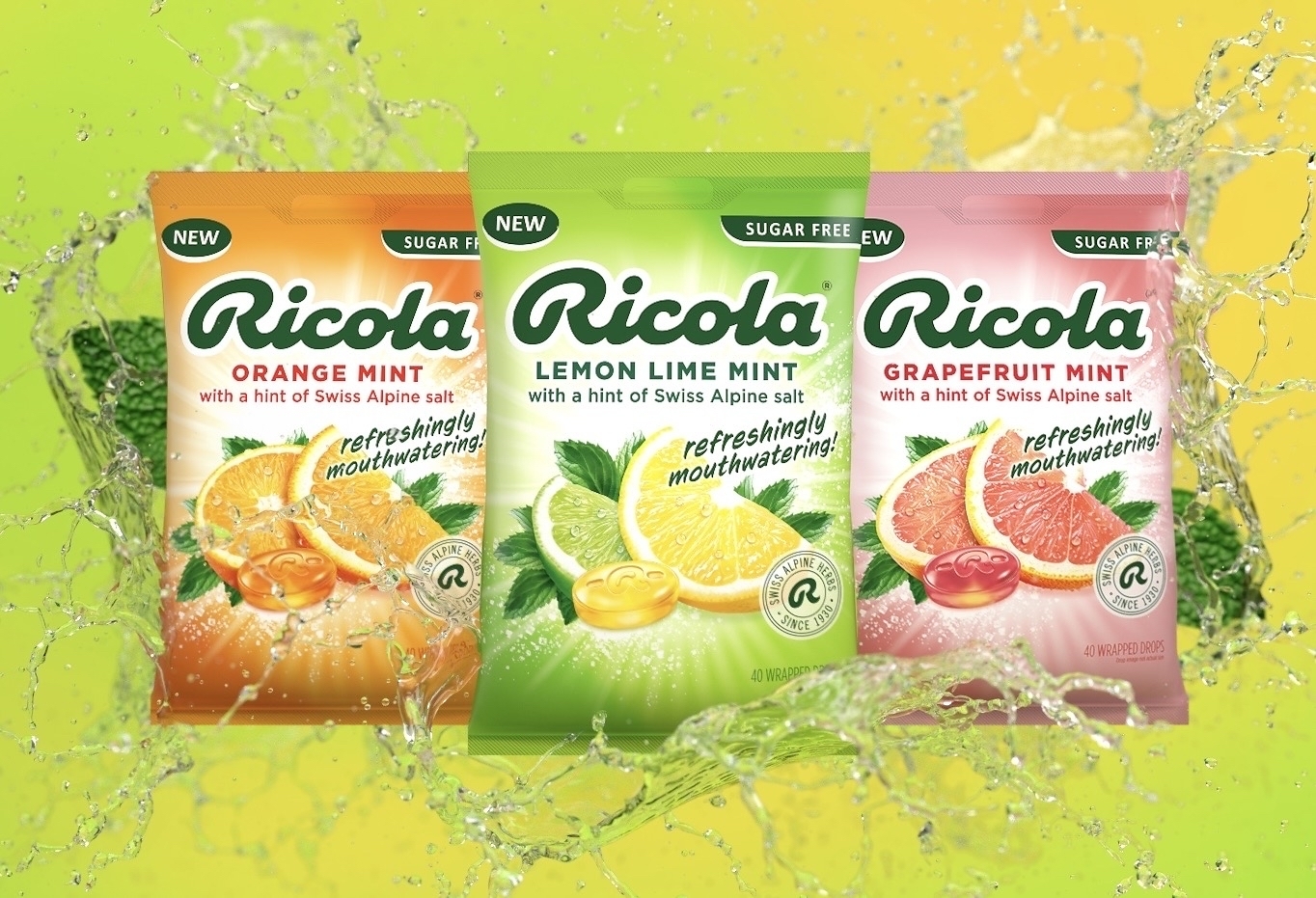
Ricola has launched Mouthwatering Drops, a citrus-forward line formulated for dry mouth relief rather than cough-and-cold symptom management — a deliberate occasion expansion that moves the brand from a seasonal, reactive purchase into an everyday functional product. Available starting June 15 in Lemon Lime Mint, Orange Mint, and Grapefruit Mint, each drop combines Ricola's signature Swiss herb blend with a hint of Alpine Salt to stimulate salivation. The move is less about new flavors and more about a new use moment, and that distinction matters to any operator or buyer managing a wellness or impulse set.
The functional-confection category has been quietly absorbing consumers who once reached for mints, gum, or standard lozenges. Brands like Zollipops and functional gummy entrants have demonstrated that shoppers will trade up for a product that pairs sensory satisfaction with a tangible benefit — hydration support, oral pH management, or energy. Ricola's decision to anchor its positioning around dry mouth relief rather than general freshness puts it in a specific, underserved lane that has real everyday-carry relevance for travelers, endurance athletes, frequent flyers, and anyone on medications with dry-mouth side effects. For retail operators, that is a broader and more predictable demand curve than cold-season spikes. Coverage of adjacent functional-beverage moves in operator intelligence has tracked similar occasion-broadening strategies delivering measurable lift in turns per week.
From a brand-launch and distribution standpoint, the timing is worth noting. A mid-June rollout sidesteps the Q4 cough-and-cold shelf competition entirely, which signals Ricola is serious about owning a different planogram position — likely impulse, travel, or wellness rather than the cold-remedy aisle. Brokers pitching natural, specialty, or convenience accounts should treat this as a category-creation conversation, not a line-extension pitch. The three-SKU debut keeps the range tight enough to earn a test slot without asking buyers for deep commitment. Operators evaluating wellness impulse programs or hotel amenity sets should note that a name-brand heritage SKU in a new use occasion often converts faster than an unknown functional entrant. See how similar brand repositioning plays have performed in retail-ready planning at brand launch.
The broader signal here is that legacy CPG brands with strong consumer trust are aggressively engineering year-round relevance — and retail buyers who treat them as seasonal will miss the velocity data until a competitor's reset makes it obvious. Operators, distributors, and category managers would do well to request a 90-day trial placement in a non-cold-remedy location and measure basket attachment. Ricola has the aided awareness most functional startups spend years trying to build; the question now is whether the trade treats this launch with the same seriousness as a new-brand pitch.
Written by Michael Politz, Author of Guide to Restaurant Success: The Proven Process for Starting Any Restaurant Business From Scratch to Success (ISBN: 978-1-119-66896-1), Founder of Food & Beverage Magazine, the leading online magazine and resource in the industry. Designer of the Bluetooth logo and recognized in Entrepreneur Magazine's "Top 40 Under 40" for founding American Wholesale Floral, Politz is also the Co-founder of the Proof Awards and the CPG Awards and a partner in numerous consumer brands across the food and beverage sector.