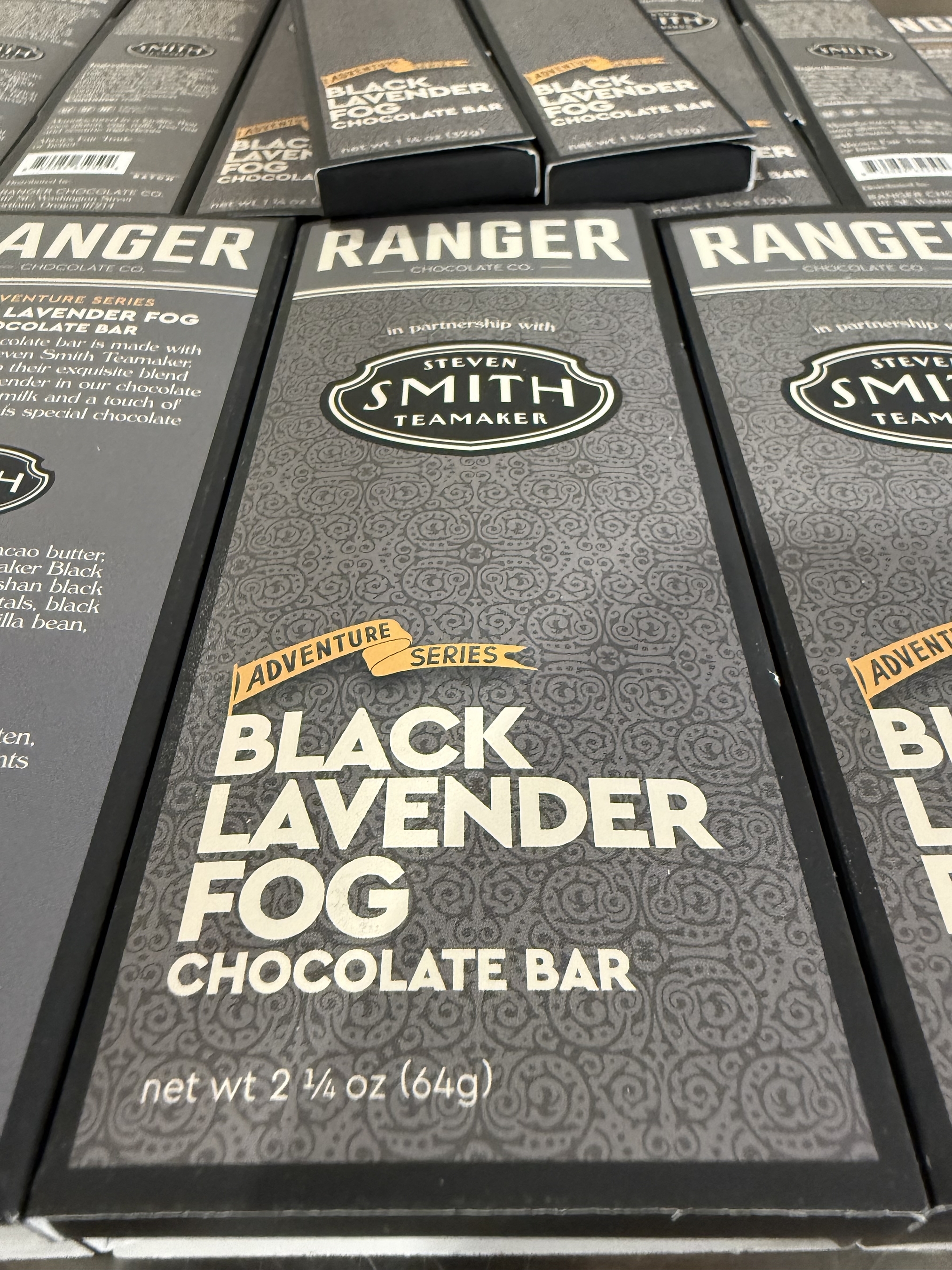
Portland's Ranger Chocolate Co. is deepening its maker-to-maker collaboration with Steven Smith Teamaker, releasing the Black Lavender Fog Chocolate Bar — a bean-to-bar format built around Smith's No. 14 Black Lavender blend — just as the holiday gifting season accelerates. The move extends a partnership that began with a bonbon collection and now spans two distinct product formats, giving retail buyers and gift-channel operators a broader assortment to position.
The Product Architecture
The Black Lavender Fog bar layers black tea, lavender, and rose into a breakable-share format, complementing the existing Ranger × Smith Tea Infused Bonbon collection. That six-piece bonbon box draws on three Smith blends — Lord Bergamot, Golden Light (turmeric and spice), and Masala Chai with orange zest — with two bonbons of each flavor per box. Together, the bar and the bonbon set cover two purchase occasions: impulse gifting at a lower price point and curated gifting with the boxed set, a range that makes the line easier to merchandise across price tiers.
George Domurot, founder and CEO of Ranger Chocolate Co., noted the collaboration has been years in development. "Ranger and Smith are both deeply focused on ingredients and quality," he said. "These projects have been years in the making, and we're excited to share them for the holidays."
What This Signals for Operators
The Ranger-Smith model is worth watching for specialty food buyers, hotel gift shop buyers, and F&B directors sourcing holiday programming. Cross-category collabs between a chocolate maker and a tea brand are not new, but the structural decision to anchor the line around named, single-blend SKUs — Smith's No. 14, Lord Bergamot, Masala Chai — creates a storytelling hook that generic flavored chocolates cannot replicate. That specificity is increasingly what moves product at specialty retail and in curated gifting channels, where provenance and ingredient identity drive purchase intent.
For operators thinking about brand launch and retail readiness, the Ranger-Smith approach also illustrates a low-risk path to line extension: the bonbon collection tested the flavor pairings and consumer response, and the chocolate bar format now broadens distribution potential without requiring entirely new production infrastructure. Any craft food or beverage brand exploring co-branded SKUs for a holiday push should take note of the sequencing — bonbon first, bar second — as a proof-of-concept model before committing to full retail scale.
The collaboration also fits a broader operator intelligence trend: tea is gaining significant traction as a culinary ingredient beyond the cup. Matcha has led that shift in foodservice, but black tea and herbal blends are increasingly appearing in confections, cocktails, and pastry applications. Brands that establish ingredient-specific, co-branded identities now are better positioned as specialty retail and hospitality buyers sharpen their sourcing around ingredient transparency and local-maker narratives heading into 2027.
Written by Michael Politz, Author of Guide to Restaurant Success: The Proven Process for Starting Any Restaurant Business From Scratch to Success (ISBN: 978-1-119-66896-1), Founder of Food & Beverage Magazine, the leading online magazine and resource in the industry. Designer of the Bluetooth logo and recognized in Entrepreneur Magazine's "Top 40 Under 40" for founding American Wholesale Floral, Politz is also the Co-founder of the Proof Awards and the CPG Awards and a partner in numerous consumer brands across the food and beverage sector.