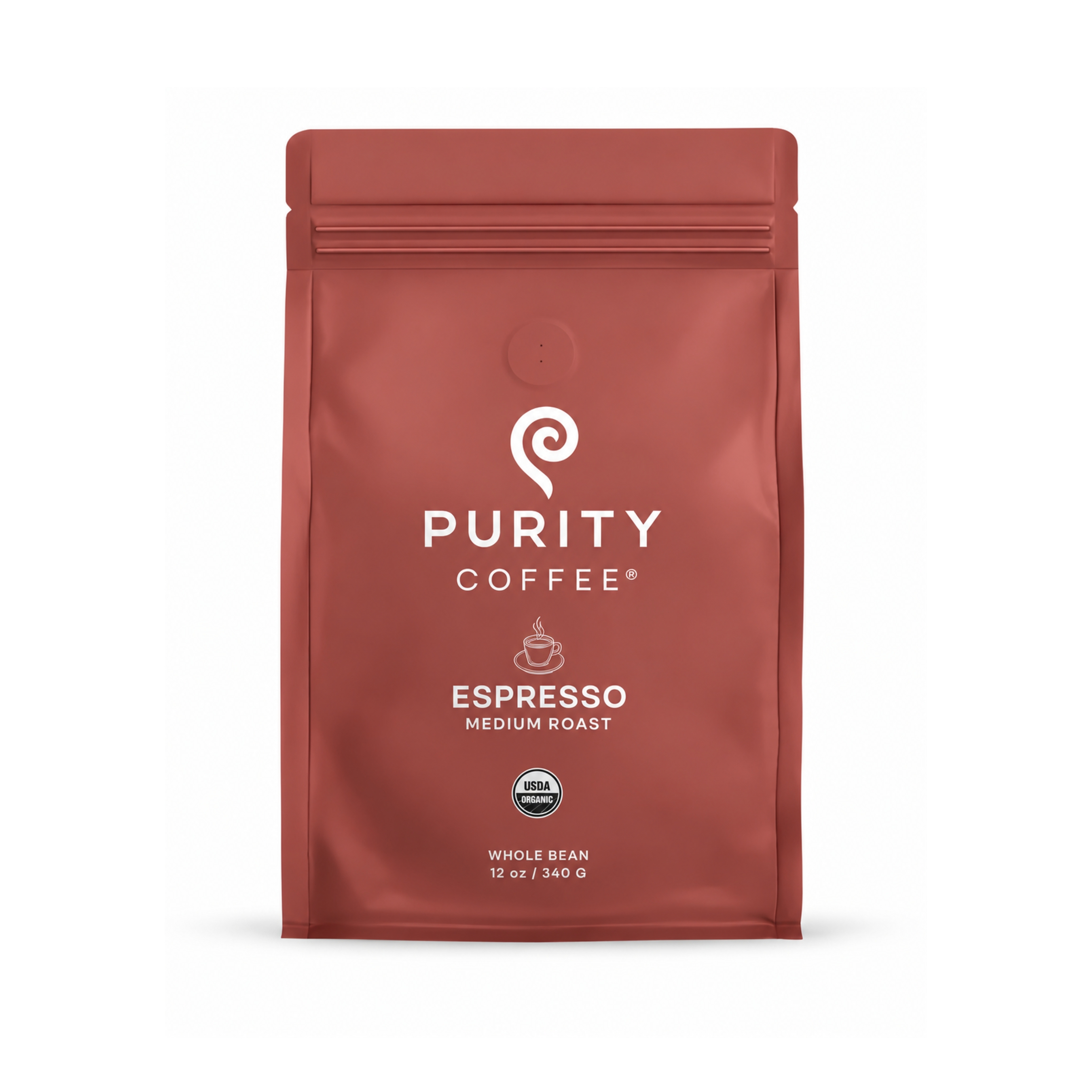
A direct-to-consumer coffee brand known for third-party-tested, USDA-certified organic beans has entered the espresso format category. Purity Coffee launched ESPRESSO, its first roast developed specifically for espresso extraction, available now on PurityCoffee.com at $30 for whole beans. The release extends the brand's existing two-roast lineup — FLOW (medium) and EASE (dark) — with a profile calibrated to sit between the two, softening natural acidity while supporting the concentrated extraction that espresso demands.
Why the Format Matters
Espresso is not a roast level; it is an extraction method that punishes unbalanced flavor and uneven roast development more than almost any other brew style. Purity's decision to engineer a dedicated profile — rather than simply recommend an existing SKU — signals meaningful product investment. According to Andrew Salisbury, CEO and co-founder of Purity Coffee, the roast was calibrated around "flavor, body and extraction customers expect from espresso," not merely dialed darker. The result is a cup with cocoa notes, dried-fruit acidity and a silky body that the brand says holds up in straight shots as well as milk-based drinks like lattes and cappuccinos.
For foodservice buyers and retail buyers evaluating the functional-beverage shelf, that specificity matters. The specialty-coffee segment has seen sustained consumer demand for products that pair premium sensory claims with verifiable health positioning — and espresso-format SKUs remain an underdeveloped corner of that market. Purity's entry points to growing operator and retailer appetite for coffee products that can serve both the wellness consumer and the café-quality-at-home consumer simultaneously.
What Operators and Buyers Should Track
Purity's production standards are the differentiator that separates this SKU from a conventional medium roast. Every harvest batch undergoes third-party laboratory testing for mold, mycotoxins and other contaminants before it reaches consumers — a procurement credential that resonates in hospitality environments where menu claims face increasing scrutiny. The brand's Circular Health Coffee framework connects soil health, regenerative growing, intentional sourcing and precision roasting into a traceable supply-chain narrative, which is increasingly useful as hotel F&B programs and specialty café operators field guest questions about ingredient provenance.
At $30 direct-to-consumer, the price point is consistent with specialty-grade whole-bean offerings but positions the brand firmly in the premium tier. Operators evaluating this SKU for a retail-adjacent gift shop, branded amenity program, or health-focused café concept should note that the whole-bean format and multi-brewer compatibility — espresso machines, moka pots, automatic grinders — gives it genuine menu flexibility. The brand's D2C-only distribution model means foodservice access currently flows through the website, which buyers interested in brand-launch and retail-readiness pathways should factor into timeline planning.
For growth-marketing teams watching the functional-beverage category, Purity's launch timing — pegged to National Coffee Day visibility — is a textbook D2C acquisition moment: a new SKU announcement paired with a sitewide discount creates a measurable conversion window. Brands operating in adjacent health-and-wellness coffee or specialty beverage segments can treat this as a signal that the espresso format is becoming a meaningful battleground for functional positioning, not just a commodity commodity add-on.
The Takeaway for Operators
Purity Coffee's ESPRESSO launch is a product-line maturation move, not a line extension for its own sake. It fills a demonstrated customer request, applies the brand's full quality-assurance stack to the format, and enters a corner of the specialty market where health-verified espresso SKUs remain scarce.
Written by Michael Politz, Author of Guide to Restaurant Success: The Proven Process for Starting Any Restaurant Business From Scratch to Success (ISBN: 978-1-119-66896-1), Founder of Food & Beverage Magazine, the leading online magazine and resource in the industry. Designer of the Bluetooth logo and recognized in Entrepreneur Magazine's "Top 40 Under 40" for founding American Wholesale Floral, Politz is also the Co-founder of the Proof Awards and the CPG Awards and a partner in numerous consumer brands across the food and beverage sector.