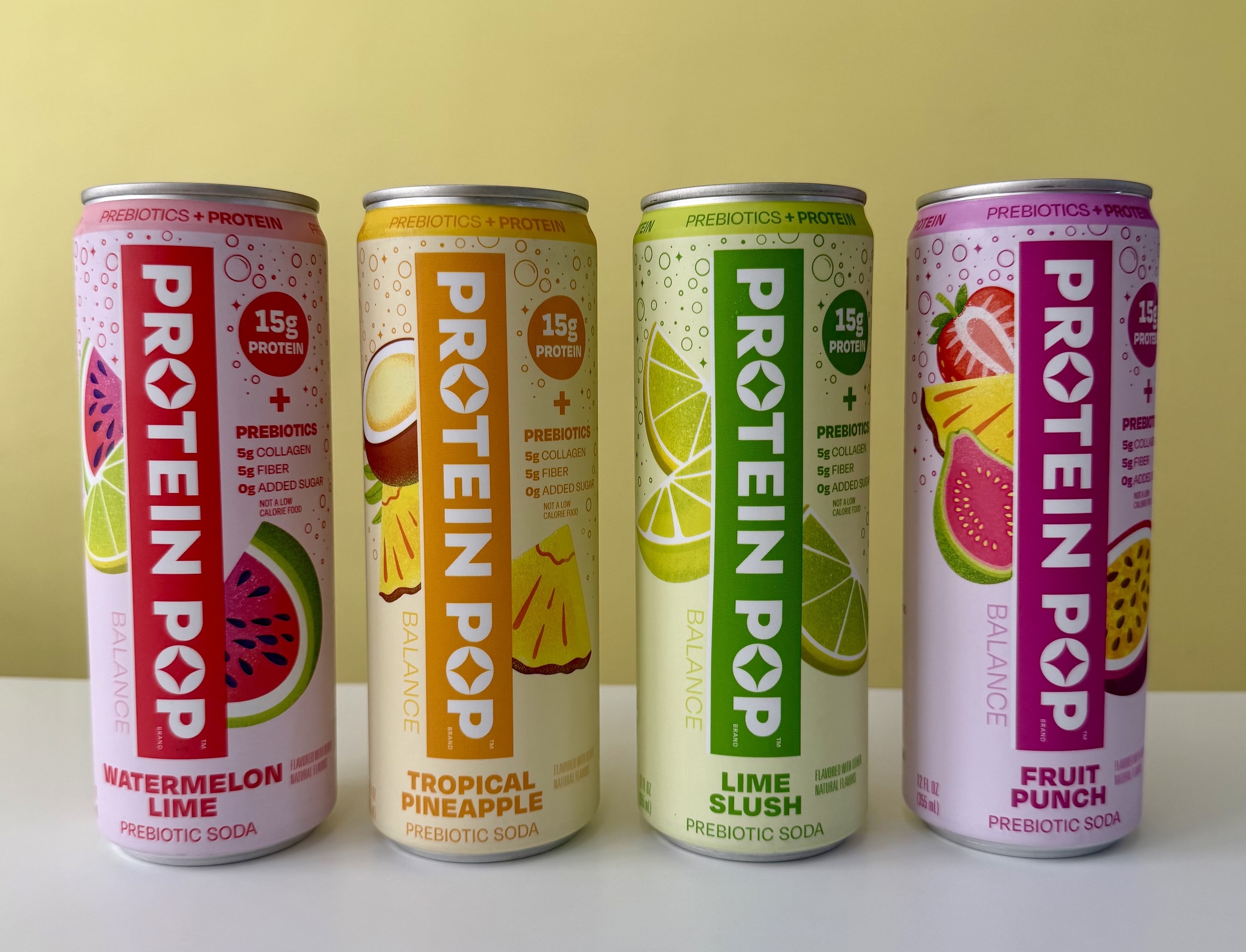
Rise Wellness has launched Protein Pop Balance, a sparkling, clear prebiotic soda delivering 15 grams of protein and 5 grams of fiber per can, with distribution live now on Amazon and online, and a Target rollout set for mid-September. The move is a direct play for functional-beverage shelf space at a moment when buyers at mass and natural retailers are actively rebalancing their RTD sets away from heavy, opaque protein shakes toward lighter, gut-health-forward formats.
The formulation combines 10 grams of clear whey protein isolate with 5 grams of collagen, added prebiotics, and 5 grams of fiber. The beverage contains 0 grams of sugar, uses a premium stevia leaf extract blend (Reb A, Reb M), and carries no artificial sweeteners, caffeine, or gluten. It launches in four flavors — Lime Slush, Tropical Pineapple, Watermelon Lime, and Fruit Punch — covering the citrus-tropical profile arc that dominates functional soda velocity data at convenience and club retailers.
Portfolio Strategy
Protein Pop Balance is the third SKU in the Rise Wellness lineup, slotting below the original Protein Pop (22 grams of whey protein isolate, non-carbonated) and Protein Pop Max (30 grams of protein with bovine collagen, carbonated). The tiered architecture — light, mid, and max protein — mirrors what sports-nutrition brands have long deployed in bar and powder formats, now applied to the RTD soda channel. Darin Perry, CEO of Rise Wellness, framed Balance as a grab-and-go option that supports both gut health and protein targets without the heaviness of traditional shakes.
For buyers and category managers, the three-SKU structure is retail-ready architecture: it enables a brand block on shelf, supports promotional rotation across protein levels, and gives grocery and convenience buyers a logical merchandising story. That scaffolding matters as much as the formulation when a brand is negotiating for incremental facings.
What Operators and Buyers Should Watch
The functional-soda segment has grown crowded fast, with prebiotic plays from established brands compressing margins on novelty alone. What differentiates Protein Pop Balance is the protein-plus-prebiotic stack — most clear prebiotic sodas on market carry negligible protein, while most protein RTDs ignore fiber and gut health entirely. Bridging those two consumer need states in a zero-sugar, carbonated format is a positioning gap the brand is moving to close before a larger player does.
For foodservice and hospitality operators sourcing functional beverages for hotel minibars, fitness-center coolers, or café grab-and-go sets, the mid-September Target launch signals broad enough distribution to support program-level purchasing through distributors aligned with mass retail. Operators exploring functional beverage programming should also note the clean-label profile — no artificial sweeteners, no caffeine, gluten-free — which reduces menu-disclosure friction in regulated dining environments.
Brands entering this space should also review their retail readiness and buyer deck fundamentals before pitching regional grocery chains, as category velocity benchmarks and claim substantiation are table stakes in mid-2026 RTD review cycles. Rise Wellness, as a wholly owned subsidiary of USANA Health Sciences (NYSE: USNA), brings supply-chain scale and regulatory infrastructure that independent beverage startups often lack — an advantage in speed-to-shelf and compliance.
Written by Michael Politz, Author of Guide to Restaurant Success: The Proven Process for Starting Any Restaurant Business From Scratch to Success (ISBN: 978-1-119-66896-1), Founder of Food & Beverage Magazine, the leading online magazine and resource in the industry. Designer of the Bluetooth logo and recognized in Entrepreneur Magazine's "Top 40 Under 40" for founding American Wholesale Floral, Politz is also the Co-founder of the Proof Awards and the CPG Awards and a partner in numerous consumer brands across the food and beverage sector.