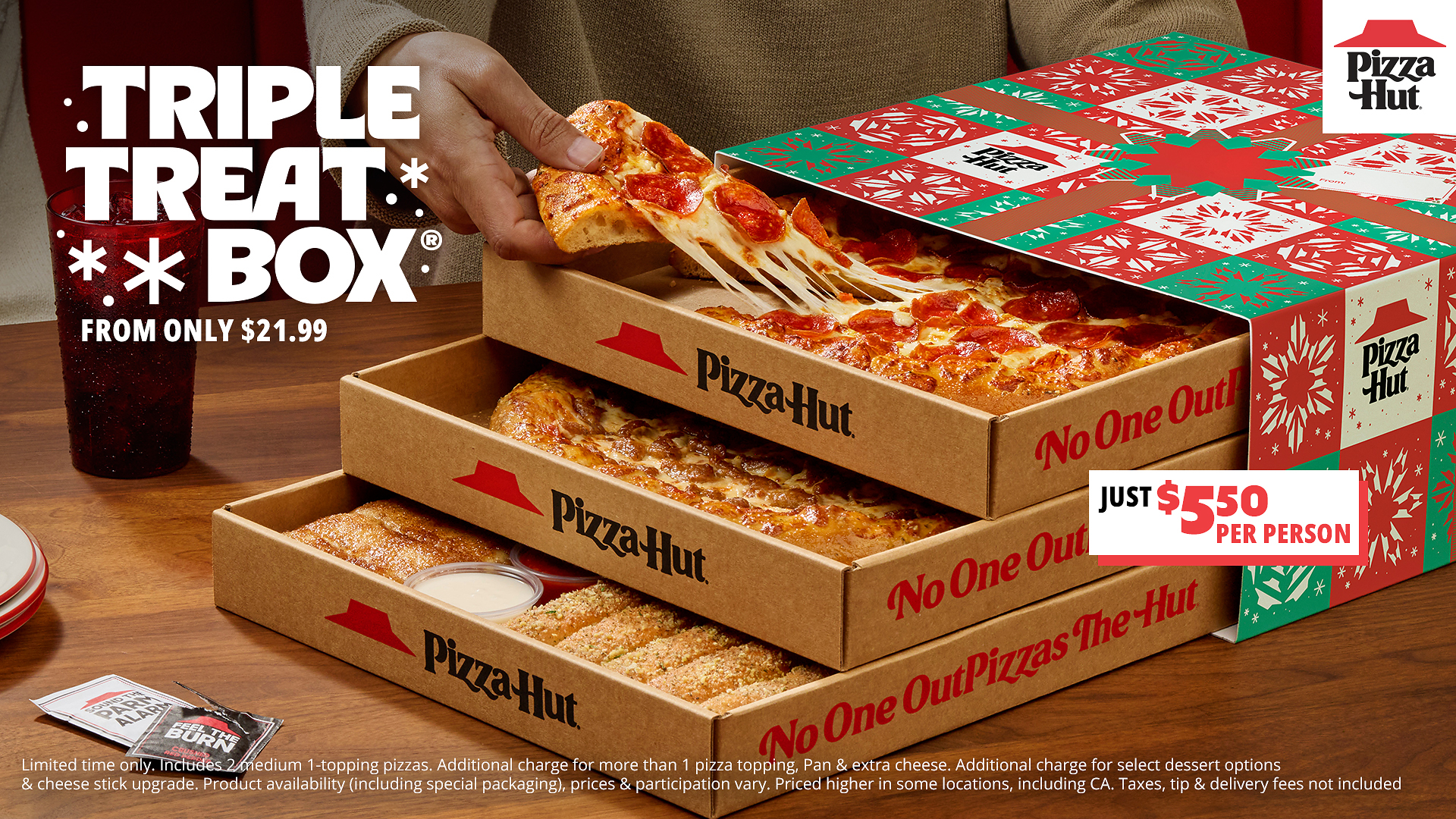
Pizza Hut is leaning hard into bundled value this Q4, bringing back its Triple Treat Box Holiday Edition for a limited run through December 28. The offer — two medium one-topping pizzas, breadsticks, and cinnamon sticks from $21.99 — is less a menu story than a pricing-strategy story: the brand is explicitly merchandising a per-head cost ($5.50) rather than a total ticket, a framing shift worth watching across the casual and fast-casual segments.
The Value-Framing Signal
In an environment where food-at-home costs have pressured restaurant traffic, Pizza Hut is positioning the box as a dinner solution, not a deal. That distinction matters for operators. Melissa Friebe, Chief Marketing Officer at Pizza Hut, framed it plainly: "Starting at just $5.50 per person, it brings everyone's Pizza Hut favorites together in one affordable meal." Per-person pricing language, long standard in catering and event foodservice, is migrating into everyday QSR messaging — a signal that operators marketing to families should consider reframing their own value propositions around per-head cost rather than total price.
The bundle structure itself is a proven Q4 lever. Bundling a starch, a side, and a dessert into a single SKU reduces decision friction, increases average ticket versus à la carte, and creates a shareable, occasion-specific product that earns social visibility without a paid amplification budget. For multi-unit operators and emerging pizza brands evaluating their own holiday LTO calendars, the Triple Treat Box architecture — fixed base with optional upgrades at additional charge — also protects margin by anchoring consumers on the entry price while upselling to higher-ticket configurations.
What This Means for Operators
The timing of the launch (mid-November through late December) aligns the product window with the highest household meal-planning stress of the year. Pizza Hut's digital-first ordering infrastructure — over half of its global transactions come through digital channels — means the bundle can be tested, promoted, and iterated via app push notifications and targeted email without meaningful print or in-store signage costs. Independent operators and regional chains without that infrastructure should consider whether their POS and online-ordering stack can support similar bundle mechanics, particularly as holiday LTO planning and digital promotion become table stakes for competing on occasion-based traffic.
For suppliers and packaging vendors, the festive box itself is a merchandising asset — Pizza Hut's proprietary holiday packaging differentiates the product at the door and extends brand presence into the home. That's a low-cost brand-touch point that foodservice operators, meal-kit adjacent concepts, and retail-ready brands are increasingly building into their launch and seasonal strategies. If your LTO doesn't have a physical brand moment beyond the bag, you're leaving a retention signal on the table.
Written by Michael Politz, Author of Guide to Restaurant Success: The Proven Process for Starting Any Restaurant Business From Scratch to Success (ISBN: 978-1-119-66896-1), Founder of Food & Beverage Magazine, the leading online magazine and resource in the industry. Designer of the Bluetooth logo and recognized in Entrepreneur Magazine's "Top 40 Under 40" for founding American Wholesale Floral, Politz is also the Co-founder of the Proof Awards and the CPG Awards and a partner in numerous consumer brands across the food and beverage sector.