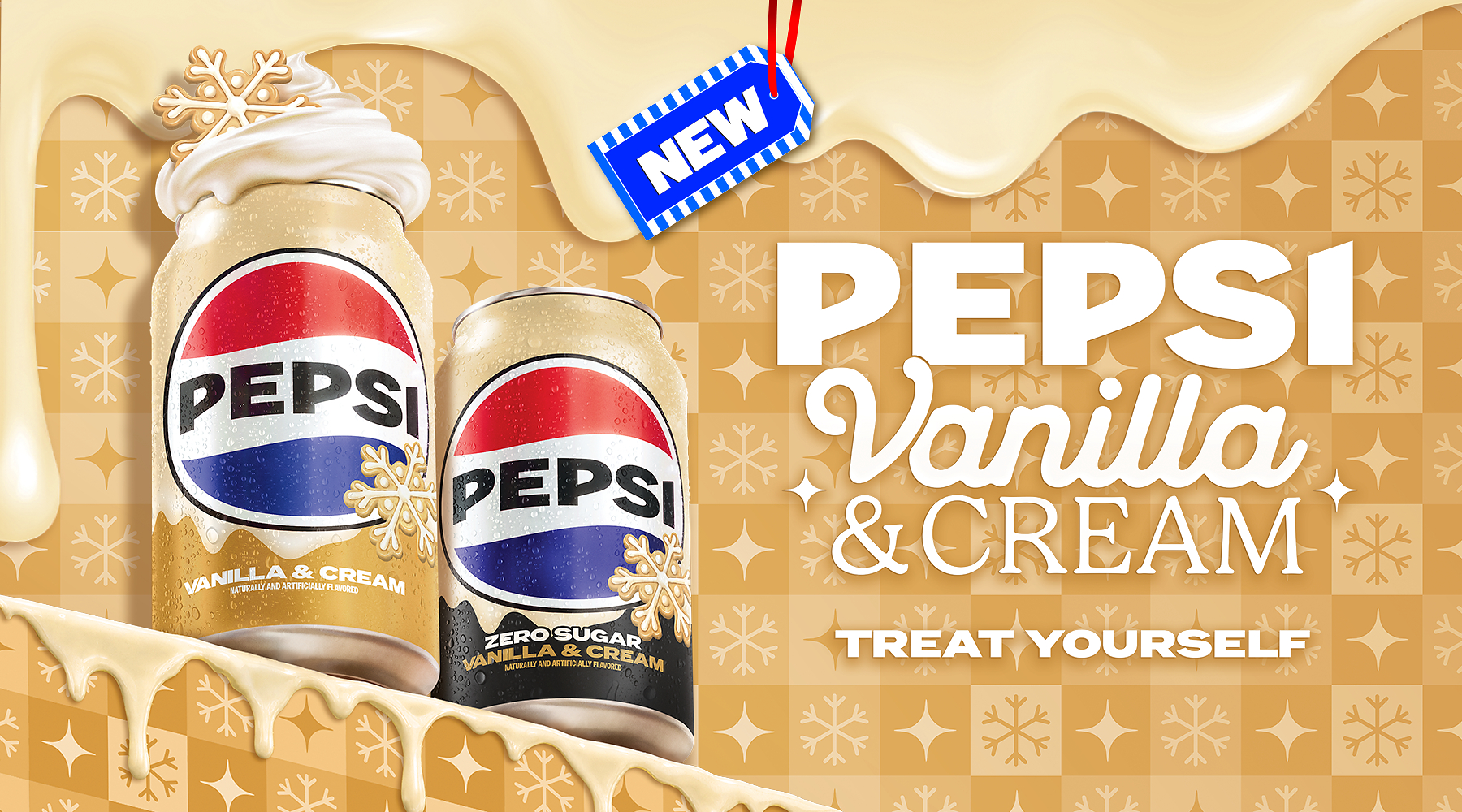
PepsiCo Beverages North America is rolling out Pepsi Vanilla & Cream nationwide as a limited-time offering, available in both Original and Zero Sugar formats in 12-pack cans and 20 oz. bottles. The launch lands October 19 and is timed explicitly to holiday selling season — a window that major NAB suppliers have increasingly treated as a proving ground for incremental flavor SKUs.
For foodservice and retail operators, the calculus here is familiar: a trusted anchor brand adds a bounded LTO to capture seasonal trial without cannibalizing core velocity. Three in four consumers report willingness to try new beverages during the holidays, according to Beverage Industry research cited by PepsiCo — a data point that justifies the promotional investment and gives buyers a demand signal worth tracking on their own shelves.
The Cream Platform
Vanilla & Cream is not a standalone bet. It extends a cream-flavor architecture PepsiCo has been building since Pepsi Wild Cherry & Cream, giving the brand a defensible sub-category position rather than a one-off novelty. Gustavo Reyna, Vice President of Marketing at Pepsi, framed the release as "nostalgic, new and undeniably delicious" — language that maps directly to the indulgence-meets-familiarity positioning that has driven premium soft drink sales across both on-premise and off-premise channels in recent cycles.
For operators managing fountain programs, group beverage menus, or retail cooler sets, cream-forward cola profiles have demonstrated staying power. The Zero Sugar variant is a direct response to operator demand for better-for-you options that do not sacrifice the flavor complexity consumers expect from a premium or seasonal SKU. Zero calories with full flavor parity is now table stakes for any LTO targeting a broad demographic.
What Buyers Should Watch
The strategic signal here is the seasonal LTO as a category-management lever. Major NAB suppliers are compressing the time between flavor concept and shelf execution, using limited availability to generate urgency without locking buyers into long-term SKU commitments. For on-premise operators — particularly hotel F&B directors, venue catering teams, and QSR franchisees — this creates a short window to negotiate promotional pricing, point-of-sale support, and co-branded digital assets before the SKU cycles out.
Retail buyers negotiating Q4 resets should also note that PepsiCo's $94 billion revenue base gives it the media and trade-spend firepower to drive consumer pull-through on LTOs that smaller suppliers cannot match. Stocking Pepsi Vanilla & Cream alongside core SKUs is a low-risk way to capture incremental holiday basket value, provided the cooler or shelf space is available. For operators tracking NAB trends and beverage procurement shifts, this launch reinforces that flavored cola innovation remains one of the highest-velocity segments in the category heading into the holiday quarter.
Brands considering their own seasonal launches can learn from the structural discipline here: a defined retail window, two format tiers (Original and Zero Sugar), and two package formats address distinct consumption occasions without fragmenting the production run. That template is increasingly visible across the brand launch strategies of both major CPG players and emerging beverage independents.
Written by Michael Politz, Author of Guide to Restaurant Success: The Proven Process for Starting Any Restaurant Business From Scratch to Success (ISBN: 978-1-119-66896-1), Founder of Food & Beverage Magazine, the leading online magazine and resource in the industry. Designer of the Bluetooth logo and recognized in Entrepreneur Magazine's "Top 40 Under 40" for founding American Wholesale Floral, Politz is also the Co-founder of the Proof Awards and the CPG Awards and a partner in numerous consumer brands across the food and beverage sector.