The Move
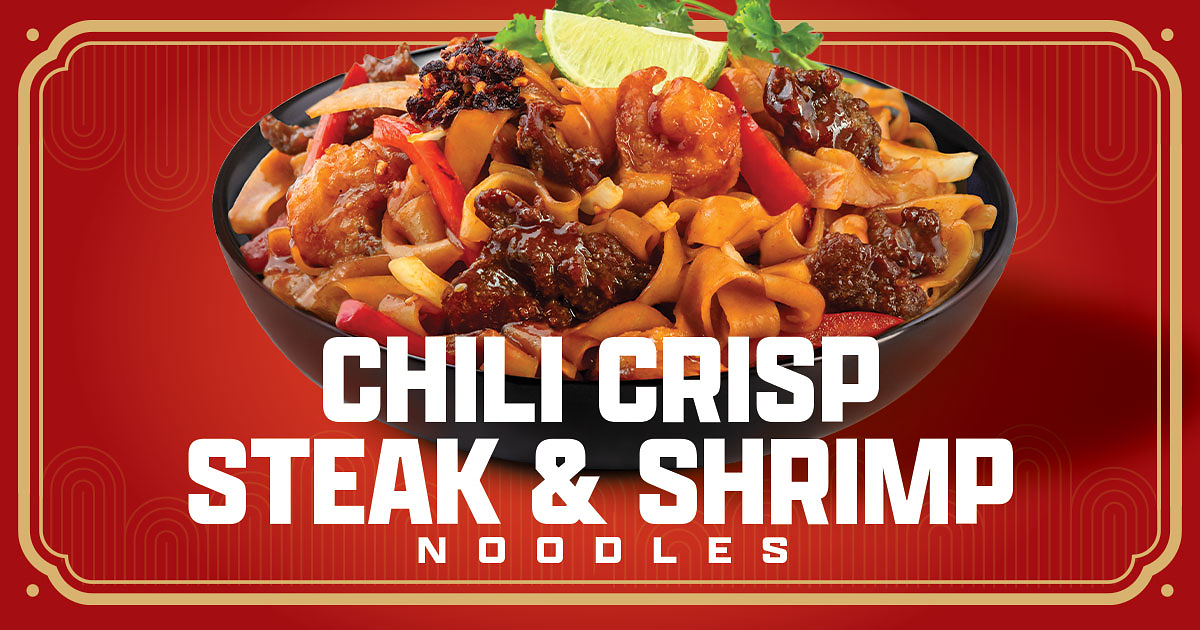
Pei Wei Asian Kitchen is adding Chili Crisp Steak & Shrimp Noodles to its limited-time lineup at $14.99, available across nearly 200 locations for dine-in, takeout, and app orders. The dish pairs wok-seared steak and shrimp with rice noodles, red bell peppers, and onions, finished in a Korean chili sauce and topped with chili crisp, fresh cilantro, and a lime wedge. The holiday-window timing is deliberate: fast-casual chains consistently use Q4 LTOs to hold transaction volume when dining occasions compete with home entertaining and retail food spending.
Why Operators Should Track This
Chili crisp has moved decisively from specialty-grocer curiosity to mainstream menu staple over the past 24 months, appearing on appetizer and entrée menus at chains ranging from regional noodle bars to national fast-casual players. For operators still evaluating whether the ingredient has legs, Pei Wei's decision to anchor a surf-and-turf LTO around it — rather than a simpler chicken or tofu application — signals that the brand's culinary team views the flavor profile as premium enough to justify a higher protein combination. At $14.99, the price point sits at the upper tier of fast-casual entrée pricing, testing whether guests will accept a slight premium for a dual-protein build.
Brian Dreeland, vice president of marketing at Pei Wei, framed the launch around craveability and repeat-visit intent rather than novelty alone — a distinction worth noting for menu strategists. Craveable LTOs that drive return visits within the promotional window are more valuable than one-and-done buzz items, particularly for chains with loyalty app infrastructure. Pei Wei's ability to route orders through its own app gives it first-party data on how frequently the LTO converts new and lapsed guests versus core loyalists, intelligence that informs whether the dish earns a permanent slot.
What This Signals for the Category
For foodservice operators and procurement teams, the Pei Wei launch is a useful benchmark on two fronts. First, it confirms that Korean-influenced heat profiles — gochugaru-based sauces, chili crisp finishes — are now commercially safe enough for the second-largest Chinese fast-casual chain in the United States to bet a holiday LTO on them. Second, the surf-and-turf noodle format (steak plus shrimp, not steak or shrimp) suggests that fast-casual brands are willing to absorb higher COGS on limited-time items in exchange for a perceived value story that justifies a higher menu price.
Suppliers and distributors watching the chili crisp category should note that chain adoption at this scale typically precedes a wave of smaller regional operator interest by one to two menu cycles. If you're a regional Asian-concept operator or an independent noodle bar without a chili crisp offering, the window to position ahead of the curve is narrowing. For brand launch and menu consultants, this is a useful case study in how to build an LTO around an emerging pantry ingredient before it becomes a commodity expectation.
Operators evaluating their own AI-assisted menu trend intelligence should flag chili crisp as a high-signal ingredient to monitor across social listening, delivery platform search data, and regional menu databases — the velocity of adoption across chain and independent segments is now fast enough that quarterly trend reviews may not be sufficient.
Written by Michael Politz, Author of Guide to Restaurant Success: The Proven Process for Starting Any Restaurant Business From Scratch to Success (ISBN: 978-1-119-66896-1), Founder of Food & Beverage Magazine, the leading online magazine and resource in the industry. Designer of the Bluetooth logo and recognized in Entrepreneur Magazine's "Top 40 Under 40" for founding American Wholesale Floral, Politz is also the Co-founder of the Proof Awards and the CPG Awards and a partner in numerous consumer brands across the food and beverage sector.
Frequently Asked Questions
What exactly is Pei Wei launching and at what price?
Pei Wei is rolling out Chili Crisp Steak & Shrimp Noodles at $14.99 across nearly 200 locations. The dish combines wok-seared steak and shrimp with rice noodles, red bell peppers, onions, Korean chili sauce, chili crisp, cilantro, and lime—positioning it at the upper tier of fast-casual entrée pricing.
Why is Pei Wei timing this LTO for the holidays specifically?
Fast-casual chains deploy Q4 LTOs to hold transaction volume when dining occasions compete with home entertaining and retail spending. The holiday window is when operators need tactical traffic drivers most, and limited-time offers consistently move needles during this period.
Has chili crisp really moved into the mainstream, or is this a niche play?
Chili crisp has graduated from specialty-grocer novelty to mainstream menu staple in the past 24 months, appearing on appetizer and entrée menus across regional noodle bars and national fast-casual players. Pei Wei's decision to anchor a dual-protein LTO around it—not a simpler chicken or tofu application—signals the culinary team sees it as premium-tier.
What should menu strategists actually learn from this launch?
Pei Wei's VP of Marketing framed this around craveability and repeat-visit intent, not novelty alone. For operators with loyalty app infrastructure, LTOs that convert new and lapsed guests into repeat visits during the promotional window are far more valuable than one-and-done buzz items.
How will Pei Wei measure if this LTO actually works?
Pei Wei routes orders through its own app, giving the brand first-party data on conversion rates, repeat visit frequency, and guest acquisition during the LTO window. That infrastructure lets them track whether the $14.99 price point sticks and which customer segments return after the promotional period ends.