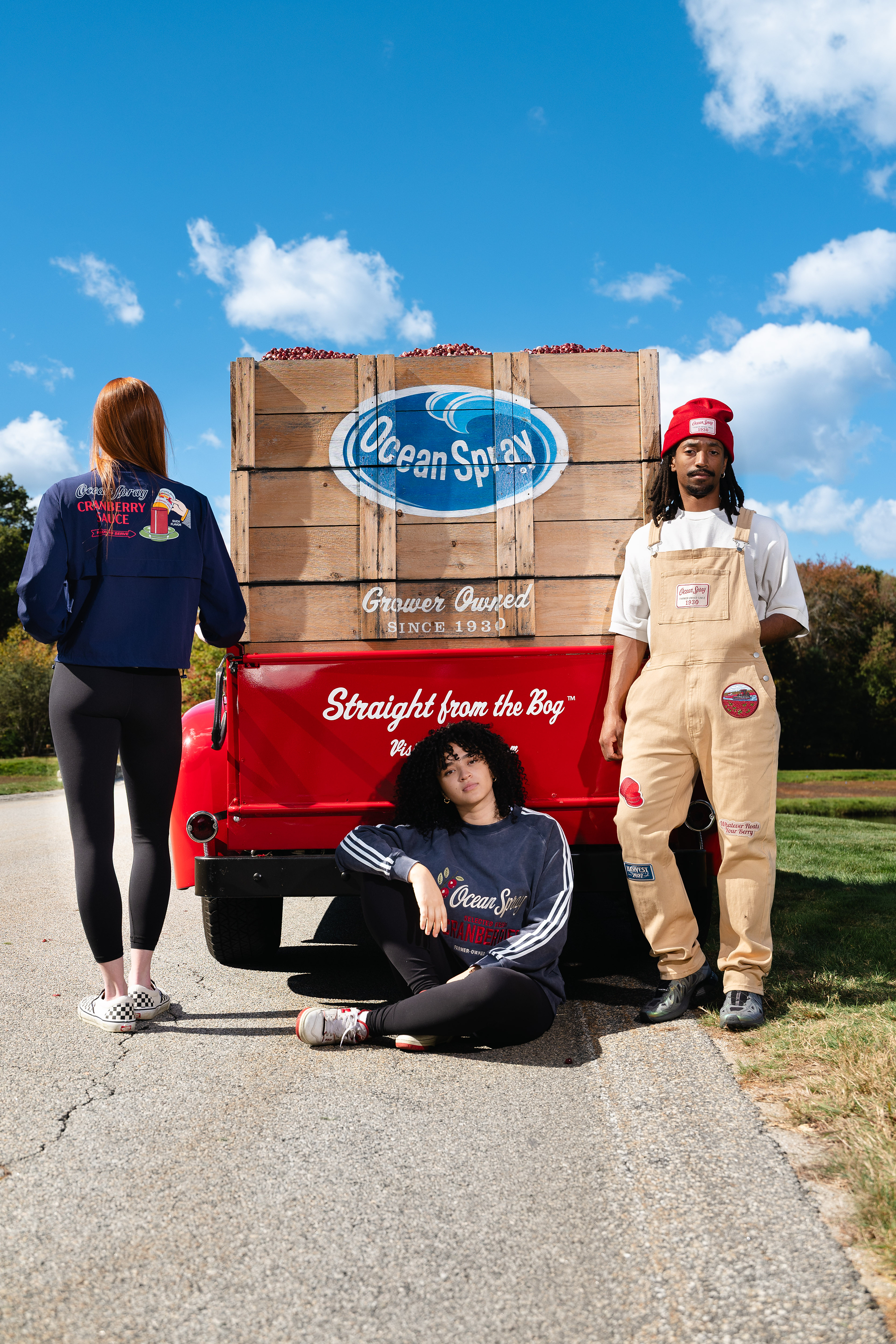
Ocean Spray Cranberries, Inc. launched its first-ever apparel collection on October 15, turning the cooperative's most recognizable harvest visuals — wader-clad farmers, floating cranberry bogs, the ridged silhouette of Jellied Cranberry Sauce — into a seven-piece limited-edition line sold exclusively at oceanspraybogcore.com. The move is less about fashion and more about what food and beverage brands increasingly understand: a well-timed, visually coherent merch drop can generate earned media, social amplification, and direct consumer data that a standard trade promotion cannot.
The Collection and the Strategy
The Ocean Spray Bog Core Collection is priced from $10 collectible patches up to $200 custom Jellied Bog Boots — waterproof footwear embossed with the sauce's signature ridges. Between those anchors sit $90 embroidered overalls, a $60 harvest crewneck, a $60 windbreaker featuring original hand-drawn illustration, a $20 beanie carrying a "Farmer-Owned Since 1930" patch, and a $15 dog bandana. The price ladder is deliberate: low-barrier entry points drive volume and social sharing, while the hero boot at $200 anchors perceived brand value and earns press coverage on its own.
For food brands and their marketing partners, the instructive part is the channel decision. Everything runs through a standalone DTC microsite rather than a retail partner, which means Ocean Spray captures first-party customer data — email addresses, purchase behavior, geographic concentration — that feeds back into its broader growth and media operation. That data asset matters well beyond cranberry season.
What Operators and Brand Teams Should Note
Seasonal brand activations of this type have become a reliable playbook across the food and beverage sector. Brands from hot sauce labels to national juice cooperatives have used limited merchandise to extend a campaign window, recruit new-to-brand buyers, and dominate a social news cycle during a competitively crowded period. The harvest timing here is precise: October is when the cooperative's roughly 700 family farmers are flooding bogs across Massachusetts, Wisconsin, Oregon, and Chile, and the visual content opportunity is at its annual peak.
Eliza Sadler, Head of Brand Elevation at Ocean Spray, framed the collection around existing organic fandom — consumers dressing as cranberry farmers for Halloween, celebrating the Jellied Sauce's iconic shape — rather than manufacturing demand from scratch. That distinction matters for brand teams advising food clients: activations anchored to pre-existing consumer behavior convert at higher rates and generate more authentic user-generated content than campaigns built on invented occasions.
For operators and hospitality brands evaluating their own seasonal marketing windows, the Bog Core drop is a useful benchmark. A tight SKU count (seven pieces), a clear visual identity system, a standalone e-commerce URL, and a defined scarcity signal ("while supplies last") are all replicable mechanics regardless of category. The infrastructure investment is modest; the brand-equity return, measured in impressions, email captures, and retailer conversation leverage, is disproportionate.
Brands considering similar brand launch strategies should also assess how a DTC merch moment can precede or amplify a retail sell-in conversation. A cooperative or supplier arriving at a buyer meeting with documented consumer demand from a viral product drop has a materially different negotiating position than one arriving with only sales history. For food brands navigating crowded grocery sets, that proof-of-pull is increasingly valuable.
Food and beverage marketing teams tracking operator intelligence trends will recognize the Bog Core Collection as part of a broader pattern: heritage agricultural brands — cooperatives especially — leaning into authentic origin stories as a differentiator against private label and challenger brands. Ocean Spray's nearly 100-year farmer-owned identity is the asset; the apparel collection is the activation vehicle.
Written by Michael Politz, Author of Guide to Restaurant Success: The Proven Process for Starting Any Restaurant Business From Scratch to Success (ISBN: 978-1-119-66896-1), Founder of Food & Beverage Magazine, the leading online magazine and resource in the industry. Designer of the Bluetooth logo and recognized in Entrepreneur Magazine's "Top 40 Under 40" for founding American Wholesale Floral, Politz is also the Co-founder of the Proof Awards and the CPG Awards and a partner in numerous consumer brands across the food and beverage sector.