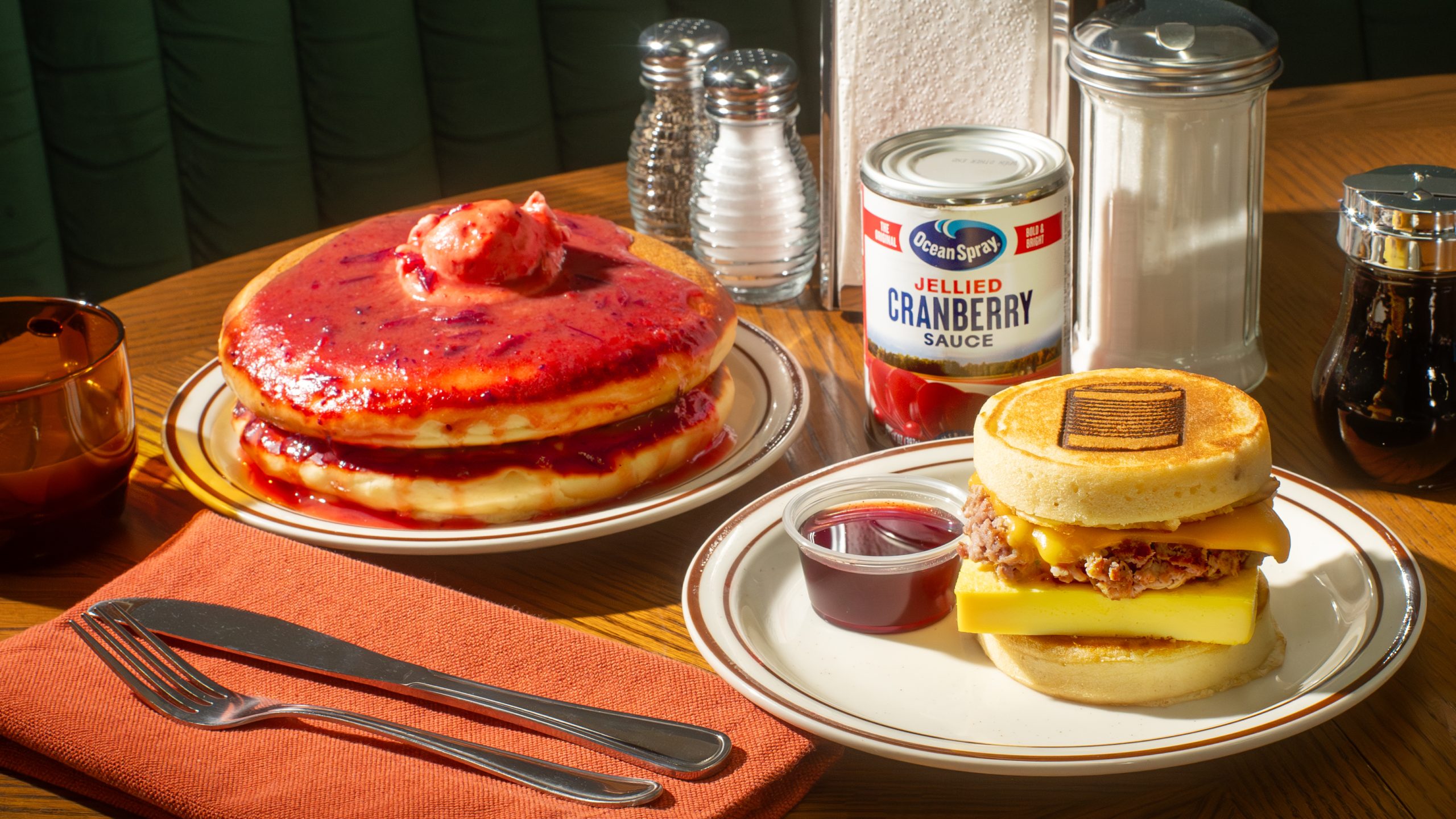
Ocean Spray Cranberries, Inc. opened a free, walk-in pop-up diner in Manhattan's Tribeca neighborhood on October 22, using a classic American diner format to argue that cranberry sauce belongs on menus year-round — not just at Thanksgiving. The one-day Saucy Spoon Diner at 33 Leonard Street ran from noon to 8 p.m. and offered complimentary dishes built entirely around cranberry sauce as the hero ingredient.
For operators and menu developers, the activation is worth reading as a brand-funded consumer research moment as much as a PR stunt. Ocean Spray is a cooperative of roughly 700 family farms, and repositioning cranberry sauce from a seasonal side to a year-round foodservice staple has direct implications for distribution volume, procurement calendars, and SKU placement at broadline distributors.
The Menu Signal
The Saucy Spoon menu leaned hard into familiar comfort-food formats — chicken and waffles, grilled cheese, breakfast sandwiches, mozzarella sticks, milkshakes — with cranberry sauce as the unifying ingredient across both sweet and savory applications. That choice is deliberate menu strategy: by demonstrating cranberry sauce's range inside formats operators already run, Ocean Spray is essentially building a sell-sheet in real time. Kelvin Vuong, Head of USA Foods and Snacking at Ocean Spray, framed it directly: "The Saucy Spoon Diner is our way of celebrating that passion and giving fans a new way to experience a holiday favorite they already know and love."
The diner format also signals which operator segment Ocean Spray is courting. Full-service casual, fast-casual breakfast, and diner concepts are the most natural first movers for cranberry sauce LTO integration — categories already accustomed to seasonal ingredient rotations and condiment-forward builds. The activation gives Ocean Spray proof-of-concept photography, real consumer response data, and social content all in a single afternoon.
What This Signals for Procurement
The partnership with Foodbeast for take-home recipe content extends the campaign's shelf life past a single news cycle and targets the home-cook audience that bridges retail and foodservice demand. For broadline buyers and category managers, that dual-channel push matters: when consumer familiarity with an ingredient application rises, foodservice pull-through typically follows within one to two menu cycles.
Operators considering cranberry sauce as a year-round ingredient should note that the commodity pricing environment for cranberries has historically been seasonal, meaning procurement teams that lock in volume outside the Q4 holiday spike may find better contract terms. Suppliers in the condiment and sauce segment have been expanding ambient and refrigerated cranberry SKUs for foodservice, a trend covered in our Operator Intelligence reporting.
The broader pattern here — CPG cooperative funding a consumer-facing pop-up to generate foodservice relevance data — is becoming a repeatable playbook. Brands in the sauce, condiment, and ingredient space are increasingly using short-run experiential activations to compress the timeline between consumer trend identification and operator menu adoption. Ocean Spray's execution is consistent with how ingredient brands are now investing in brand launch tactics traditionally reserved for finished-goods CPG.
Written by Michael Politz, Author of Guide to Restaurant Success: The Proven Process for Starting Any Restaurant Business From Scratch to Success (ISBN: 978-1-119-66896-1), Founder of Food & Beverage Magazine, the leading online magazine and resource in the industry. Designer of the Bluetooth logo and recognized in Entrepreneur Magazine's "Top 40 Under 40" for founding American Wholesale Floral, Politz is also the Co-founder of the Proof Awards and the CPG Awards and a partner in numerous consumer brands across the food and beverage sector.