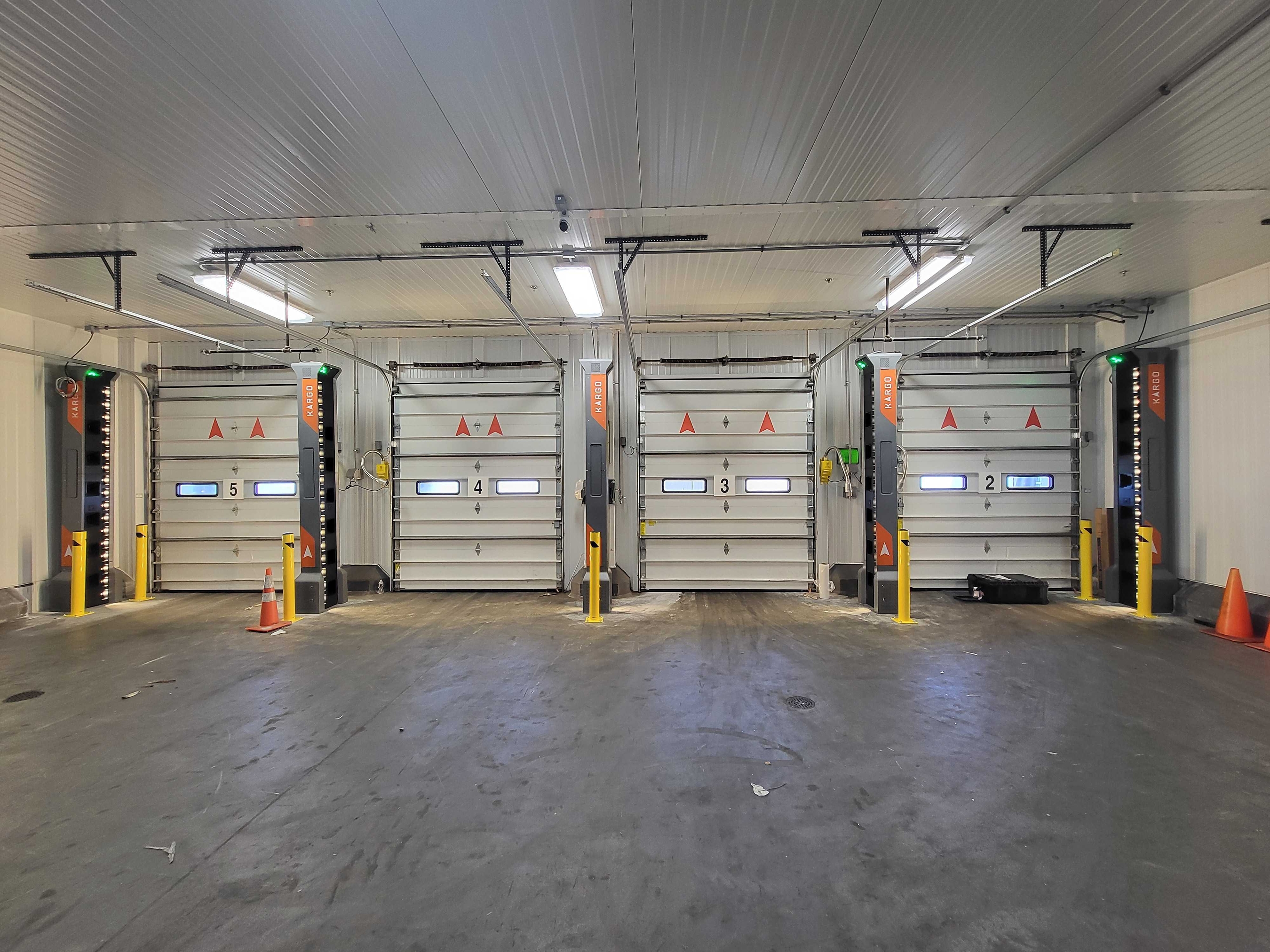
Northern Wind, a leading direct off-loader and processor of premium sea scallops, has deployed Kargo's AI-powered camera tower system at its New Bedford, Massachusetts facility — and the first-year numbers are concrete enough to get cold-chain operators paying attention. Four camera towers installed at dock doors tracked 6,970 shipments, flagged 917 damage exceptions, and delivered $106,000 in documented savings, amounting to a 3x return on investment in year one.
For seafood distributors, outbound shipping has long been a blind spot. A single pallet can hold more than 100 cases of product, and manual documentation of pallet condition, date codes, and dimensions is both time-consuming and error-prone. When a claim arrives weeks later, operators are often left without the evidence to dispute it. Northern Wind's deployment addresses that gap directly by creating a shareable visual record for every pallet leaving the dock.
What the System Actually Does
Kargo's camera towers capture visual proof of pallet condition, case dimensions, and date codes at the moment of departure — automatically, without requiring dock staff to interrupt workflow. For Northern Wind's lobster inventory in particular, consistent date-code capture means the oldest product is identified and shipped first, a compliance and quality detail that matters enormously to major retail and wholesale grocery buyers in the US, UK, and Korea.
Joel Cancel, Vice President of Warehouse Operations at Northern Wind, noted that the system gives the facility "definitive proof that pallets leave our custody in great condition," enabling the team to hold both internal staff and third-party logistics partners accountable when claims arise. That accountability loop — from packer in Asia to end customer across multiple export markets — is precisely the visibility gap that's historically made seafood one of the most claims-heavy categories in food logistics.
What This Signals for Operators
For foodservice and food-retail operators evaluating cold-chain technology, the Northern Wind case offers a useful procurement benchmark. Computer vision at the dock is no longer experimental — it's generating auditable, dollar-denominated outcomes inside a 12-month window. The Kargo deployment also integrates with third-party logistics networks, meaning the visual record travels with the shipment rather than staying siloed at the origin facility.
The next phase at Northern Wind includes automated Advance Shipping Notice (ASN) generation for both intra-company transfers and external customer requirements — a capability that reduces manual data entry and positions the facility for tighter EDI compliance as retail buyers increase documentation demands. That roadmap signals where AI-assisted warehouse operations are heading for mid-size food distributors: from reactive claims defense toward proactive, automated compliance documentation.
Operators in adjacent categories — fresh produce, protein processing, temperature-sensitive specialty food — should watch this deployment pattern. As AI procurement tools reshape food logistics, vision-based dock verification is emerging as a near-term standard rather than a differentiator. The question for most distribution-dependent brands is no longer whether to instrument the dock, but which system fits their 3PL and retail-compliance stack. For context on how tech adoption is reshaping supplier accountability across foodservice, see our coverage of supply chain intelligence trends for food operators.
Written by Michael Politz, Author of Guide to Restaurant Success: The Proven Process for Starting Any Restaurant Business From Scratch to Success (ISBN: 978-1-119-66896-1), Founder of Food & Beverage Magazine, the leading online magazine and resource in the industry. Designer of the Bluetooth logo and recognized in Entrepreneur Magazine's "Top 40 Under 40" for founding American Wholesale Floral, Politz is also the Co-founder of the Proof Awards and the CPG Awards and a partner in numerous consumer brands across the food and beverage sector.
Frequently Asked Questions
What's the actual ROI Northern Wind achieved with Kargo's system?
Northern Wind deployed four camera towers at its New Bedford facility and documented $106,000 in savings against the first-year investment — a 3x return. The system tracked 6,970 shipments and flagged 917 damage exceptions that would've otherwise generated uncontested claims or required costly manual reviews.
How does AI-powered dock documentation solve the claims problem?
When a damage claim arrives weeks later, you typically have zero visual evidence to dispute it. Kargo's towers automatically capture pallet condition, case dimensions, and date codes at departure, creating a shareable record that holds both your internal staff and third-party logistics partners accountable.
Why does date-code capture matter for seafood distributors?
For lobster and scallop inventory, automatic date-code identification ensures FIFO compliance — oldest product ships first — a non-negotiable requirement for major retail and wholesale buyers in the US, UK, and Korea. Manual date tracking creates compliance risk and missed freshness advantages.
What specific workflow problem does this eliminate for dock staff?
Manual documentation of pallet condition, dimensions, and dates across 100+ cases per pallet is both time-consuming and error-prone. Kargo's automated capture eliminates the need for staff to interrupt workflow or handle additional paperwork while maintaining provable accuracy.
Can this system integrate with existing cold-chain operations?
Northern Wind installed the four-tower system at its dock doors without operational disruption, capturing data automatically as pallets depart. The visual records are shareable across your supply chain — from internal teams to logistics partners — enabling accountability across the entire custody chain.