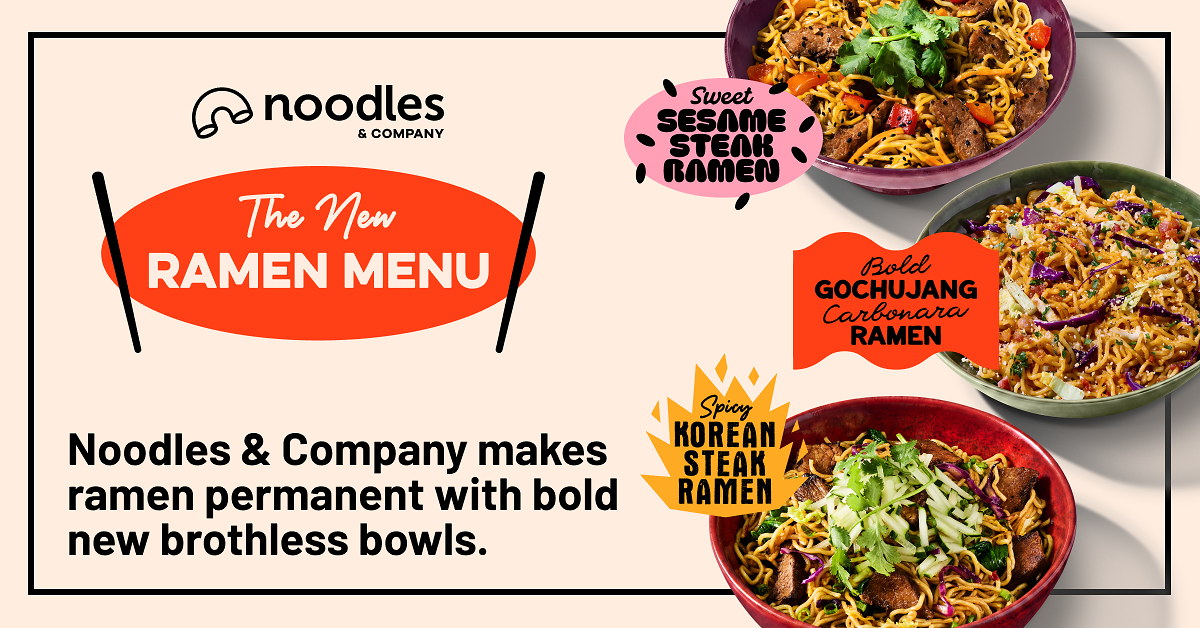
Noodles & Company is converting ramen from a limited-time format into a standing menu category, launching three brothless bowls system-wide across its 390-plus locations as of October 14. The move is a direct response to measurable guest acquisition data — not a flavor trend chased cold.
The chain's Chili Garlic Ramen LTO brought more than 150,000 new guests to the brand, making it one of the most successful menu launches in company history. That guest-acquisition signal is what elevated ramen from test item to permanent fixture, a procurement and marketing decision operators at any scale should study.
The Lineup and the Logic
The three opening SKUs — Gochujang Carbonara Ramen Noodles, Sweet Sesame Steak Ramen Noodles, and Spicy Korean Steak Ramen Noodles — are brothless bowls, a format choice with real operational upside. Eliminating broth reduces cook time, simplifies line execution, and cuts the risk of consistency issues across a franchise footprint. Each bowl builds on existing Noodles & Company sauce and protein infrastructure, meaning the new category likely required limited new supply-chain onboarding.
Tina Massey, vice president of culinary R&D at Noodles & Company, noted that the lineup is designed to demonstrate ramen's range: "From the creamy heat of the Gochujang Carbonara Ramen Noodles to the savory sweetness of Sweet Sesame Steak Ramen Noodles and the familiar bold flavor of Spicy Korean Steak Ramen Noodles, we're showing just how versatile ramen can be while giving each dish a distinctly Noodles spin."
The fusion framing — Korean-Italian, savory-sweet, global-comfort — is deliberate positioning for a segment that increasingly competes on flavor credibility rather than price alone.
What This Signals for Operators
The Noodles & Company ramen playbook is an instructive model for mid-size and regional chains evaluating menu expansion. The brand used an LTO as a guest-acquisition instrument, tracked new-customer counts as the primary success metric, and made permanence contingent on proven demand rather than internal enthusiasm. That sequence — test, measure acquisition, then commit — is increasingly how sophisticated operators are managing menu risk in an environment where commodity costs remain volatile and traffic is hard to buy.
The loyalty integration is worth noting separately. New Rewards members receive a free entrée after a first purchase of $10 or more, and existing members get early access to ramen items. Using a new menu category to drive loyalty enrollment is a distribution tactic as much as a marketing one — it turns menu curiosity into a first-party data capture event.
For suppliers and distributors, the permanence of this category creates a more predictable demand signal for ramen noodles, gochujang, and Korean-style sauces at foodservice scale. Fast-casual chains that commit to a new permanent category typically lock in supply agreements within one to two quarters of launch, making this a near-term procurement conversation.
Operators tracking menu innovation trends and fast-casual category strategy should watch whether the two LTO bowls — Gochujang Carbonara and Sweet Sesame Steak — get promoted to permanent status based on velocity data, which Noodles & Company has signaled it will continue to evolve.
Written by Michael Politz, Author of Guide to Restaurant Success: The Proven Process for Starting Any Restaurant Business From Scratch to Success (ISBN: 978-1-119-66896-1), Founder of Food & Beverage Magazine, the leading online magazine and resource in the industry. Designer of the Bluetooth logo and recognized in Entrepreneur Magazine's "Top 40 Under 40" for founding American Wholesale Floral, Politz is also the Co-founder of the Proof Awards and the CPG Awards and a partner in numerous consumer brands across the food and beverage sector.