The Non-GMO Project has grown its Non-UPF Verified program to 304 products across 23 brands since opening enrollment on January 21, 2026 — and it is now pairing that milestone with a consumer-facing barcode-scan app designed to turn shopper curiosity into procurement pressure on food brands. For operators and buyers evaluating supplier credentials, the program's rapid early growth signals that third-party ultraprocessed-food certification is moving from niche to mainstream faster than most procurement teams anticipated.
What the App Does
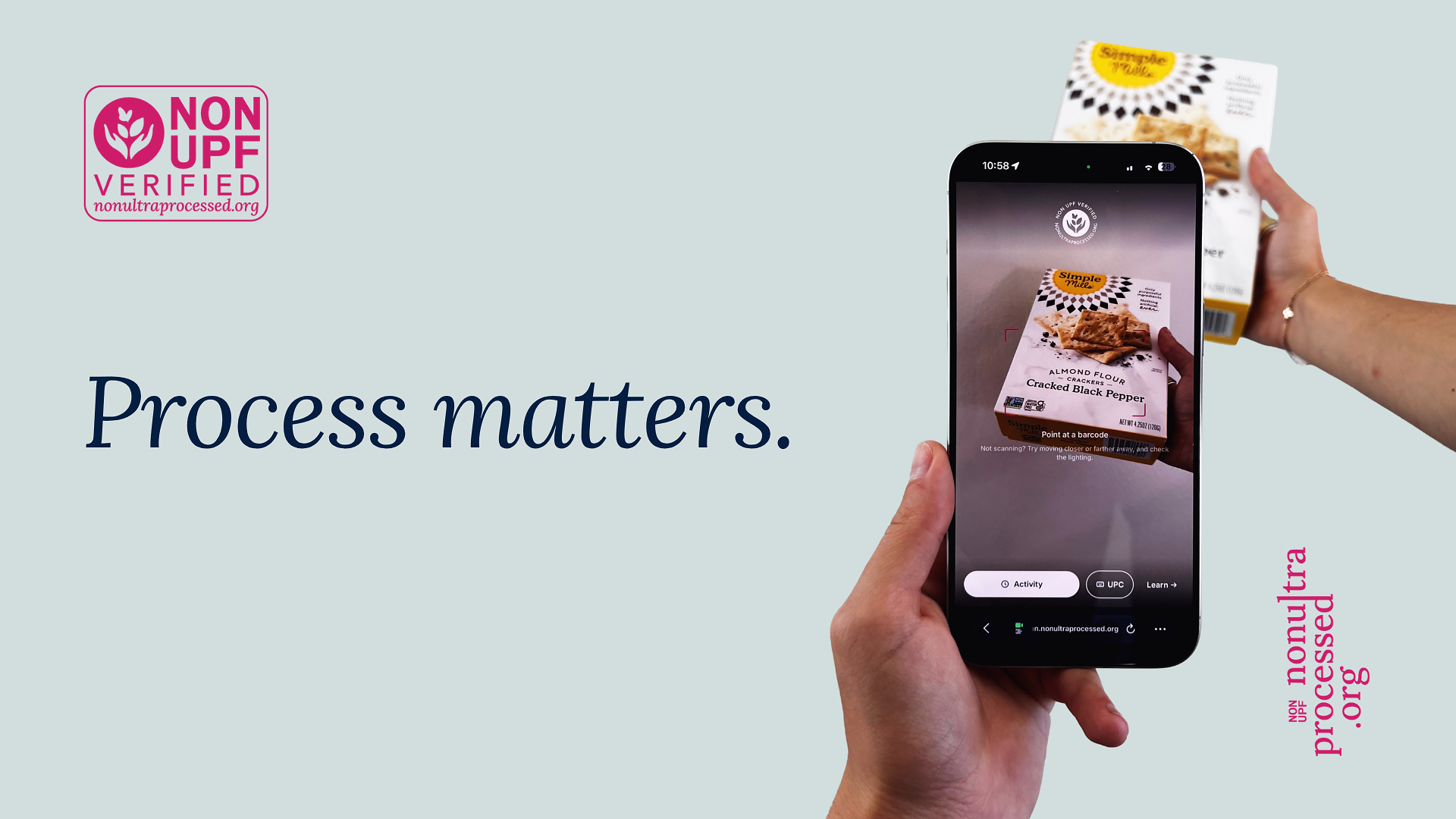
The new Non-UPF Verified app, available on iOS and Android, lets shoppers scan a packaged product's barcode to see its verification status and learn what the standard actually requires. Crucially, if a product is not yet verified, users can submit a request for verification with a single tap. Those demand signals aggregate into a visible consumer-pressure metric that the Non-GMO Project can relay to food makers — effectively creating a closed-loop between retail shelf performance and certification pipeline. For brands watching category trends, this is a direct intelligence feed on where shopper attention is concentrating.
The Standard and the Stakes
Non-UPF Verified is positioned as the first third-party program to evaluate processing methods — not just ingredient lists or nutrition panels. Under the Standard, at least 70.0% of a product's ingredients must meet requirements for permissible minimal or moderate processing, and specific ingredients and manufacturing processes associated with ultraprocessed formulation are restricted or prohibited outright. That methodology puts it a step beyond California's recently passed AB 2244, which would base eligibility on ingredients and nutritional profile alone — a distinction that matters to brand teams building long-term certification strategy.
Verified products now span 15 food and beverage categories, with participating brands including Amy's Kitchen, Simple Mills, Spindrift, and Chomps. Another 41 brands are actively pursuing verification, which suggests the certified portfolio could double within 12 months at current intake rates. The Non-GMO Project brings nearly 20 years of independent verification infrastructure to the program, including relationships with more than 5,000 food brands across North America — a distribution network that gives Non-UPF Verified immediate credibility with retail buyers who already recognize the Butterfly seal on more than 63,000 products.
What Operators and Buyers Should Watch
For foodservice operators and retail category managers, the UPF conversation is no longer a research-community abstraction. It is entering public policy — California's AB 2244 is awaiting a gubernatorial signature — and it is reaching mainstream media, including a September 17 NBC TODAY segment featuring Non-GMO Project CEO Megan Westgate and Simple Mills President Michelle Lorge. When a certification program lands network morning television, procurement teams should expect it to surface in buyer meetings and RFP language within one to two purchasing cycles.
Brands that move early on verification gain the ability to quantify their position for retail buyers before the category gets crowded. Those that wait risk having consumer scan-app demand data used against them in shelf-space negotiations. The Non-UPF Verified program's scan-and-request mechanic is, in effect, a real-time brand-audit tool operating at the point of purchase — and the data it generates will flow to food makers whether or not they have engaged with certification yet.
Operators sourcing packaged goods for hotel F&B programs, grocery-adjacent retail, or health-positioned menu concepts should also track how the 41 brands currently in the verification pipeline shake out — that list will define which suppliers can credibly claim a non-UPF positioning by mid-2027. For more on how certification signals are reshaping supplier selection, see our coverage of ingredient transparency trends and brand-launch readiness for retail buyers.
Written by Michael Politz, Author of Guide to Restaurant Success: The Proven Process for Starting Any Restaurant Business From Scratch to Success (ISBN: 978-1-119-66896-1), Founder of Food & Beverage Magazine, the leading online magazine and resource in the industry. Designer of the Bluetooth logo and recognized in Entrepreneur Magazine's "Top 40 Under 40" for founding American Wholesale Floral, Politz is also the Co-founder of the Proof Awards and the CPG Awards and a partner in numerous consumer brands across the food and beverage sector.