
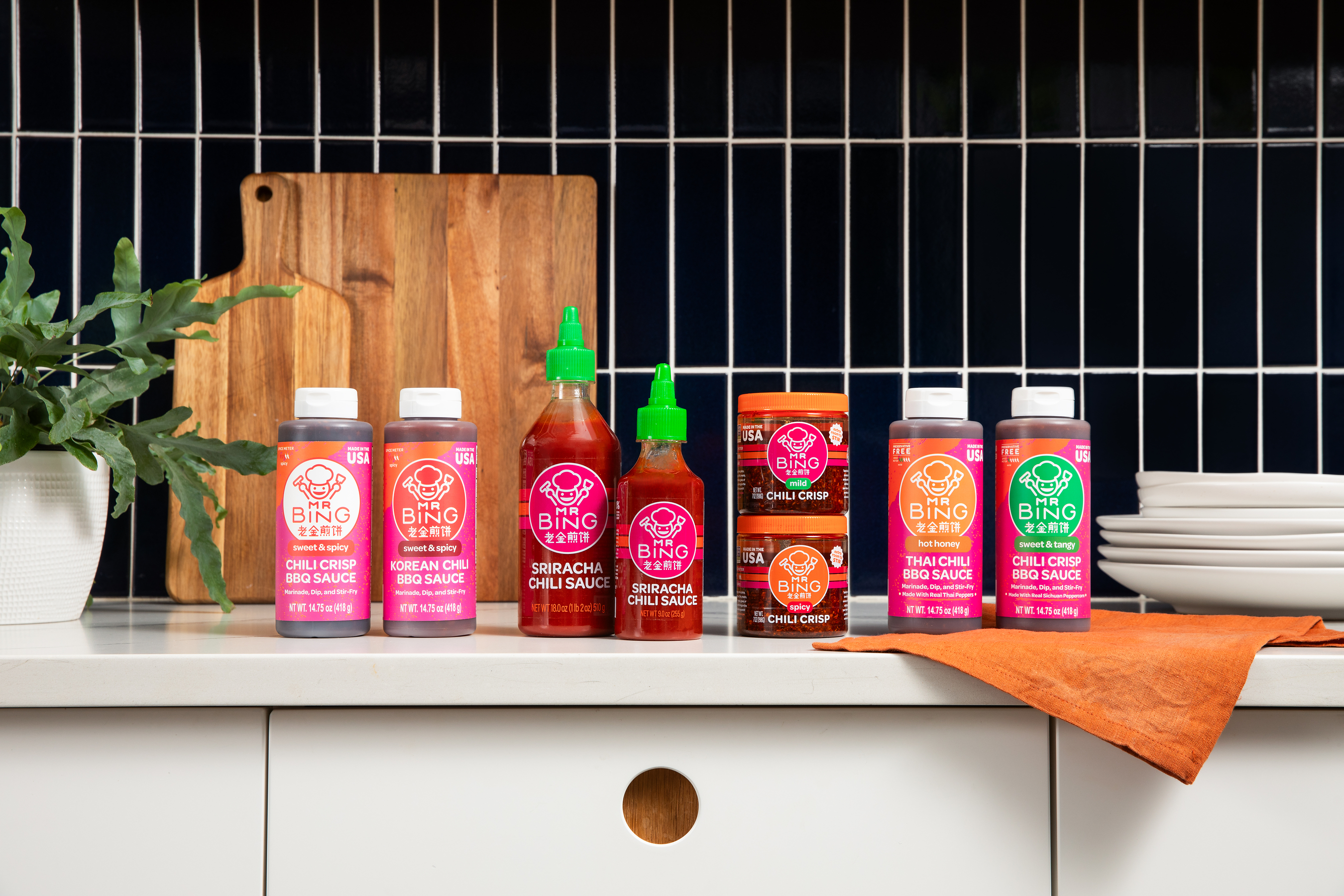
Mr Bing, the Pan-Asian street sauce brand with chef-credentialed positioning, has added an Asian BBQ Sauce lineup to its portfolio: four retail SKUs covering Chili Crisp, Gochujang, and Thai Chili-inspired profiles, plus a dedicated foodservice format sized for kitchen operations. The simultaneous retail-and-foodservice drop is deliberate — and operators evaluating their condiment and house-sauce programs should pay attention to what it signals about where flavor demand is heading.
Asian-inspired heat profiles have been climbing steadily across casual dining, fast casual, and limited-service menus for the better part of three years. Gochujang moved from trend-watch lists to permanent menu fixtures at chains ranging from burger concepts to chicken specialists. Chili crisp crossed from specialty retail into club-store endcaps. The "swicy" framing — sweet heat that leads with umami before the burn — has proven durable precisely because it translates across proteins, snack applications, and LTO formats without alienating mainstream guests. Mr Bing's timing is calibrated to that durability, not the leading edge of the trend.
For operators, the more consequential signal here is the foodservice SKU itself. Brands that historically launched retail-first are now engineering operator-ready formats into their initial rollout rather than treating foodservice as a secondary channel. That changes the procurement conversation: distributors and broadline reps will be carrying this product alongside the retail version, which means menu developers have a shorter path from tasting to spec. It also means the brand arrives with consumer pull already built in — guests who recognize Mr Bing from grocery are more likely to engage with it on a menu callout, reducing the friction of introducing an unfamiliar sauce name in a dish description.
From a brand-launch architecture standpoint, Mr Bing is executing a playbook that regional and emerging sauce brands have refined over the past two cycles: build chef credibility, establish retail velocity, then use that proof of demand to enter foodservice with a converted SKU rather than a reformulated one. The operator intelligence on condiment procurement increasingly favors brands that can demonstrate consumer recognition before asking a kitchen to commit to a gallon jug. Mr Bing's existing retail presence does that work in advance.
Buyers sourcing for Asian-leaning concepts, modern American menus, or any program looking to retire a generic sriracha application should request a foodservice sample and evaluate the Gochujang and Chili Crisp SKUs against current house sauce costs. The swicy window remains open, but the brands that secure operator placements in the next two quarters will own the menu real estate when trend fatigue eventually compresses the field.
Written by Michael Politz, Author of Guide to Restaurant Success: The Proven Process for Starting Any Restaurant Business From Scratch to Success (ISBN: 978-1-119-66896-1), Founder of Food & Beverage Magazine, the leading online magazine and resource in the industry. Designer of the Bluetooth logo and recognized in Entrepreneur Magazine's "Top 40 Under 40" for founding American Wholesale Floral, Politz is also the Co-founder of the Proof Awards and the CPG Awards and a partner in numerous consumer brands across the food and beverage sector.

