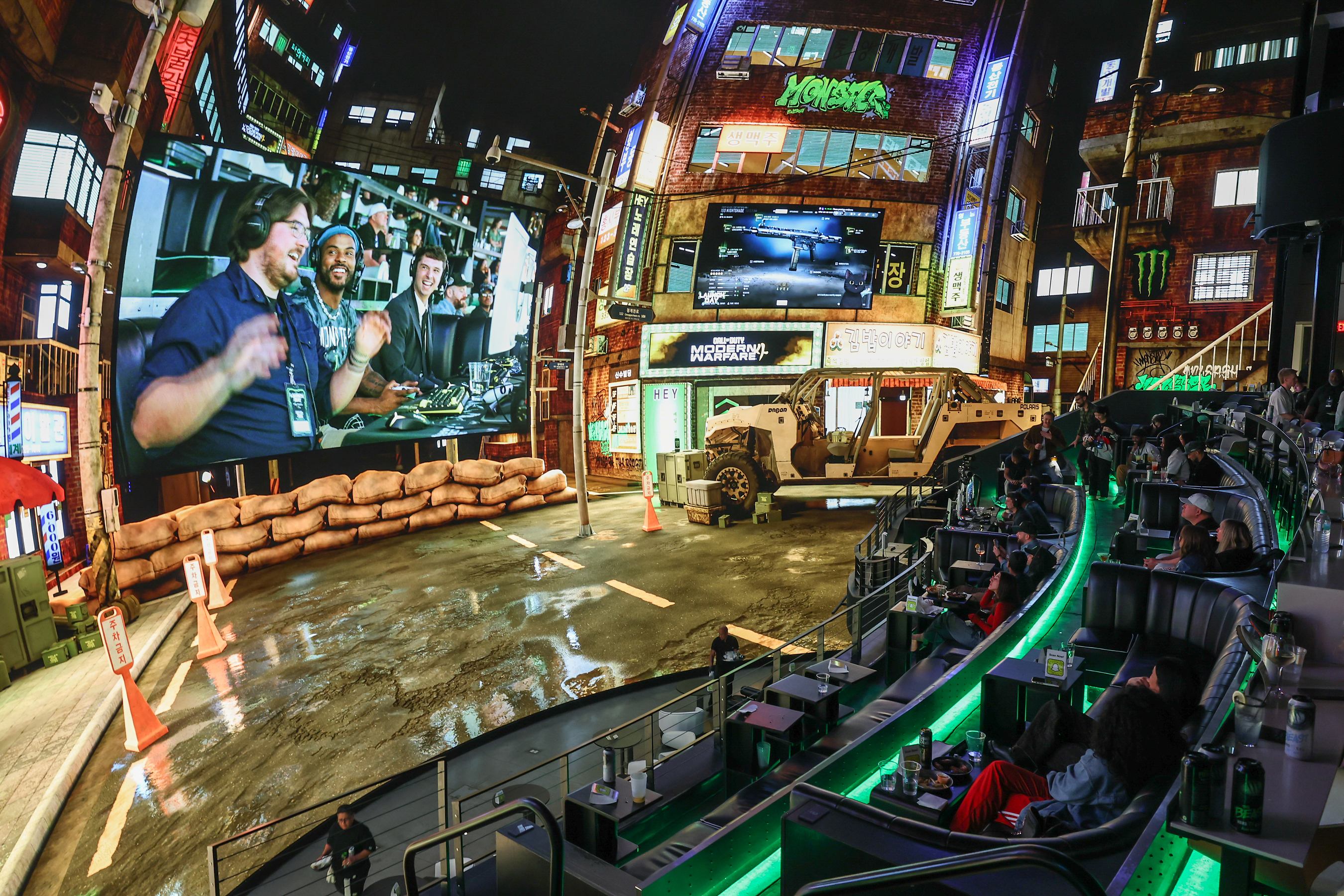
Monster Energy converted Cosm Los Angeles — a venue built around an 87-foot-diameter, 12K LED dome — into a branded launch environment for Call of Duty®: Modern Warfare® 4, and the real story for operators and retail buyers isn't the celebrity guest list. It's how the brand chained a single experiential moment to an extended retail promotion that runs through March 31, 2027.
For foodservice and convenience-channel operators stocking energy drinks, the structure is worth studying. Every qualifying Monster Energy Original Green, Zero Sugar, or Zero Ultra can unlocks 15 minutes of in-game Double XP, while the first five cans progressively unlock exclusive in-game items — including weapon blueprints and Operator Skins. That mechanic turns each unit of product into a functional piece of game content, which gives retail partners a reason to merchandise cans prominently rather than as a commodity SKU.
The Retail Mechanics
Four retail chains — 7-Eleven, Hy-Vee, QuikTrip, and RTG — are running dedicated Monster Energy x Polaris vehicle sweepstakes, with in-store entry via QR codes unique to each banner. This kind of retailer-specific activation is increasingly common in the better-for-you and functional beverage segments, where brands are under pressure to justify shelf placement with traffic-driving programs rather than margin alone. The QR-gated sweepstakes also gives Monster Energy a first-party data capture mechanism tied directly to purchase intent at the point of sale — something that matters as third-party cookie deprecation reshapes CPG digital strategy.
The Cosm event itself featured a Korean-inspired food menu — kimchi mandu, Korean corn cheese nachos, gochujang-glazed wings — alongside complimentary Monster Energy throughout the venue. That menu detail is small but signals how brand launch environments are increasingly expected to deliver credible F&B programming, not just branded snacks. For operators pitching venue rental or catering partnerships to CPG brands running experiential activations, the bar for culinary execution is rising.
What This Signals for Buyers
The partnership structure — linking an entertainment IP (Activision's Call of Duty franchise), a venue technology company (Cosm), a powersports brand (Polaris), and a convenience retail network — reflects a broader trend in beverage brand launch strategy where no single channel carries the full activation weight. Each partner extends reach into a distinct consumer touchpoint: the dome event generates earned media and creator content; the in-game rewards drive repeat purchase; the retail sweepstakes justifies co-op spend and in-store placement.
For operators evaluating beverage supplier partnerships and promotional programming, the Monster Energy model offers a replicable template. The brand is effectively subsidizing retail traffic through entertainment IP, which makes it a stronger negotiating position when approaching buyers at regional grocery or convenience chains. Buyers increasingly want promotional programs with digital hooks — scan-to-win, QR-gated rewards, loyalty integration — rather than standalone price promotions that compress margin without building brand equity.
Jordi Gayola, CMO of the Americas at Monster Energy, framed the event as experiential brand convergence: "It's about bringing our worlds together and creating the kind of unforgettable experience that only Monster Energy can deliver." The more durable takeaway for the trade is that Monster Energy has built a promotional architecture that outlasts the launch night by five months.
Written by Michael Politz, Author of Guide to Restaurant Success: The Proven Process for Starting Any Restaurant Business From Scratch to Success (ISBN: 978-1-119-66896-1), Founder of Food & Beverage Magazine, the leading online magazine and resource in the industry. Designer of the Bluetooth logo and recognized in Entrepreneur Magazine's "Top 40 Under 40" for founding American Wholesale Floral, Politz is also the Co-founder of the Proof Awards and the CPG Awards and a partner in numerous consumer brands across the food and beverage sector.