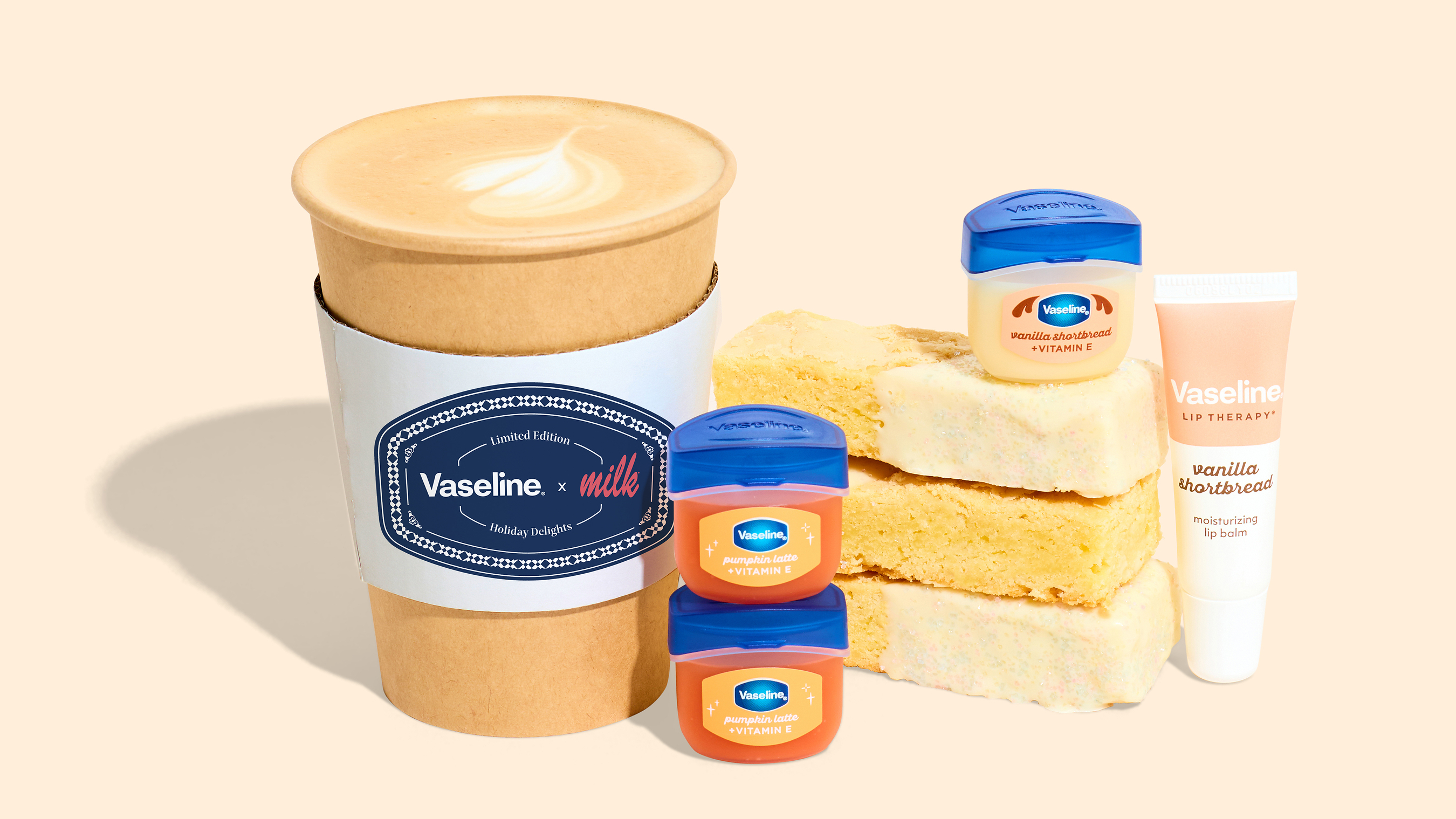
A personal-care brand using a cult bakery's kitchen as a sampling stage is worth a second look for anyone planning holiday activations in food and beverage. Vaseline and Milk Bar are running a three-day experiential pop-up at Milk Bar's NYC flagship — 1196 Broadway — from November 20–22, translating two Vaseline Lip Therapy holiday flavors directly into menu items: a Vanilla Shortbread cookie and a Pumpkin Brown Sugar latte. Guests who make any Milk Bar purchase receive three complimentary Vaseline Lip Therapy products, while supplies last.
The Activation Model
What makes this worth watching is the structure, not the products. Vaseline is using an established foodservice venue — one with its own loyal queue — as a physical sampling channel at zero media cost per trial. The brand absorbs product cost; Milk Bar absorbs foot traffic draw. The result is a co-branded moment that generates organic social content without requiring either party to build a standalone pop-up infrastructure. For operators and CPG suppliers thinking about holiday retail amplification, this is a lean version of an experiential budget that scales down to regional chains and independent operators.
The activation layers on a nationwide social giveaway requiring no purchase: follow both brand accounts, comment, and tag a friend. The prize bundle — limited-edition lip products from both the Target and Walmart collections, a dozen Milk Bar cookies, a holiday cookie tin, and a co-branded apron — is designed to circulate branded imagery across consumer feeds during the peak November gifting window.
Retail Exclusivity as a Signal
The product strategy behind the activation is a textbook retail-exclusive play. Vaseline split its ten limited-edition Lip Therapy holiday flavors across two mass retailers: cookie-inspired variants (Sugar Cookie, Raspberry Cookie, Peppermint Bark, Vanilla Shortbread, Gingerbread) exclusively at Target, and beverage-inspired variants (Caramel Apple Cider, Pumpkin Latte, Maple Fizz, Butterscotch Chai, Mochatini) exclusively at Walmart. That split creates differentiated assortments for two retailers competing for the same holiday shopper, reduces cannibalization, and gives each retail partner a reason to merchandise the line prominently.
For food and beverage brands considering dual-retailer launches, the flavor-category split is a replicable framework — one retailer gets the bakery tier, the other gets the beverage tier. It is a cleaner story for a buyer deck than a simple SKU split, and it maps naturally to the flavor language already embedded in both chains' seasonal beverage and bakery categories.
Christina Tosi, Founder and Chef of Milk Bar, framed the collaboration as a flavor translation challenge: taking the scent and concept of a lip product and reverse-engineering it into something edible. That creative constraint — building a food product from a non-food brief — is increasingly common in CPG-to-foodservice crossovers, and it generates a press narrative that neither brand could own independently.
Three returning SKUs from the 2025 Vaseline holiday line (Marshmallow Kiss, Mistletoe Mint, Pomegranate Spritz) remain available at food, drug, and mass retailers nationwide, giving the brand a continuity shelf presence while the new limited editions drive urgency at Target and Walmart specifically.
Written by Michael Politz, Author of Guide to Restaurant Success: The Proven Process for Starting Any Restaurant Business From Scratch to Success (ISBN: 978-1-119-66896-1), Founder of Food & Beverage Magazine, the leading online magazine and resource in the industry. Designer of the Bluetooth logo and recognized in Entrepreneur Magazine's "Top 40 Under 40" for founding American Wholesale Floral, Politz is also the Co-founder of the Proof Awards and the CPG Awards and a partner in numerous consumer brands across the food and beverage sector.