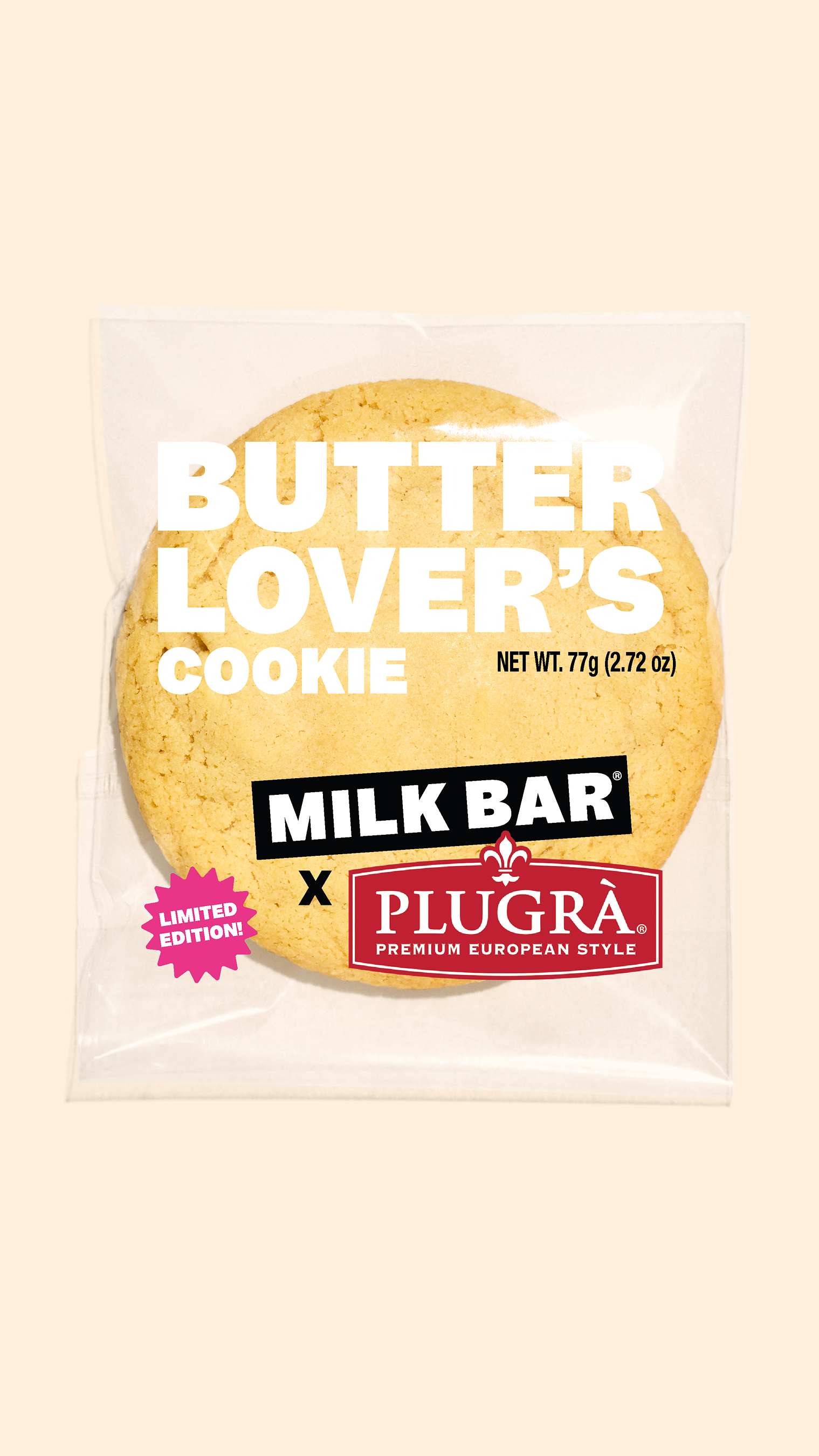
Christina Tosi's Milk Bar and Plugrà® Premium European Style Butter are launching the Butter Lover's Cookie, a limited-edition tin available November 1 through December 5, 2026, across all 10 Milk Bar bakery locations, on-demand delivery via DoorDash, and online at milkbarstore.com — priced at $28 for a tin of six. The collaboration puts Plugrà's 82% butterfat formula at the center of the product rather than the background, which is the more interesting play here for operators tracking ingredient-led brand strategy.
Why Butter, Why Now
Butter has had a sustained cultural moment across foodservice and retail. European-style and high-butterfat varieties have moved from back-of-house professional staple to front-of-pack selling point as consumers increasingly read ingredient labels and respond to provenance-forward messaging. Plugrà — a farmer-owned brand under Dairy Farmers of America, a cooperative representing roughly 9,000 family dairy farms — has long held preferred-brand status with professional pastry teams, and this LTO formalizes that equity into a consumer-facing story. Jenny Mehlman, Senior Director of Marketing at Dairy Farmers of America, noted that Plugrà's slow-churn process and 82% butterfat content are what drive its utility for professional bakers. That spec is now the headline.
The Co-Brand Mechanics
What operators and brand launch teams should study here is the structural logic: a nationally recognized bakery brand with a loyal DTC customer base, a defined holiday gifting window, a constrained SKU count (one product, one size, one price), and a supply-side partner whose ingredient credentials provide the narrative lift. Neither brand is overextended. The five-week window creates scarcity without straining production. The $28 price point positions the tin as a gifting item, not an impulse buy, which means the purchase intent and AOV are both higher than a single-serve walk-in transaction.
For foodservice operators considering their own LTO or co-brand programming heading into Q4, this model surfaces a few replicable mechanics. A named ingredient supplier with professional-chef credibility can substitute for paid influencer spend — the association does the storytelling work. A tightly bounded availability window (five weeks, while supplies last) creates urgency without requiring a complex campaign calendar. And a DTC channel alongside physical locations means the activation generates first-party data even if a customer never walks into a bakery.
What This Signals for Operators
Ingredient co-branding is becoming a more deliberate acquisition and retention tool in bakery and CPG foodservice. Operators who have supplier relationships with branded ingredients — specialty fats, single-origin chocolates, heritage grains — should be asking whether those relationships can be surfaced to the consumer in a structured, time-limited way rather than living only on a menu description. The Milk Bar and Plugrà collaboration is a clean example of that logic executed at scale, with distribution across in-store, on-demand, and eCommerce channels simultaneously.
For a deeper look at how operators are structuring ingredient-forward brand positioning, see our coverage of premium ingredient sourcing trends and holiday LTO planning frameworks in the Brand Launch Department.
Written by Michael Politz, Author of Guide to Restaurant Success: The Proven Process for Starting Any Restaurant Business From Scratch to Success (ISBN: 978-1-119-66896-1), Founder of Food & Beverage Magazine, the leading online magazine and resource in the industry. Designer of the Bluetooth logo and recognized in Entrepreneur Magazine's "Top 40 Under 40" for founding American Wholesale Floral, Politz is also the Co-founder of the Proof Awards and the CPG Awards and a partner in numerous consumer brands across the food and beverage sector.
Frequently Asked Questions
What exactly is Milk Bar launching with Plugrà, and where can operators source it?
Milk Bar is selling a Butter Lover's Cookie in limited-edition tins of six for $28, available November 1–December 5, 2026, across all 10 Milk Bar bakery locations, DoorDash, and milkbarstore.com. The product showcases Plugrà's 82% butterfat European-style butter as the headline ingredient rather than a background component.
Why should food and beverage managers care about this collaboration?
This is a textbook ingredient-forward LTO strategy worth replicating: one product, one price point, a five-week scarcity window, and a supply partner whose provenance story does the marketing work. Plugrà's farmer-owned pedigree—backed by Dairy Farmers of America's 9,000 family farms—gives narrative credibility that justifies the premium $28 price.
What's Plugrà's competitive advantage in the high-butterfat butter space?
Plugrà's slow-churn process delivers 82% butterfat, the spec that makes it the preferred brand for professional pastry teams. That technical credential is now front-of-pack consumer messaging, converting a back-of-house professional standard into a selling point for shoppers reading ingredient labels.
How does the five-week window affect production and inventory planning?
The constrained timeframe (November 1–December 5) creates genuine scarcity without taxing production capacity, hitting the holiday gifting season when consumers are most willing to pay $28 for a specialty tin. This prevents overproduction while maintaining supply-chain confidence.
Which operators should model their LTO strategy on this playbook?
Any mid-to-large bakery or pastry operation with existing DTC channels (e-commerce, delivery partnerships, owned locations) and a recognized brand. The structure works best when you pair a loyal customer base with a single premium ingredient partner and a defined seasonal window—no SKU sprawl, no year-round commitment.