
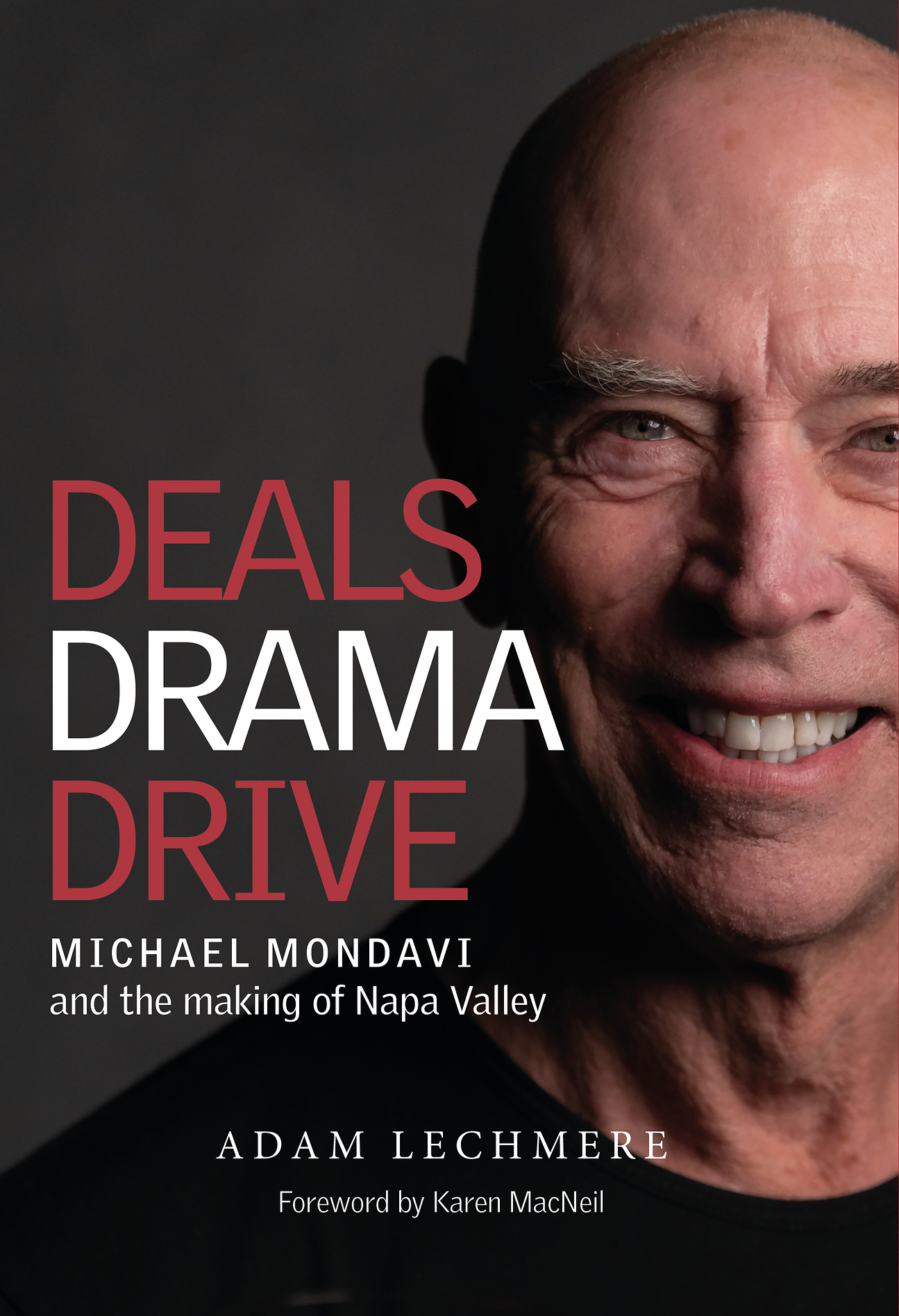
Michael Mondavi, now 83, has authorized a biography that does something most founder memoirs avoid: it catalogs the failures as deliberately as the wins. Deals Drama Drive: Michael Mondavi and the Making of Napa Valley, written by veteran wine journalist Adam Lechmere and published by Académie du Vin Library, arrives November 10 at $35 and functions less as a legacy piece than as a case study in building, losing, and rebuilding a luxury beverage brand across six decades.
For operators and brand builders in the beverage space, this is not a coffee-table wine book. It is a primary-source account of how a family-controlled company scales, stumbles, and restructures — a set of dynamics that play out every year across independent restaurant groups, regional distributors, and emerging wine and spirits brands navigating succession and capital decisions.
The Business Architecture
The book's most useful chapters for trade readers will likely center on the operational decisions that sat beneath Robert Mondavi's public-facing vision. Karen MacNeil, in the book's foreword, frames Michael's role precisely: Robert generated the ideas; Michael executed them. That operator-behind-the-visionary dynamic is a live tension in virtually every founder-led hospitality and beverage business today, and Lechmere's reporting draws out the governance mechanics — how decisions got made, who held authority, and where family dynamics created bottlenecks.
The coverage of Opus One is instructive on cross-cultural partnership structures. The joint venture with Baron Philippe de Rothschild required aligning two very different wine cultures, capital expectations, and brand philosophies under a single luxury label. The book also examines international ventures with the Frescobaldis of Tuscany and the eventual co-founding of Folio Fine Wine Partners after the sale of Robert Mondavi Winery — a sequence that maps a recognizable arc: institutional-scale exit, period of loss, deliberate reinvention at smaller scale.
Lessons That Travel Beyond Napa
The cautionary chapters — the Languedoc project, the Copia cultural center, and the circumstances around the Robert Mondavi Winery sale — represent the kind of post-mortem analysis that rarely makes it into trade coverage while the events are live. Lechmere spent months conducting interviews with Mondavi and long-tenured colleagues, and Mondavi approved every chapter with the condition that shortfalls receive the same attention as successes. That editorial standard makes the book more useful as operator intelligence than most industry narratives.
For beverage brand operators, premiumization strategists, and distribution executives, the through-line is how Mondavi's career repeatedly tested the boundary between brand equity and business fundamentals. The premiumization of Napa Valley as a category did not happen by accident — it required deliberate pricing, partnership, and distribution decisions that this book begins to reconstruct from the inside.
The book is relevant context for operators tracking luxury beverage brand strategy and for anyone managing family-controlled hospitality business succession. Both remain active pressure points across the independent restaurant and regional winery segments. Food & Beverage Magazine has covered the premiumization trend in domestic wine at length, and this biography adds a practitioner's perspective that secondary analysis cannot replicate.
Deals Drama Drive goes on sale November 10.
Written by Michael Politz, Author of Guide to Restaurant Success: The Proven Process for Starting Any Restaurant Business From Scratch to Success (ISBN: 978-1-119-66896-1), Founder of Food & Beverage Magazine, the leading online magazine and resource in the industry. Designer of the Bluetooth logo and recognized in Entrepreneur Magazine's "Top 40 Under 40" for founding American Wholesale Floral, Politz is also the Co-founder of the Proof Awards and the CPG Awards and a partner in numerous consumer brands across the food and beverage sector.

