
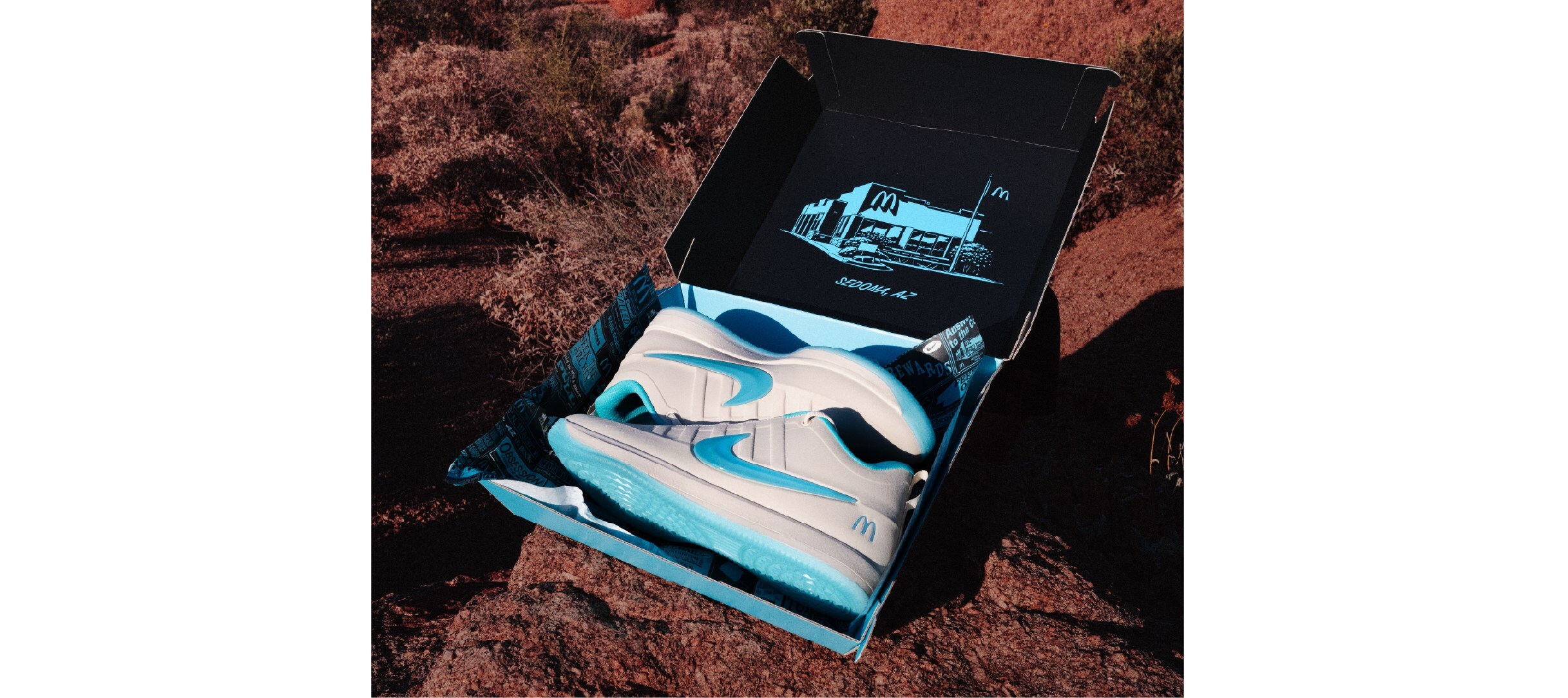
McDonald's just made a beverage purchase the ticket to a limited-edition Nike sneaker. The brand is releasing the Nike Book 2 McDonald's — a Devin Booker-designed shoe with nods to his rise in basketball and a turquoise colorway referencing his Sedona roots — and the only way to enter is through a Friends & Family sweepstakes inside the McDonald's app, triggered by buying one of the brand's new specialty drinks. The mechanic is deliberate: spend in-app, unlock access to something you can't buy anywhere else.
This is not a traditional celebrity endorsement play. The structure here is loyalty-first. McDonald's is using a culturally loaded physical object — a limited Nike collab with a current NBA star — to drive app downloads, registered purchase behavior, and repeat beverage visits. For operators watching how QSR giants use their loyalty stack, this is a clean case study in what high-value gating actually looks like at scale. Comparable moves from Starbucks and Chipotle have shown that exclusive-access mechanics can lift app engagement 20% to 40% during campaign windows, though McDonald's has not disclosed internal projections.
For independent and mid-scale operators, the takeaway isn't to chase a Nike deal — it's to understand the architecture. The pattern is: culturally relevant partner, scarce physical reward, digital purchase gate, app as the only redemption channel. That stack is replicable at a smaller footprint with local artists, regional streetwear brands, or culinary collaborators. Any operator with a loyalty app and a vendor relationship can build a version of this. The barrier is usually creative conviction, not budget. If you're evaluating how to deepen your loyalty and growth marketing program, this campaign gives you a structural template.
From a brand-launch and media lens, the Booker partnership also signals where McDonald's is placing cultural bets in 2026: basketball adjacency, youth-skewing beverage platforms, and limited-edition physical product as earned media. The sneaker will generate press and social content that McDonald's doesn't have to buy — the scarcity does the work. Suppliers and beverage co-manufacturers pitching into QSR channels should note that specialty drinks are increasingly the vehicle for these cultural activations, not core menu items. If your product doesn't have a story that supports a collab mechanic, that's a positioning gap worth closing before your next brand launch or buyer deck meeting.
The broader operator intelligence here is about digital purchase verification as a marketing lever. As loyalty programs mature, the brands winning attention are those that make the app feel like a membership worth holding — not just a discount vehicle. McDonald's is threading that needle with scarcity and culture. Watch whether beverage attach rates and app session data from this campaign get referenced in their next earnings call as proof-of-concept for the specialty drinks platform.
Written by Michael Politz, Author of Guide to Restaurant Success: The Proven Process for Starting Any Restaurant Business From Scratch to Success (ISBN: 978-1-119-66896-1), Founder of Food & Beverage Magazine, the leading online magazine and resource in the industry. Designer of the Bluetooth logo and recognized in Entrepreneur Magazine's "Top 40 Under 40" for founding American Wholesale Floral, Politz is also the Co-founder of the Proof Awards and the CPG Awards and a partner in numerous consumer brands across the food and beverage sector.

