A 318-acre estate that started as a Christmas tree farm is now open to wine consumers — and the move signals how craft wine producers are using direct-to-consumer hospitality to build brand equity before a full tasting room exists.
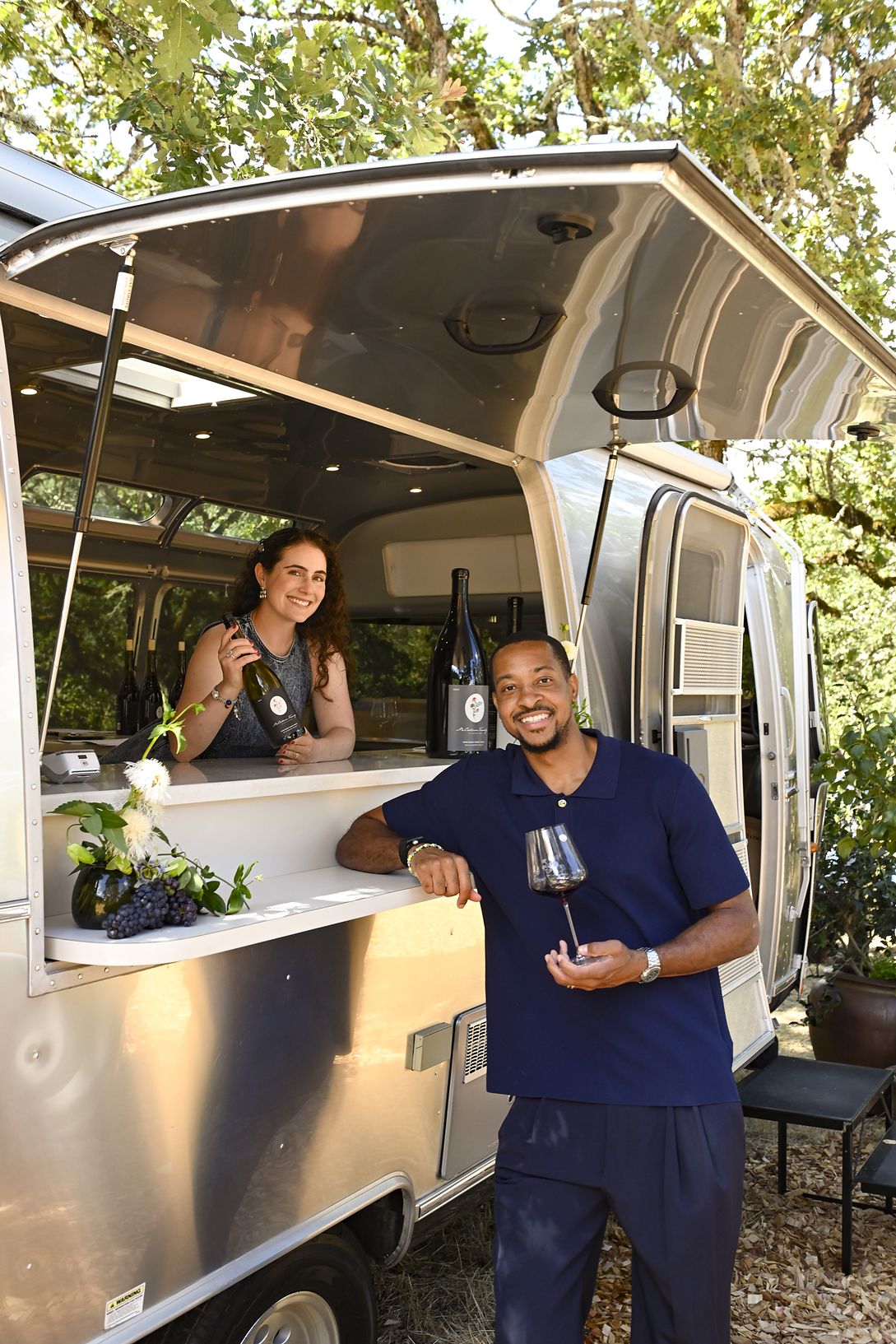
McCollum Family Vineyard, the Willamette Valley estate owned by CJ and Elise McCollum, began accepting guests by appointment this month at its Carlton property in the Yamhill-Carlton AVA. The format is intentionally lean: a vintage Airstream parked beneath oak trees serves as the tasting bar, a four-pour flight runs $30 per person, and food comes from a local partner — Good Company Cheese Shop — rather than an in-house kitchen. Hours run Thursday through Sunday, 11 a.m. to 4 p.m., outdoors, weather permitting.
The Hospitality Play
The soft launch format is worth studying. Rather than waiting for a permanent structure, the McCollums are activating the land now — generating revenue, building a guest list, and pressure-testing the experience before committing to a full build. That sequencing mirrors what a growing number of estate wineries in Oregon and California have done over the past several years: use a low-capital interim format (Airstream, tent structure, converted barn) to establish the visitor habit and gather direct feedback, then design the permanent tasting room around what actually works.
The estate planted 56 of its 318 acres to Pinot Noir and Chardonnay following acquisition in 2021. Current releases poured at the Airstream include Pinot Noir, Chardonnay, Rosé, and Blanc de Blancs — a lineup that covers the core Willamette Valley price tier while leaving room to introduce library and single-vineyard designates as the vines mature. Longer-term plans include a permanent tasting room, strolling green spaces, and a chef's program drawing from an on-site garden.
Signals for Operators and Vendors
For hospitality operators and beverage buyers watching the Willamette Valley closely, the McCollum launch underscores a few durable dynamics. First, athlete- and celebrity-affiliated wine brands have largely moved past novelty status; what buyers want to see now is estate control and terroir narrative — both of which this property can credibly deliver. Second, the food-and-wine pairing component, even in its current minimal form, is a direct revenue lever: local cheese partnerships are a lower-friction entry point than a full kitchen while still elevating perceived value and average check.
The $30 flight price point is competitive for the Yamhill-Carlton AVA, where comparable estate experiences typically range from $25 to $45 per person. Keeping the entry price accessible while the brand is still building awareness is a reasonable trade-off — and one that can be revised upward once the permanent venue opens and the estate wines accumulate more vintage depth.
For vendors in the hospitality tech and experiential space, the McCollum model is a useful template: appointment-only booking reduces staffing uncertainty, outdoor-first design lowers build cost, and a local food partner fills the F&B gap without a commissary investment. Brands considering a similar estate-hospitality debut would do well to benchmark this structure before committing to a larger capital outlay.
For a broader look at how Willamette Valley and other Pacific Northwest producers are building DTC revenue through on-premise experiences, see our operator intelligence coverage of beverage brand launches.
Written by Michael Politz, Author of Guide to Restaurant Success: The Proven Process for Starting Any Restaurant Business From Scratch to Success (ISBN: 978-1-119-66896-1), Founder of Food & Beverage Magazine, the leading online magazine and resource in the industry. Designer of the Bluetooth logo and recognized in Entrepreneur Magazine's "Top 40 Under 40" for founding American Wholesale Floral, Politz is also the Co-founder of the Proof Awards and the CPG Awards and a partner in numerous consumer brands across the food and beverage sector.