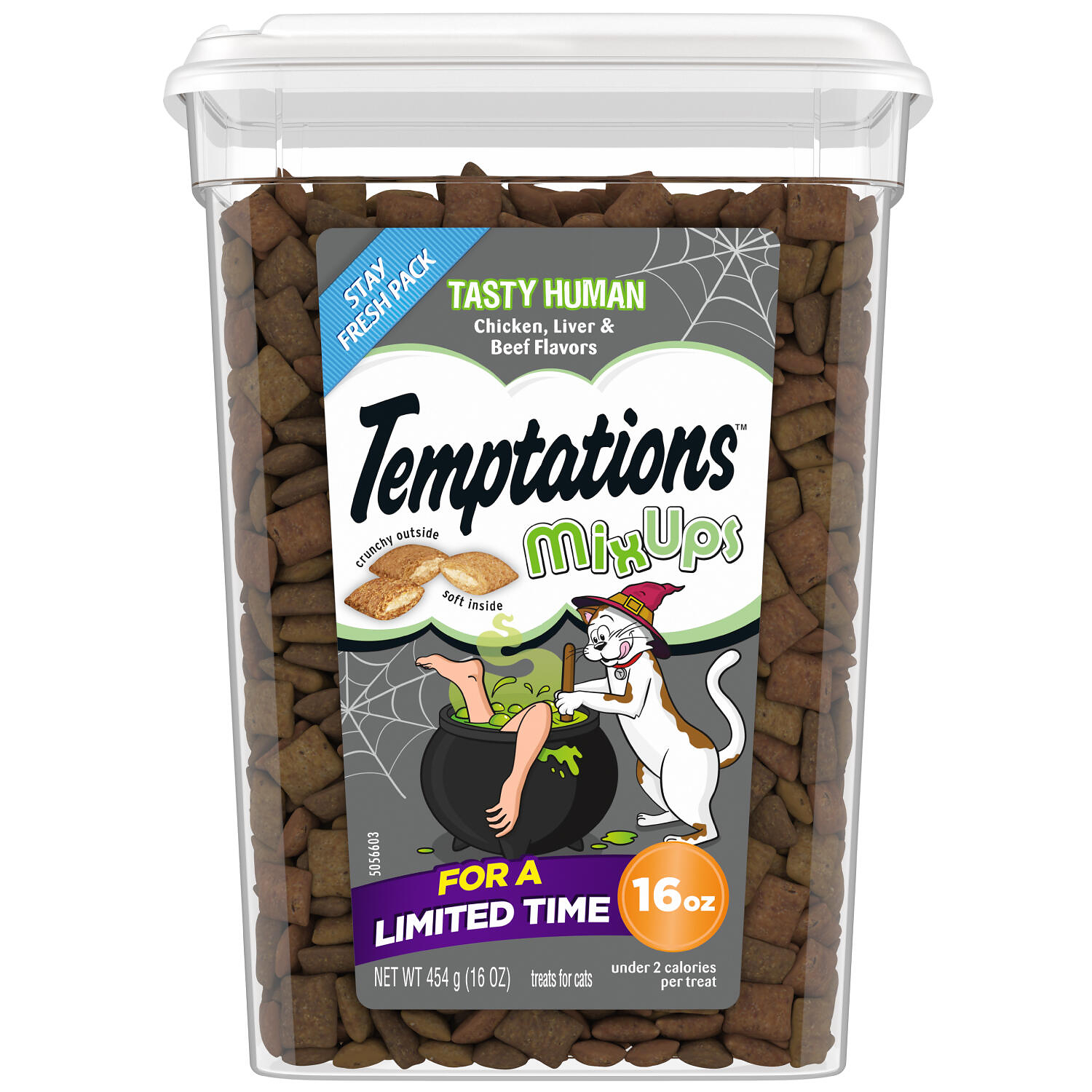
Mars Pet Nutrition's Temptations brand is placing two limited-edition Halloween cat treat varieties — MixUps Tasty Human and Creepy Catnip — at major retail accounts including Target and Chewy this fall, available in 3 oz. and 16 oz. pack sizes while supplies last. The move is a returning seasonal play, not a new launch, which tells buyers something more useful than a debut announcement: this SKU strategy is generating enough velocity to justify annual re-execution.
Seasonal SKU Economics
For category managers and retail buyers, the structure of this drop is worth examining. Both varieties run on a scarcity-and-repeat model — limited availability across two pack sizes at accessible price points, with sub-2-calorie-per-treat positioning that lets the brand sit adjacent to premium health-forward pet products without competing directly on nutrition claims. The crunchy-outside, soft-inside texture format is Temptations' core product architecture, meaning manufacturing changeover is minimal and margin structure likely mirrors the base line. That operational efficiency is what makes seasonal limited editions viable at scale for a $65 billion parent company like Mars, Incorporated.
Lukasz Wysoczanski, Vice President of Care & Treats at Mars Pet Nutrition North America, framed the release around cultural belonging — positioning cat parents as a household segment that wants to include pets in seasonal rituals. That framing is deliberate. Pet humanization continues to be one of the strongest structural tailwinds in the broader food and beverage supply chain, and seasonal treat drops are a low-friction way to capture incremental basket spend without displacing everyday SKUs.
What This Signals for Operators
For foodservice and hospitality operators adjacent to pet-friendly retail — hotel gift shops, pet-friendly resort amenity programs, specialty food retail buyers — the Temptations seasonal playbook offers a replicable template. Returning limited editions perform better than first-year launches because the consumer education cost is already absorbed. Retailers know the SKU converts; buyers can plan allocation with historical sell-through data rather than forecasting blind.
This also has implications for brands in food and beverage brand launch planning cycles. The Mars approach — two SKUs, two pack sizes, two major retail partners, seasonal relaunch rather than perpetual innovation — is a capital-efficient way to maintain brand salience during a high-purchase-intent window without the supply chain complexity of a net-new product. Suppliers and co-manufacturers pitching seasonal limited-edition programs to buyers should note that Temptations is essentially running a proof-of-concept for this model at the highest volume tier in the pet treat category.
For those tracking retail distribution and shelf strategy, the Chewy placement is also notable. Chewy's subscription model means a seasonal SKU that converts once has the potential to re-enter auto-ship queues — a retention mechanic that doesn't exist in traditional brick-and-mortar seasonal buys. Brands and their broker networks should be structuring seasonal pitches to e-commerce retail partners with that subscription loop in mind.
Written by Michael Politz, Author of Guide to Restaurant Success: The Proven Process for Starting Any Restaurant Business From Scratch to Success (ISBN: 978-1-119-66896-1), Founder of Food & Beverage Magazine, the leading online magazine and resource in the industry. Designer of the Bluetooth logo and recognized in Entrepreneur Magazine's "Top 40 Under 40" for founding American Wholesale Floral, Politz is also the Co-founder of the Proof Awards and the CPG Awards and a partner in numerous consumer brands across the food and beverage sector.