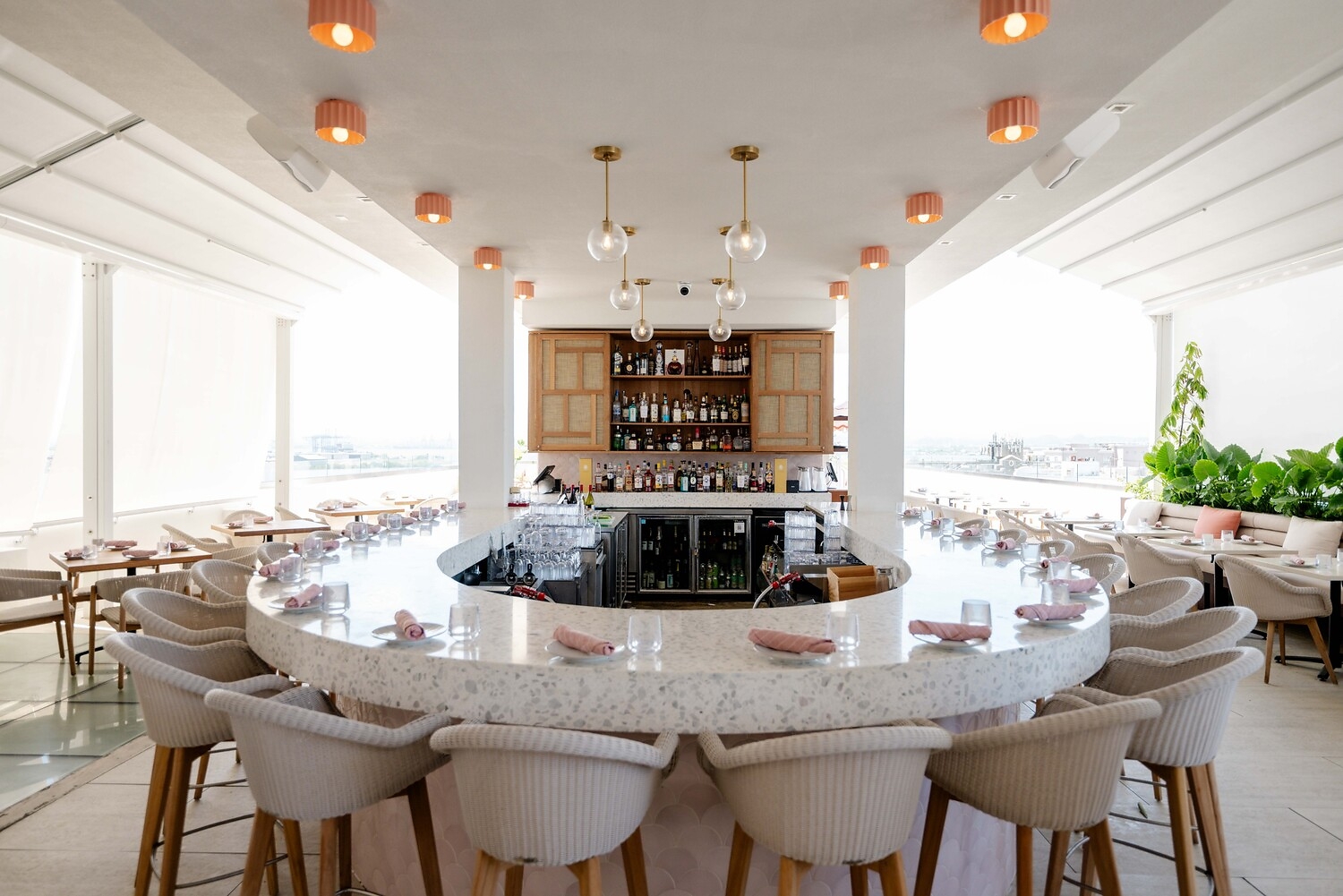
Nine new or repositioned food-and-beverage concepts are going live across Marriott International properties in Mexico, Puerto Rico, Aruba, St. Kitts, and the Dominican Republic — a coordinated push that reframes hotel dining as a destination draw rather than a guest amenity.
The scale matters: this is not a single flagship opening but a portfolio-wide F&B refresh spanning Luxury (JW Marriott), Premium (Sheraton, Westin), Select (Aloft), and Autograph Collection properties simultaneously. For regional operators and food-and-beverage vendors, the move signals that the Caribbean and Mexico corridor is absorbing meaningful capital investment in culinary programming right now.
The Concept Mix
The openings range from white-tablecloth to casual-social. At JW Marriott Cancun Resort & Spa, Sybil debuts as a Mediterranean concept built around mezze, shared plates, and cocktails drawing from Greek and Moroccan influences — with ingredients sourced from the resort's on-property JW Garden. In Mexico City, Sendero at JW Marriott Hotel Mexico City Polanco anchors its menu around ancestral open-fire technique and a tasting journey called Mapa Culinario, spotlighting corn, chiles, beans, and mezcal as hero ingredients.
In San Miguel de Allende, Ayolí at Cleviá San Miguel de Allende, Autograph Collection, grounds contemporary Mexican cuisine in pre-Hispanic tradition. On the Pacific coast, Gaviotas at Sheraton Buganvilias Resort & Convention Center Puerto Vallarta — a four-time World Culinary Awards honoree for Latin America's Best Hotel Fine Dining — continues to anchor that property's premium positioning with elevated birria and truffle-finished corn preparations that demonstrate how fine-dining technique applied to regional ingredients is becoming a competitive differentiator across the corridor.
The Caribbean Signal
In Puerto Rico, two properties are running divergent strategies in the same market. Alma San Juan, Autograph Collection, is leaning into hyper-local sourcing with Andaluz — a Spanish-Caribbean fusion concept built on collaborations with local farmers and guest chefs. Aloft San Juan, by contrast, is refreshing its W XYZ® Bar with a cocktail-and-shareables program targeting social-scene volume, featuring a Tripleta Sandwich alongside craft cocktails, underscoring how select-service properties increasingly compete on beverage programming rather than cuisine alone.
In Aruba, Marriott Resort & Stellaris Casino hosted an exclusive dinner with chef Marcus Samuelsson during the Auténtico Food Festival — a chef-partnership model that generates PR lift without the overhead of a permanent concept. At St. Kitts Marriott Resort & The Royal Beach Casino, three micro-concepts are being added: a rotisserie chicken counter, a poolside food truck serving Mexican-inspired street food, and an artisan ice cream shop — a cluster approach that expands F&B revenue per guest without requiring a full-service restaurant build-out.
The November 20–21 Culinary Weekend at The Westin Puntacana Resort brings Brazilian chef Tássia Magalhães and her restaurant Nelita — currently ranked No. 12 on Latin America's 50 Best Restaurants — to the Dominican Republic for an exclusive dinner. Event-driven gastronomy of this profile is a proven demand-generation tool that hotel groups use to fill shoulder-season inventory while generating media coverage that extends the concept's reach beyond the event itself.
What Operators Should Watch
For regional F&B operators, suppliers, and hospitality vendors, Marriott's coordinated rollout carries several intelligence signals. Hotel groups at this scale do not launch nine concepts simultaneously without contracted sourcing, equipment procurement, and staffing pipelines already in motion. Local and regional vendors — particularly specialty ingredient suppliers, craft spirits distributors, and equipment providers — should be tracking which properties are sourcing locally versus centrally, as that determines where vendor relationships are most accessible.
The emphasis on ancestral technique, open-fire cooking, and hyper-local ingredients across multiple concepts also reflects a broader menu trend documented in recent hospitality research: guests in leisure markets are increasingly selecting dining experiences based on cultural authenticity, not simply price point or amenity tier. That shift has direct implications for how independent restaurants in these same markets position their own menus and communicate provenance to competing for the same discretionary spend that hotel F&B programs are actively capturing.
For agencies and brand consultants serving the hospitality sector, the Marriott rollout reinforces that culinary programming is now a core marketing function, not a back-of-house operational category. The investment in concept identity, chef partnerships, and event-driven programming reflects budgets that increasingly overlap with what used to be classified as brand marketing.
Read more on how hotel groups are activating chef partnership models for F&B brand differentiation and how culinary event programming drives off-peak revenue in leisure markets.
Written by Michael Politz, Author of Guide to Restaurant Success: The Proven Process for Starting Any Restaurant Business From Scratch to Success (ISBN: 978-1-119-66896-1), Founder of Food & Beverage Magazine, the leading online magazine and resource in the industry. Designer of the Bluetooth logo and recognized in Entrepreneur Magazine's "Top 40 Under 40" for founding American Wholesale Floral, Politz is also the Co-founder of the Proof Awards and the CPG Awards and a partner in numerous consumer brands across the food and beverage sector.