The Launch Slate
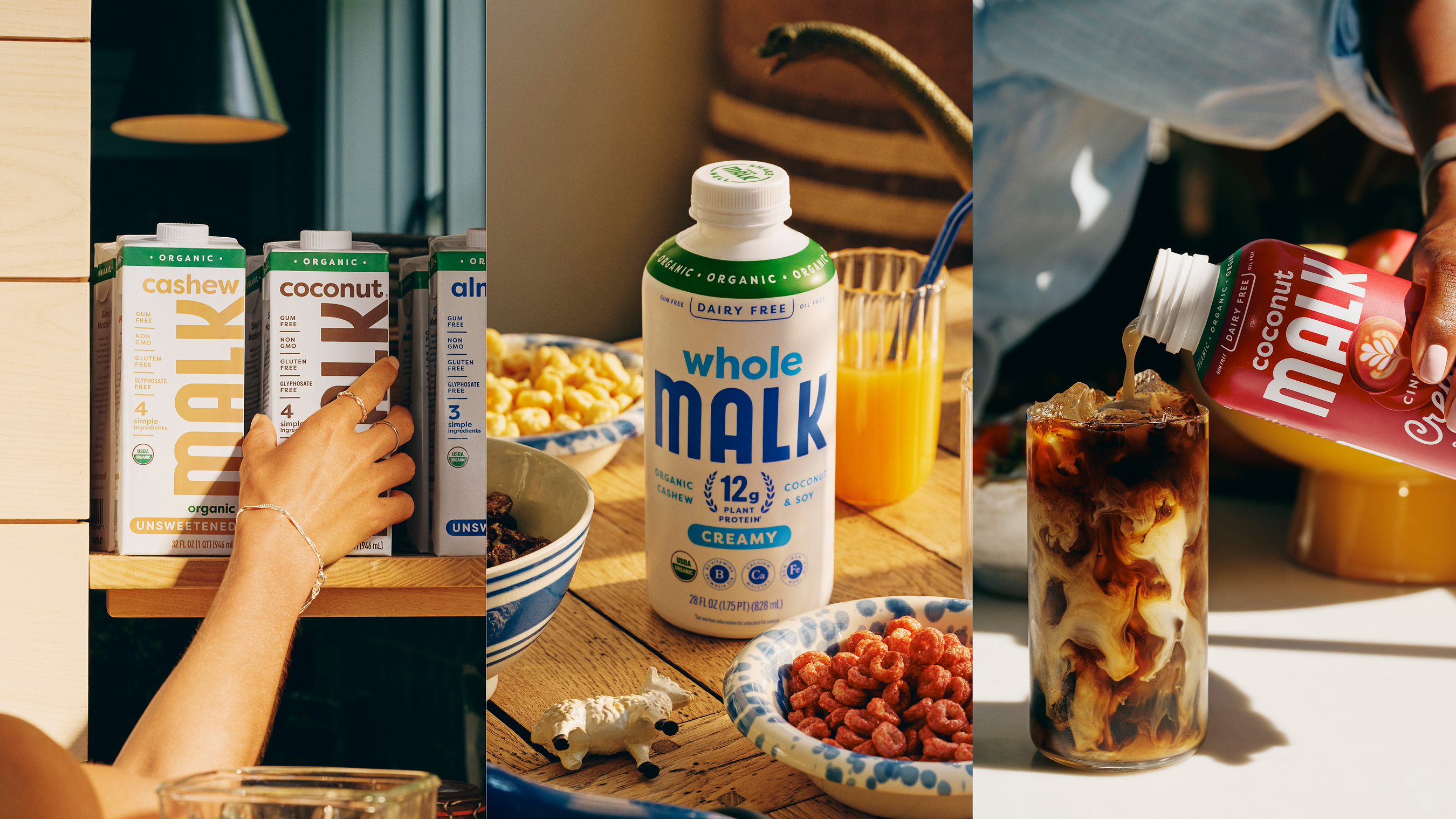
MALK Organics is entering fall 2026 with its deepest product expansion to date: four new SKUs spanning protein milk, shelf-stable formats, and a cinnamon coconut creamer — all built around the brand's core constraint of zero oils, gums, natural flavors, or fillers. The anchor launch is Whole MALK, an organic blend of coconut, cashew, soy, and pea protein delivering 12 grams of plant protein per serving, fortified with calcium, iron, and vitamins. It is the first product MALK has positioned explicitly as a dairy milk replacement rather than a category alternative.
Joining Whole MALK are shelf-stable Coconut and Cashew Milk SKUs — moving two of the brand's established refrigerated products into pantry-aisle distribution — and a Cinnamon Creamer made with real cinnamon and an organic coconut base. The creamer extends a line MALK introduced earlier in 2026 and is already available at Whole Foods Market, Target, Sprouts, Wegmans, and Publix at $6.49. Whole MALK retails for $6.99 at Whole Foods, Target, and Sprouts. The shelf-stable formats are currently online via Amazon at $6.99.
What the Numbers Say
The launches are timed to MALK's strongest sales stretch on record. The brand reported 29.0% sales growth year to date, with 46.0% growth specifically in traditional and mass retail. Across multi-outlet, natural, and specialty channels, MALK is the fastest-growing brand among the top 10 refrigerated plant-based milk labels at 18.0% velocity. Total 2025 sales cleared $94 million on 1.4 million units. The portfolio has expanded from three products in 2021 to 20 today — a pace that most natural-channel brands take a decade to achieve.
For buyers and category managers evaluating plant-based beverage sets, those numbers shift the conversation. MALK is no longer a premium niche play competing on ingredient purity alone; the shelf-stable expansion and protein positioning put it on the same planogram shortlist as mainstream alt-milk incumbents. Operators running café programs or foodservice ingredient sourcing should note the creamer portfolio build specifically — clean-label creamers without natural flavors remain a white space in most hospitality and food-and-beverage procurement specs.
Cultural Pull and Distribution Signals
Beyond retail velocity, MALK has built meaningful earned-distribution through brand partnerships. The brand serves as the exclusive dairy alternative in Erewhon's celebrity smoothie collaborations — including programs with high-profile talent — and has active co-branded relationships with Kith Treats, Coconut Cult, Cha Cha Matcha, and Los Angeles' Leora Cafe. These are not paid placements; partner brands are choosing to build on MALK's formulation standards rather than sourcing a private-label equivalent. That dynamic is a leading indicator of where premium foodservice accounts and specialty retailers are heading on ingredient sourcing.
For operators evaluating alt-milk suppliers, MALK's shelf-stable entry is the most operationally relevant development. Shelf-stable SKUs reduce cold-chain dependency, simplify back-of-house storage, and open procurement to distribution partners that don't manage refrigerated logistics. If the Amazon launch generates the velocity MALK's refrigerated line has shown in natural and specialty, expect broader foodservice distribution conversations to follow in 2027. Operators interested in plant-based beverage sourcing and foodservice brand strategy should track this brand's next distribution announcement closely.
The protein story also deserves operator attention. At 12 grams per serving, Whole MALK meets the threshold that wellness-forward café and hotel F&B programs are increasingly requiring from their alt-milk options. Ryan Rouse, President of MALK, framed the expansion as coverage of "time, place, and routine" rather than pure volume growth — a positioning discipline that distinguishes brands built for longevity from those chasing trend cycles. Operators building brand-launch-ready beverage programs will find MALK's category entry playbook instructive regardless of whether they stock the product.
Written by Michael Politz, Author of Guide to Restaurant Success: The Proven Process for Starting Any Restaurant Business From Scratch to Success (ISBN: 978-1-119-66896-1), Founder of Food & Beverage Magazine, the leading online magazine and resource in the industry. Designer of the Bluetooth logo and recognized in Entrepreneur Magazine's "Top 40 Under 40" for founding American Wholesale Floral, Politz is also the Co-founder of the Proof Awards and the CPG Awards and a partner in numerous consumer brands across the food and beverage sector.