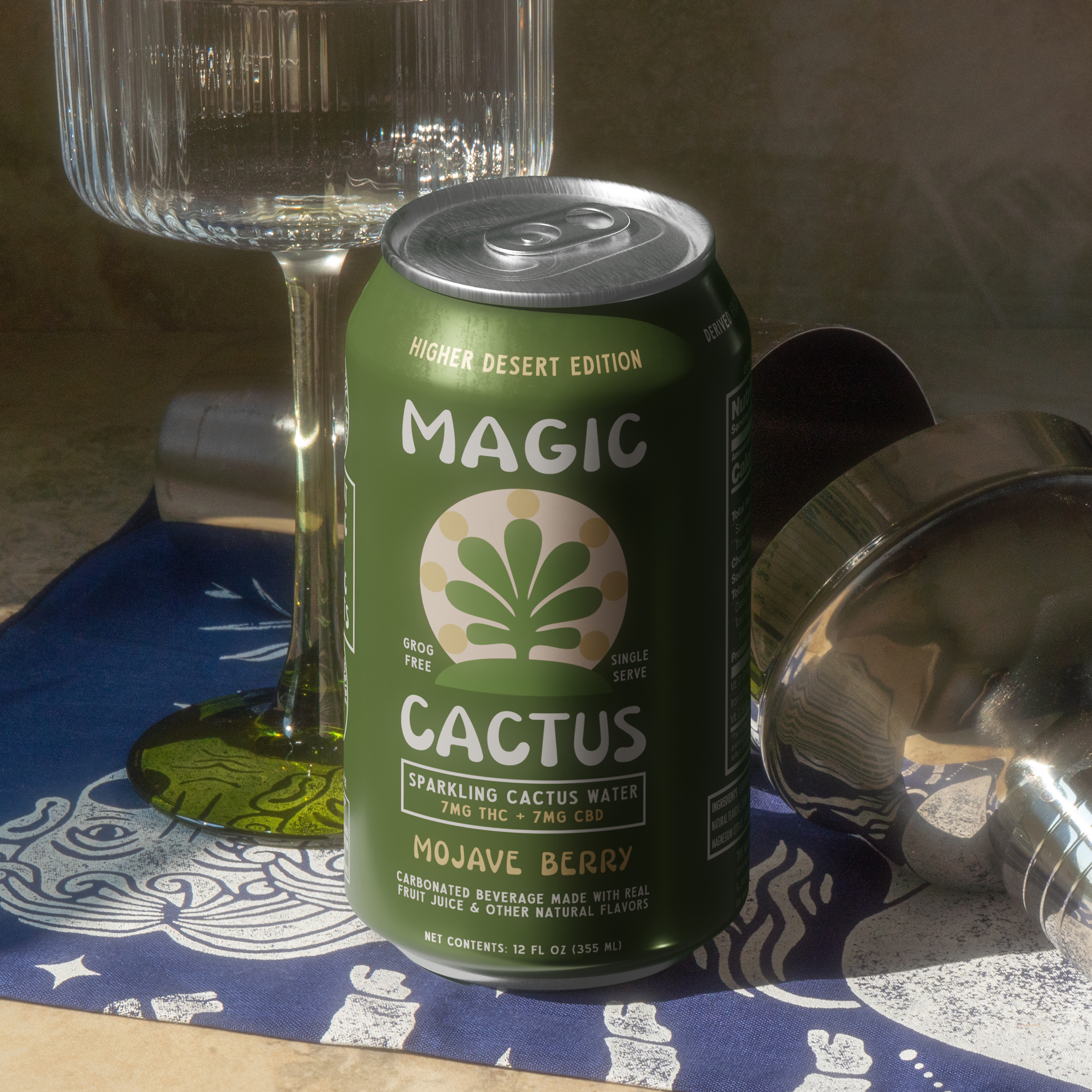
Hemp beverage brand Magic Cactus sold out its first batch of Higher Desert Edition — a 7mg THC / 7mg CBD sparkling cactus water — on pre-order alone before restocking mid-September at all Sprouts Farmers Market locations in Texas and Florida, and direct-to-consumer online. The launch is paired with a follow-on investment from Listen Ventures, the Chicago-based consumer venture firm that led the brand's Seed round in early 2025.
The Product and the Bet
Higher Desert Edition arrives in a single flavor, Mojave Berry, at $19.99 per 4-pack — a 12-ounce single-serve built around a 1:1 THC-to-CBD ratio on a sparkling prickly pear cactus base with real fruit juice, L-theanine, magnesium, 20 calories, and no added sugar. That potency sits below the 10mg per-container benchmark that Jonny Locarni, Founder and CEO, says outsells everything else in most retail channels, but it is a deliberate step above the brand's microdose core lineup. The positioning is clear: one-and-done occasion, not a sessionable set.
The distinction matters for buyers evaluating hemp shelf space. Magic Cactus ranked number one in Sprouts' hemp THC beverage set for the first half of 2026 per SPINS data, and its four core SKUs — Lavender Raspberry, Spiced Peach, Wild Black Cherry, and Watermelon Hibiscus — are already ranged alongside the new limited edition at those Sprouts doors. Wholesale revenue is up more than 200.0% year to date versus the same period in 2025, driven almost entirely by the grocery rollout that began in roughly 120 Sprouts stores in January 2026 and expanded to The Fresh Market in North Carolina and Florida in February.
Why Grocery Is the Strategic Moat
Magic Cactus has made a deliberate choice to build in the everyday grocery aisle rather than in smoke shops or convenience, channels where potency-first positioning dominates. That grocery-first footprint now accounts for approximately 40.0% of the brand's total door count. The math on why is straightforward: Sprouts shoppers already read ingredient panels, already seek functional alternatives, and represent exactly the label-literate consumer who is most likely to trial a low-dose hemp beverage as a conscious occasion choice rather than a novelty purchase.
For operators and buyers watching the category, the sell-out pre-order signals that demand for a higher-but-still-accessible tier of hemp beverage is real at grocery — not just in direct-to-consumer or specialty channels. Jeff Cantalupo, Founder and Managing Partner at Listen Ventures, framed it plainly: "There is a sea of hemp THC beverages in the market but very few brands. Magic Cactus has built a cult following, a brand that people want to be seen drinking."
Regulatory Timing and What's Next
The launch lands during a narrow regulatory window. Federal legislation passed in November 2025 capped finished hemp products at 0.4mg THC per container — a threshold the industry views as operationally impractical. Congress delayed the effective date to December 11, 2026, giving brands and retailers breathing room while a more workable framework is negotiated. Magic Cactus has publicly aligned with a regulated market that includes dosing standards, age gating, and third-party testing, a posture that reduces buyer risk at the grocery level.
For procurement teams and category managers, the regulatory overhang is the most important variable to track. Brands that have built credibility at a major natural grocer with clean label credentials and transparent dosing are better positioned to survive a tightening framework than high-potency, specialty-channel players. The brand-launch playbook here — sell-out limited SKU, follow-on investment, grocery anchor, functional ingredients — is one other emerging beverage brands in the functional and better-for-you beverage space will study closely heading into 2027 planning cycles.
Written by Michael Politz, Author of Guide to Restaurant Success: The Proven Process for Starting Any Restaurant Business From Scratch to Success (ISBN: 978-1-119-66896-1), Founder of Food & Beverage Magazine, the leading online magazine and resource in the industry. Designer of the Bluetooth logo and recognized in Entrepreneur Magazine's "Top 40 Under 40" for founding American Wholesale Floral, Politz is also the Co-founder of the Proof Awards and the CPG Awards and a partner in numerous consumer brands across the food and beverage sector.