Eight years after launching as a direct-to-consumer baby food subscription, Little Spoon is accelerating its omnichannel pivot with simultaneous October launches inside H-E-B, Wegmans, and Harris Teeter—adding approximately 570 stores across Texas, the Northeast, Mid-Atlantic, and Southeast. The move follows what the company describes as a top-decile velocity performance at Target, its first retail partner, where it gained share against legacy category incumbents. For buyers and brand managers tracking the kids' nutrition segment, this signals that digitally native food brands are now mature enough to compete on shelf—not just on screen.
Depth Over Distribution
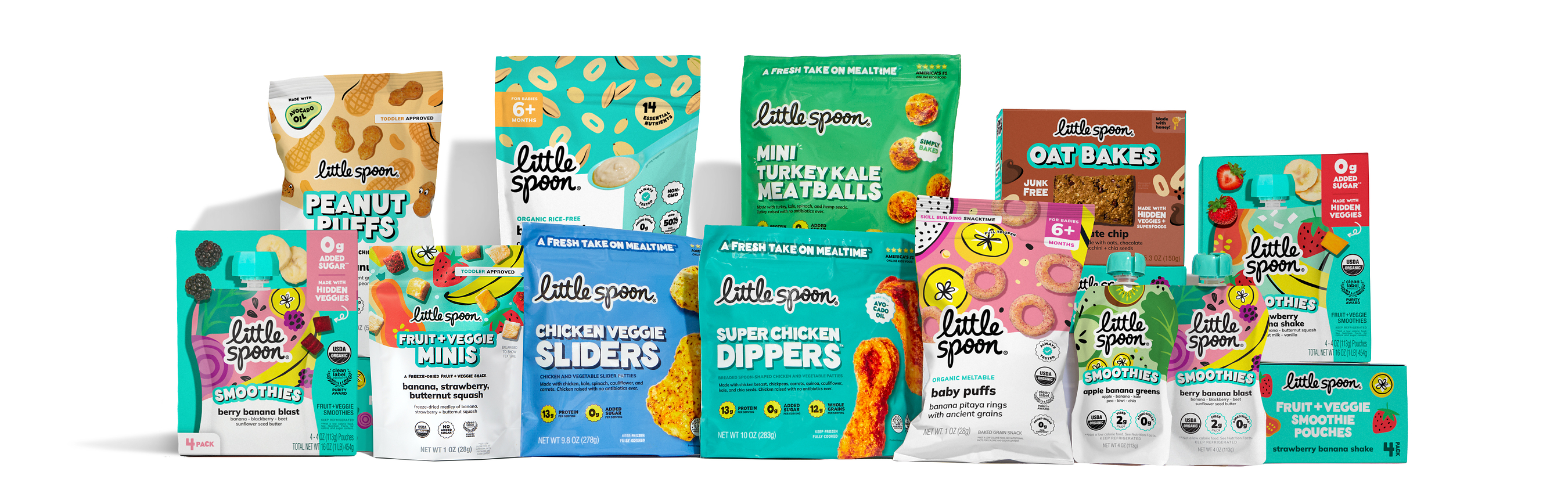
The strategic logic here is worth studying. Rather than chasing door count with a single hero SKU, Little Spoon is entering each new retailer with between 21 and 32 products spanning ambient, refrigerated, and frozen—mirroring the multi-category feeding platform it built through its DTC subscription. H-E-B receives the broadest assortment at 32 products. Wegmans launches with 21 products across 110 stores in nine Northeast states. Harris Teeter opens 21 products across 260-plus Mid-Atlantic and Southeast locations. That SKU density is a deliberate shelf-capture play: owning multiple aisles and stages of childhood reduces the risk of single-SKU delisting and builds basket size in a way that narrow entries cannot.
The data layer underneath this expansion is equally instructive. Little Spoon's eight years of first-party consumer data allowed the brand to map demand before committing to retail partners—New Jersey ranks as its number-one state per capita, making Wegmans a near-obvious fit. Texas is its second-largest state by customer base, validating the H-E-B launch. This is the DTC-to-retail intelligence playbook in its clearest form: subscription brands accumulating zip-code-level purchase data and then using it to negotiate regionally targeted retail placement, rather than relying on broker relationships or syndicated category data alone.
What Buyers Should Watch
For grocery buyers and category managers, Little Spoon's approach raises the bar on what a credible retail pitch looks like from a digitally native brand. Arriving with verified regional demand data, proven velocity at a mass retailer, and a portfolio deep enough to span multiple aisles materially de-risks the buyer conversation. Vendors and food brokers working with emerging CPG brands should take note: the era of launching a single refrigerated item and hoping for reorder is giving way to structured multi-category entries backed by first-party analytics.
The broader kids' food and family nutrition segment is in active consolidation between legacy players and next-generation brands. Little Spoon's profitability milestone—reached before this retail expansion—means it enters these partnerships from a position of financial stability rather than growth-at-all-costs pressure. Co-Founder and CEO Ben Lewis framed the retailer selection around community trust and consumer affinity rather than pure distribution scale, a positioning choice that aligns the brand with premium regional chains rather than discounters. That decision has margin and brand-equity implications that operators evaluating similar expansions should weigh carefully.
For operators and suppliers tracking retail-readiness and brand launch strategy, Little Spoon's move is a case study in sequencing: build DTC proof of concept, accumulate first-party data, prove velocity at one mass retailer, then use that evidence to negotiate broad assortment entry at high-affinity regional chains. It is also a signal that regional grocers—H-E-B, Wegmans, and Harris Teeter chief among them—are increasingly the proving ground brands want before pursuing national rollouts. Marketers following CPG distribution trends and operator intelligence should expect more DTC-first brands to replicate this sequenced regional model through 2027.
Written by Michael Politz, Author of Guide to Restaurant Success: The Proven Process for Starting Any Restaurant Business From Scratch to Success (ISBN: 978-1-119-66896-1), Founder of Food & Beverage Magazine, the leading online magazine and resource in the industry. Designer of the Bluetooth logo and recognized in Entrepreneur Magazine's "Top 40 Under 40" for founding American Wholesale Floral, Politz is also the Co-founder of the Proof Awards and the CPG Awards and a partner in numerous consumer brands across the food and beverage sector.