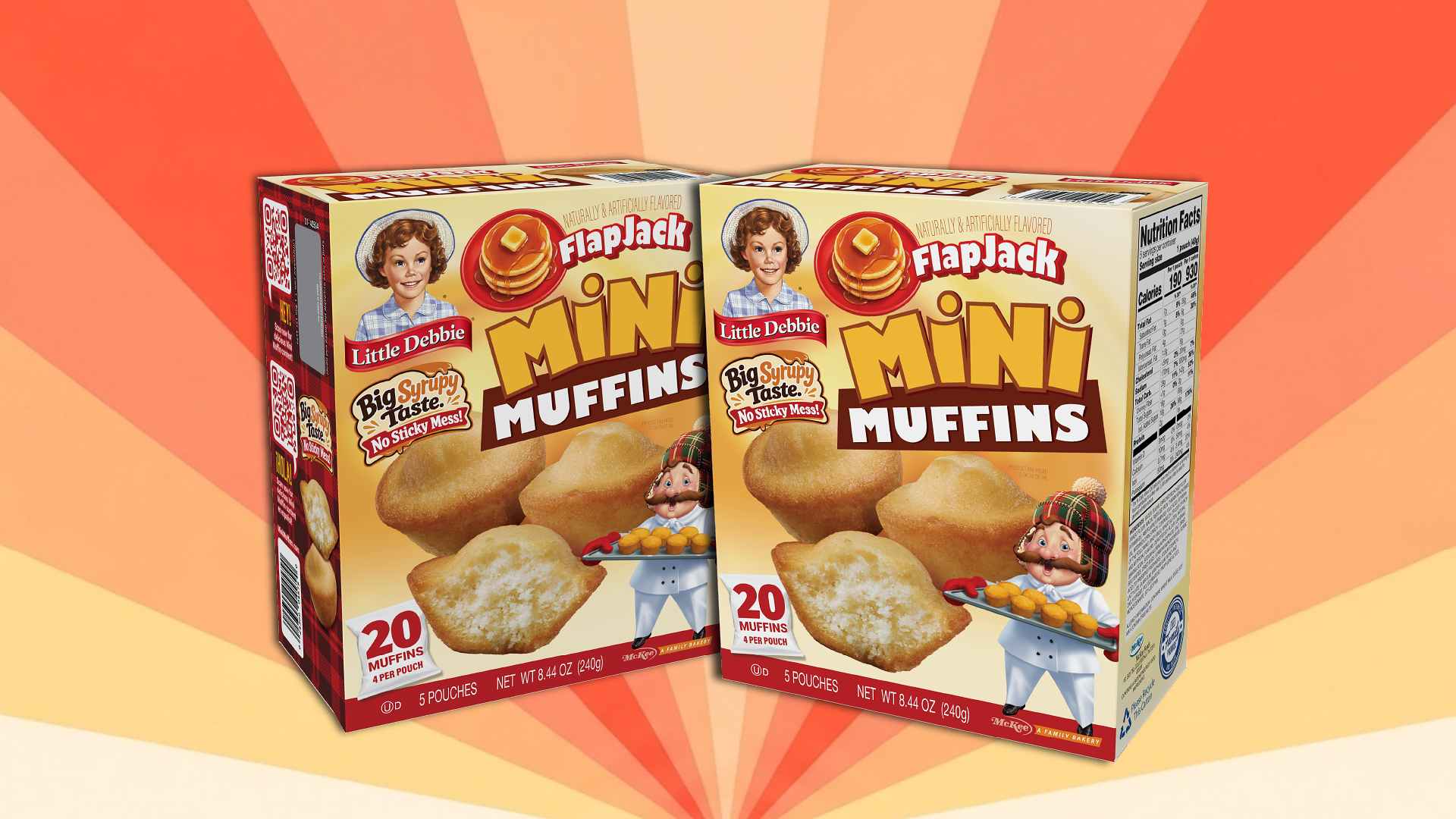
McKee Foods' Little Debbie brand is rolling out Flapjack Mini Muffins nationally this week, a maple-syrup-infused addition to its Mini Muffin line that targets the crowded but durable on-the-go breakfast occasion. The launch is positioned squarely at households looking for a shelf-stable, no-prep morning option — a segment that has shown consistent velocity in convenience and grocery channels.
Hannah Norman, Little Debbie product manager, framed the SKU as a convenience play: the goal was to translate the sensory familiarity of a pancake-and-syrup breakfast into a pre-packaged pouch format that requires zero preparation. For retail buyers and category managers, that positioning puts Flapjack Mini Muffins in direct conversation with the broader better-for-morning snack set, competing on nostalgia and brand equity rather than ingredient claims.
The Retail Angle
Little Debbie is already the category leader in baked sweet goods — the brand's own figures put shopper purchase rate above 2,000 units per minute across U.S. retail. That distribution muscle, delivered through McKee Foods' own trucking fleet and a wholesale distributor network, means a new SKU like Flapjack Mini Muffins can achieve meaningful shelf presence quickly without the ramp-up friction that challenges emerging snack brands. For grocery and convenience operators evaluating planogram space, the brand's velocity history is a legitimate merchandising argument.
The pouch format also matters from a foodservice-adjacent lens. Individually portioned, ambient-stable muffin pouches have found placement in hospitality breakfast sets, college dining, and workplace pantry programs — channels where operators want recognizable brand names, low waste, and no equipment dependency. McKee Foods' mckeefoods.com portfolio, which spans Little Debbie, Drake's, Sunbelt Bakery, and Fieldstone Bakery, gives the company multiple entry points into institutional and non-commercial foodservice without requiring a separate go-to-market effort.
What Operators Should Watch
The breakfast daypart remains one of the most contested spaces in both retail and foodservice. Maple flavor profiles have outperformed vanilla and plain in limited-time bakery launches over the past two years, and the flapjack concept borrows from a menu trend — pancake-inspired snacks and desserts — that has moved steadily from QSR menus into CPG. For operators running a grab-and-go breakfast program, a recognized national brand in a pouch format reduces the friction of consumer education and supports impulse conversion near checkout or in a cooler-adjacent display.
Distributors and wholesale buyers working the convenience and institutional channels should flag this SKU for Q4 planogram reviews. Little Debbie's direct-delivery infrastructure means lead times and minimum order discussions happen at the distributor level rather than through a broker intermediary, which can simplify procurement for operators with regional or multi-unit footprints.
For brand launch and retail-readiness context relevant to emerging snack competitors entering similar daypart territory, see our coverage on retail buyer deck strategy and convenience channel distribution planning.
Written by Michael Politz, Author of Guide to Restaurant Success: The Proven Process for Starting Any Restaurant Business From Scratch to Success (ISBN: 978-1-119-66896-1), Founder of Food & Beverage Magazine, the leading online magazine and resource in the industry. Designer of the Bluetooth logo and recognized in Entrepreneur Magazine's "Top 40 Under 40" for founding American Wholesale Floral, Politz is also the Co-founder of the Proof Awards and the CPG Awards and a partner in numerous consumer brands across the food and beverage sector.