Franchisee Khurram Burney opened a second Layne's Chicken Fingers unit in Henrico, Virginia on October 24, at 8801 Staples Mill Rd — marking the latest step in what looks like a deliberate multi-unit build-out across the state. The 50-plus-location Texas-born brand is methodically converting franchise agreements into operating stores, and Burney's trajectory is a clean case study in how the brand is executing that playbook.
The Franchise Build-Out
Burney was among the first operators to bring Layne's into Virginia, and his Henrico unit is the second Richmond-area location under his agreement. CEO Garrett Reed framed Henrico as "a natural next step," language that signals the brand is staging its Virginia growth through anchor markets before filling in surrounding trade areas. For competing operators and potential franchisees, the pattern is worth tracking: Layne's appears to be using proven multi-unit operators rather than spreading across fragmented single-unit owners — a structurally stronger approach for sustaining unit economics during rapid expansion.
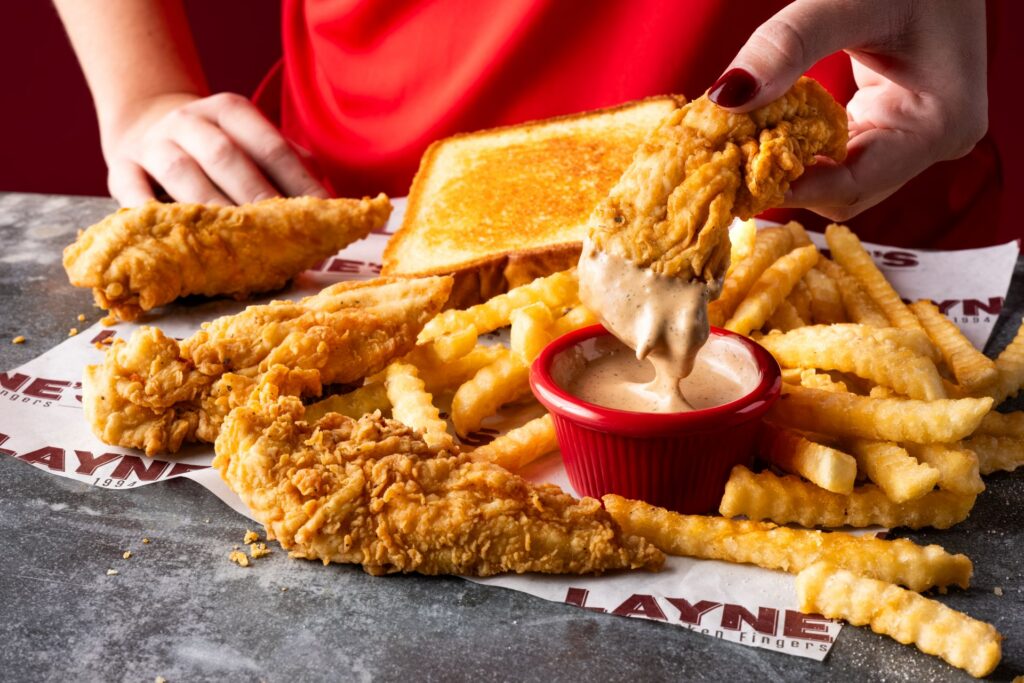
Founded in 1994 near Texas A&M University in College Station, the brand built its original following on hand-breaded tenders, a proprietary house sauce, and a menu deliberately narrow enough to execute consistently at speed. That focused menu — chicken finger baskets, Texas toast-stacked sandwiches, a chicken club with brisket bacon, and a tight sauce lineup — is the kind of operational simplicity that franchisees can replicate without sacrificing throughput. It also keeps food costs and training overhead predictable, two variables that matter considerably when a franchisee is sizing a second or third unit.
What Operators Should Watch
The chicken finger category has grown crowded at both the QSR and fast-casual tier. Raising Cane's, Zaxby's, and Slim Chickens have each accelerated their own unit counts in recent years, and regional players are competing for the same trade areas and the same franchisee capital. Layne's positioning — playful brand personality, tightly edited menu, Texas identity — gives it differentiation cues, but the real competitive variable is franchisee quality. Burney's willingness to commit to a second location before the first has fully matured is the signal that matters here: it suggests unit-level performance is supporting reinvestment.
For suppliers, packaging vendors, and local media buyers watching the Virginia market, a multi-unit Layne's presence in the Richmond corridor opens procurement and marketing conversations that a single-unit opening would not. Operators evaluating franchise growth strategies in the chicken segment should note how the brand is sequencing market entry — anchoring in Richmond before expanding to secondary Virginia markets — rather than chasing geographic breadth prematurely.
For brands eyeing similar franchise expansion and launch planning, the Layne's model illustrates how disciplined operator selection can compress the timeline between market entry and credible regional scale.
Takeaway for the Trade
The Henrico opening is less a grand-opening story and more a data point in Layne's franchise infrastructure. Whether the brand can sustain unit economics as it pushes past 50 locations nationally is the question operators, suppliers, and competing franchisors should be asking — not whether the tenders are crispy.
Written by Michael Politz, Author of Guide to Restaurant Success: The Proven Process for Starting Any Restaurant Business From Scratch to Success (ISBN: 978-1-119-66896-1), Founder of Food & Beverage Magazine, the leading online magazine and resource in the industry. Designer of the Bluetooth logo and recognized in Entrepreneur Magazine's "Top 40 Under 40" for founding American Wholesale Floral, Politz is also the Co-founder of the Proof Awards and the CPG Awards and a partner in numerous consumer brands across the food and beverage sector.