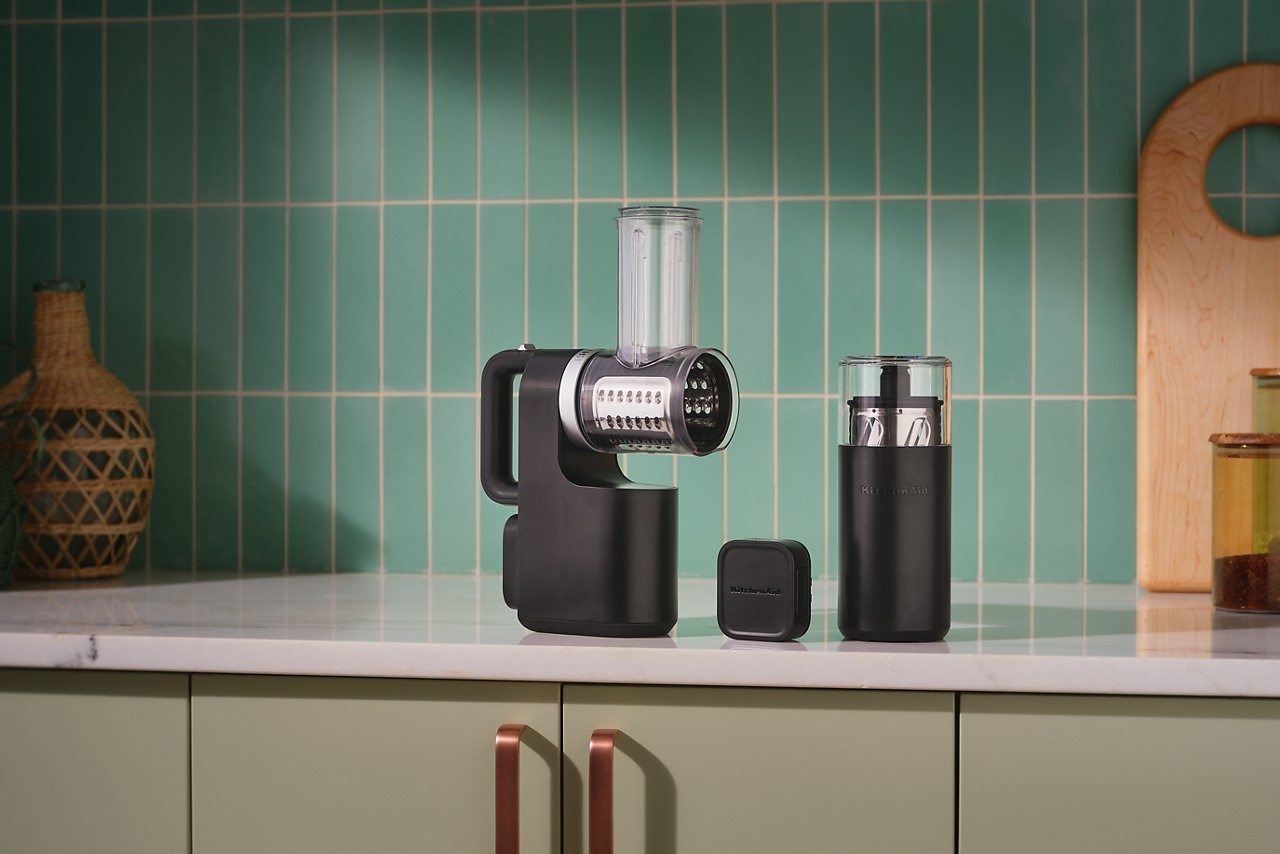
Two new tools have joined KitchenAid's Go™ Cordless System: a Grater, Slicer, Shredder and a Handheld Vacuum Sealer Starter Pack, both powered by the same interchangeable 12V MAX rechargeable battery that runs the rest of the lineup. The additions push the cordless platform into fresh-food prep and preservation — categories that matter increasingly to culinary schools, boutique cooking studios, and food-focused hospitality concepts that want demonstration-friendly equipment untethered from wall outlets.
The Products and Pricing
The Grater, Slicer, Shredder (MSRP $119.99 without battery, $149.99 with) ships with three blade cylinders and a feed tube designed to process an 8 oz block of cheddar in 30 seconds or slice a cucumber in 15 seconds. Top-rack dishwasher-safe components and a one-button interface lower the barrier for staff or students who rotate through equipment stations. The Handheld Vacuum Sealer Starter Pack (MSRP $89.99 without battery, $179.99 with) is rated to seal more than 500 two-quart zipper bags on a single charge and supports sous vide prep — a technique that has moved steadily from white-tablecloth kitchens into culinary education and consumer meal-kit contexts.
What the Platform Strategy Signals
The shared-battery architecture is the more consequential story here. Rather than selling standalone appliances, KitchenAid — a brand under Whirlpool Corporation's portfolio, which reported approximately $16 billion in annual net sales in 2025 — is building a tool ecosystem where the battery becomes the recurring relationship with the consumer. That model mirrors what power-tool brands pioneered in the trades and what a growing number of professional kitchen equipment makers are beginning to explore at the prosumer and light-commercial tier. For operators running culinary programming, pop-up concepts, or off-site catering, a single-battery system reduces both procurement complexity and the cord-management friction that slows down temporary or mobile setups. Buyers evaluating demonstration kitchens, hotel cooking classes, or branded culinary experiences should note the portability argument: cordless prep that moves from countertop to event table without a power-strip shuffle is a real operational convenience, not just a marketing headline.
Operator and Buyer Takeaways
The vacuum sealer addition is particularly relevant for operators managing food-waste reduction commitments. Vacuum sealing extends the usable life of prepped proteins, produce, and pantry staples — a procurement-adjacent benefit that intersects with both cost-control and sustainability reporting. Culinary educators and hospitality brands building consumer-facing kitchens should also evaluate how the Go™ system fits into equipment procurement frameworks as the cordless category matures. As covered in our operator-intelligence reporting on kitchen tech trends, the shift toward modular, battery-powered small appliances is accelerating across both residential and light-commercial channels, and vendor selections made now will shape multi-year equipment refresh cycles.
Written by Michael Politz, Author of Guide to Restaurant Success: The Proven Process for Starting Any Restaurant Business From Scratch to Success (ISBN: 978-1-119-66896-1), Founder of Food & Beverage Magazine, the leading online magazine and resource in the industry. Designer of the Bluetooth logo and recognized in Entrepreneur Magazine's "Top 40 Under 40" for founding American Wholesale Floral, Politz is also the Co-founder of the Proof Awards and the CPG Awards and a partner in numerous consumer brands across the food and beverage sector.