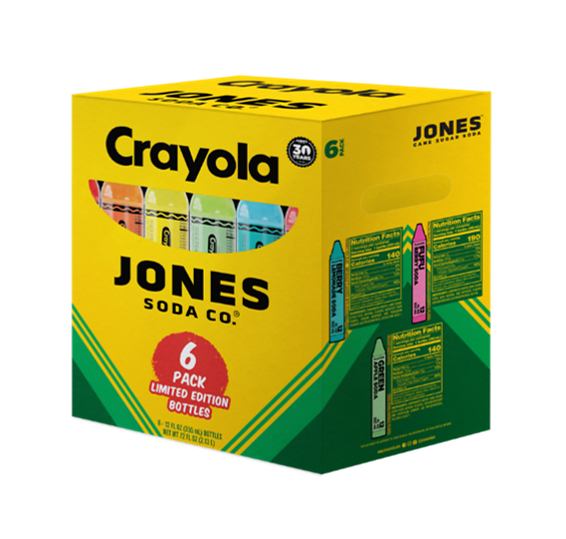
Jones Soda Co. is rolling out a limited-edition Crayola x Jones Soda 6-pack at retail and online, timed to the back-to-school summer season and framed as part of the brand's 30th anniversary "Dirty 30" campaign. The move is a return collaboration — not a first attempt — which signals the original Crayola partnership cleared enough commercial thresholds to earn a second run.
For buyers and category managers, the timing is deliberate. Back-to-school is one of the few seasonal windows where a nostalgia-forward licensed beverage can credibly compete for incremental shelf space alongside established impulse categories. Pairing a craft soda SKU with one of the most recognizable childhood brands in North America lowers the consumer education burden and gives retail partners a built-in merchandising story.
The Co-Brand Calculus
Licensed co-branding in the non-alcoholic beverage space has accelerated over the past two years, particularly among mid-tier craft brands looking to punch above their marketing weight without committing to sustained media spend. A limited-edition 6-pack format contains the risk: it sets a natural sell-through deadline, justifies a premium price point, and generates earned media through scarcity framing — all without requiring the infrastructure of a permanent line extension.
Jones Soda's approach here is consistent with how challenger beverage brands are using seasonal retail programs to maintain velocity between anchor SKUs. The Crayola IP brings visual differentiation on shelf at a moment when packaging creativity directly influences trial among the parent-and-kid shopping unit driving back-to-school baskets.
What Operators and Buyers Should Watch
For foodservice and hospitality operators sourcing specialty beverage programs — particularly those building curated retail walls, grab-and-go sets, or branded minibar concepts — limited-edition co-branded SKUs like this one present both an opportunity and a logistics question. The upside is a conversation-starter product with built-in brand equity on both sides. The constraint is availability window: these programs typically carry tight production runs and compressed distribution timelines that require early purchase-order commitment.
On the brand launch and retail readiness side, the Jones-Crayola program is a workable case study in how a heritage craft brand uses a milestone anniversary to reactivate lapsed consumers and court new retail placements simultaneously. The "Dirty 30" framing gives earned media a hook beyond the SKU itself, extending press coverage into brand narrative territory that a straight product launch rarely achieves.
Distributors and brokers working emerging beverage portfolios should note the online-plus-retail dual-channel launch structure. Direct-to-consumer availability alongside retail placement allows the brand to capture full-margin sales while generating the sales-rank data that supports future buyer conversations.
Written by Michael Politz, Author of Guide to Restaurant Success: The Proven Process for Starting Any Restaurant Business From Scratch to Success (ISBN: 978-1-119-66896-1), Founder of Food & Beverage Magazine, the leading online magazine and resource in the industry. Designer of the Bluetooth logo and recognized in Entrepreneur Magazine's "Top 40 Under 40" for founding American Wholesale Floral, Politz is also the Co-founder of the Proof Awards and the CPG Awards and a partner in numerous consumer brands across the food and beverage sector.