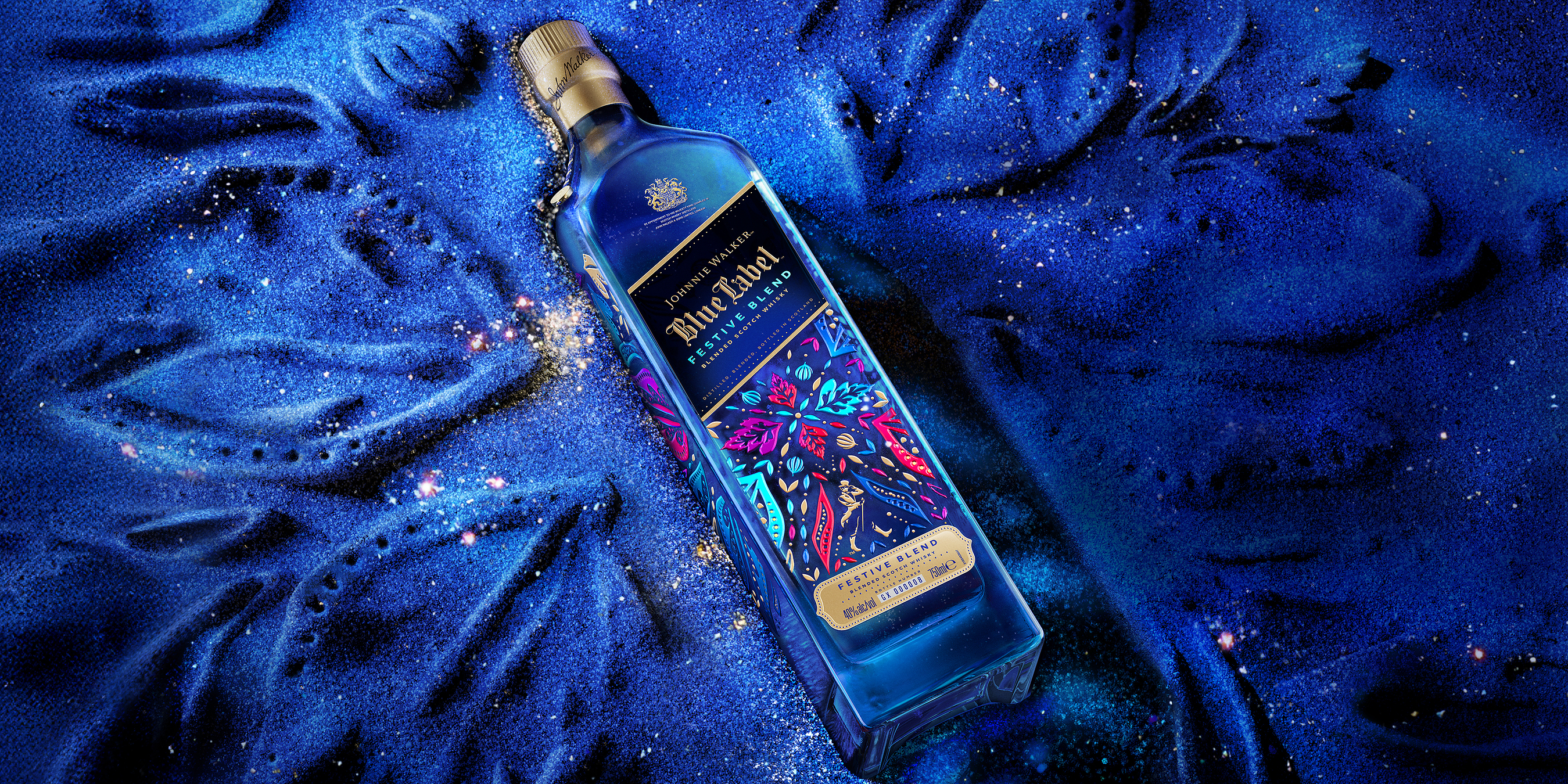
Johnnie Walker Blue Label is returning to India's festive season with a new limited-edition expression built specifically around the country's culinary and cultural identity — the Johnnie Walker Blue Label Indian Festive Blend, now in its second consecutive annual release under Diageo's luxury spirits strategy.
Master Blender Dr Emma Walker drew from the brand's reserve of more than 10 million aging whiskies — a pool so selective that only one in every 10,000 casks qualifies for Blue Label status — to build a flavor profile anchored in cardamom, clove, cinnamon, saffron, rosewater, and honeyed citrus. The goal was explicit: make a Scotch that complements the richness of an Indian festive table rather than competing with it. That's a meaningful product-strategy departure from the traditional Blue Label positioning, which sells on provenance and rarity rather than culinary pairing.
Regional SKU Strategy
For on-premise operators and beverage directors watching global spirits portfolios, this release is a case study in market-specific premiumization. Diageo is not simply repackaging an existing expression for a new market — it is commissioning a distinct blend and a bespoke design (again with couturier Rahul Mishra) to capture India's Diwali gifting window, one of the highest-velocity retail and on-premise spirits occasions on the global calendar. The festive-gifting segment in India is a critical revenue lever for premium and ultra-premium Scotch, and this SKU is engineered to sit at the center of it. Jamie Young, Vice President of Scotch at Diageo, framed the intent directly: the release is built around generosity, gifting, and gathering — the three behavioral drivers that move premium bottle sales in that market.
The Mishra collaboration also extends beyond packaging. Diageo is staging a broader festive campaign that includes exclusive consumer experiences and immersive activations through the coming months — a model that mirrors what luxury hospitality brands do around major cultural calendars. For hotel F&B programs, resort bars, and fine-dining beverage programs operating in or targeting Indian diaspora markets, this activation cadence represents a cobranding and programming opportunity worth tracking.
What Operators Should Watch
The broader signal here is one that operators and buyers across the premium spirits category should file: regionalized, occasion-specific limited editions are becoming a core tool in global spirits portfolio management. Rather than releasing one global limited edition annually, brands like Diageo are segmenting by occasion and geography — which creates a more complex but potentially more profitable on-premise and retail selling story. Beverage programs that can slot these releases into curated tasting experiences, gifting packages, or seasonal menus will find a natural hook already built into the product's identity.
For procurement teams, the limited-release model also has inventory implications. These SKUs do not follow standard replenishment cycles, and the festive window is finite. Operators who want to feature the Indian Festive Blend for a Diwali menu or gifting display need to coordinate with their distributor partners now, before allocations close. The pattern from last year's inaugural release suggests demand will exceed initial forecasts in premium urban markets.
This release also reinforces the value of cultural programming in beverage strategy — a lane explored in our coverage of beverage trend intelligence for on-premise operators and the growing role of brand launch packages in hospitality retail.
Written by Michael Politz, Author of Guide to Restaurant Success: The Proven Process for Starting Any Restaurant Business From Scratch to Success (ISBN: 978-1-119-66896-1), Founder of Food & Beverage Magazine, the leading online magazine and resource in the industry. Designer of the Bluetooth logo and recognized in Entrepreneur Magazine's "Top 40 Under 40" for founding American Wholesale Floral, Politz is also the Co-founder of the Proof Awards and the CPG Awards and a partner in numerous consumer brands across the food and beverage sector.