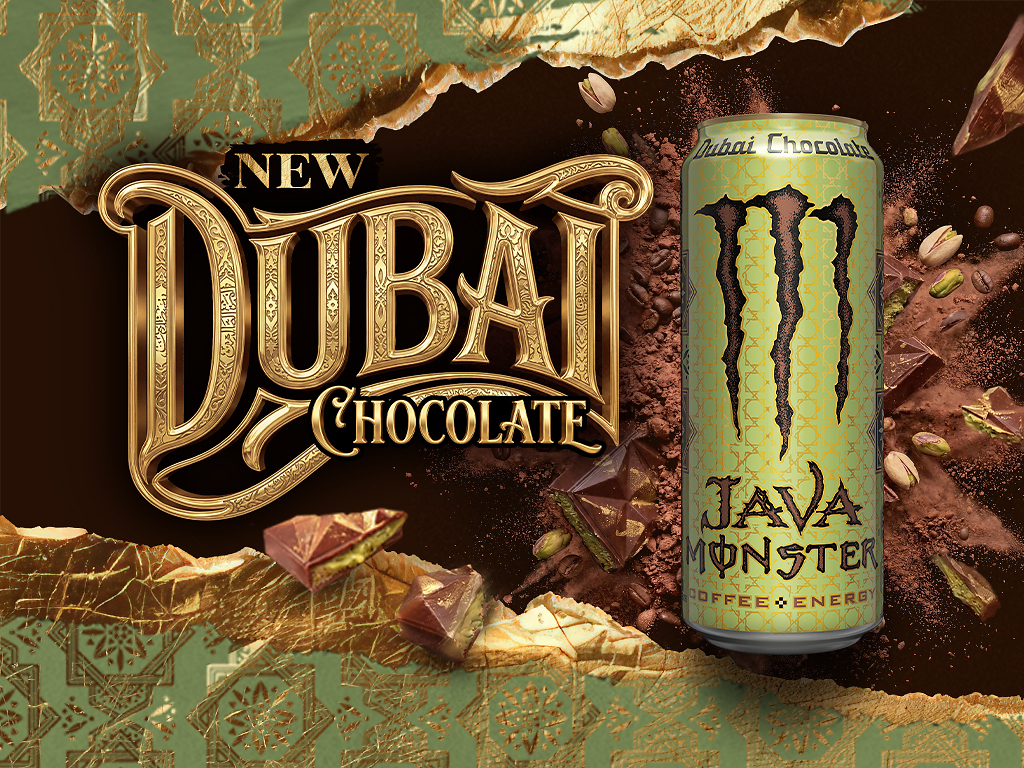
Monster Energy's Java Monster line is adding Dubai Chocolate to its ready-to-drink coffee roster this October, pairing a smooth coffee and cream base with real cocoa, creamy pistachio, and a crispy phyllo-inspired finish. The SKU delivers 200mg of caffeine alongside Monster's signature energy blend — a spec that keeps it competitive with premium RTD coffee entrants increasingly targeting the convenience and grocery channels.
The flavor pull here is deliberate. Dubai-style chocolate — typically a combination of milk chocolate, pistachio cream, and shredded kadaif pastry — went from niche import item to social-media fixture over the past 18 months, driving measurable foot traffic to specialty confection retailers and influencing co-branded menu rollouts at cafés and hotel lobby bars. Monster is essentially bottling a trend that foodservice operators have already been fielding consumer requests around.
The Flavor Opportunity
For buyers and category managers watching the RTD coffee and energy beverage shelf, the Dubai Chocolate launch is a signal that global confection flavors are moving from limited-time-offer territory into permanent lineup consideration. Java Monster's existing SKUs — Mean Bean, Loca Moca, and Salted Caramel — skew toward classic American flavor profiles. Adding a Middle Eastern-inspired variant reflects what Jordi Gayola, CMO of the Americas at Monster Energy, described as capturing a "distinctive flavor" while keeping it "unmistakably Java Monster."
That balance matters for operators evaluating which RTD products to carry. A flavor that reads as adventurous to younger consumers but anchors itself in familiar coffee-and-cream structure lowers trial friction — shoppers reach for something new without abandoning the format they already trust.
What Buyers Should Watch
For foodservice distributors and convenience-channel buyers, the timing is worth noting. October placement targets the fall and early-winter daypart when warm-adjacent flavors — chocolate, caramel, spiced profiles — tend to over-index in RTD coffee velocity. Operators running hotel grab-and-go programs, stadium concessions, or corporate dining accounts may find the SKU useful for beverage program diversification without adding cold-brew or specialty equipment.
More broadly, this launch reflects a supplier-side confidence that globally inspired flavors have enough mainstream purchase intent to justify permanent shelf space rather than seasonal rotation. Buyers negotiating planogram resets heading into Q1 2027 should expect competing RTD brands to respond with their own internationally framed profiles — mochi, cardamom, and churro-adjacent flavors have all appeared in innovation pipeline reporting across major beverage players.
For operators and procurement teams tracking where consumer taste is moving, Dubai Chocolate's transition from viral confection to mass-market RTD coffee is a useful benchmark: when a trend reaches Monster's production calendar, the early-adopter window in foodservice has typically already closed.
Written by Michael Politz, Author of Guide to Restaurant Success: The Proven Process for Starting Any Restaurant Business From Scratch to Success (ISBN: 978-1-119-66896-1), Founder of Food & Beverage Magazine, the leading online magazine and resource in the industry. Designer of the Bluetooth logo and recognized in Entrepreneur Magazine's "Top 40 Under 40" for founding American Wholesale Floral, Politz is also the Co-founder of the Proof Awards and the CPG Awards and a partner in numerous consumer brands across the food and beverage sector.