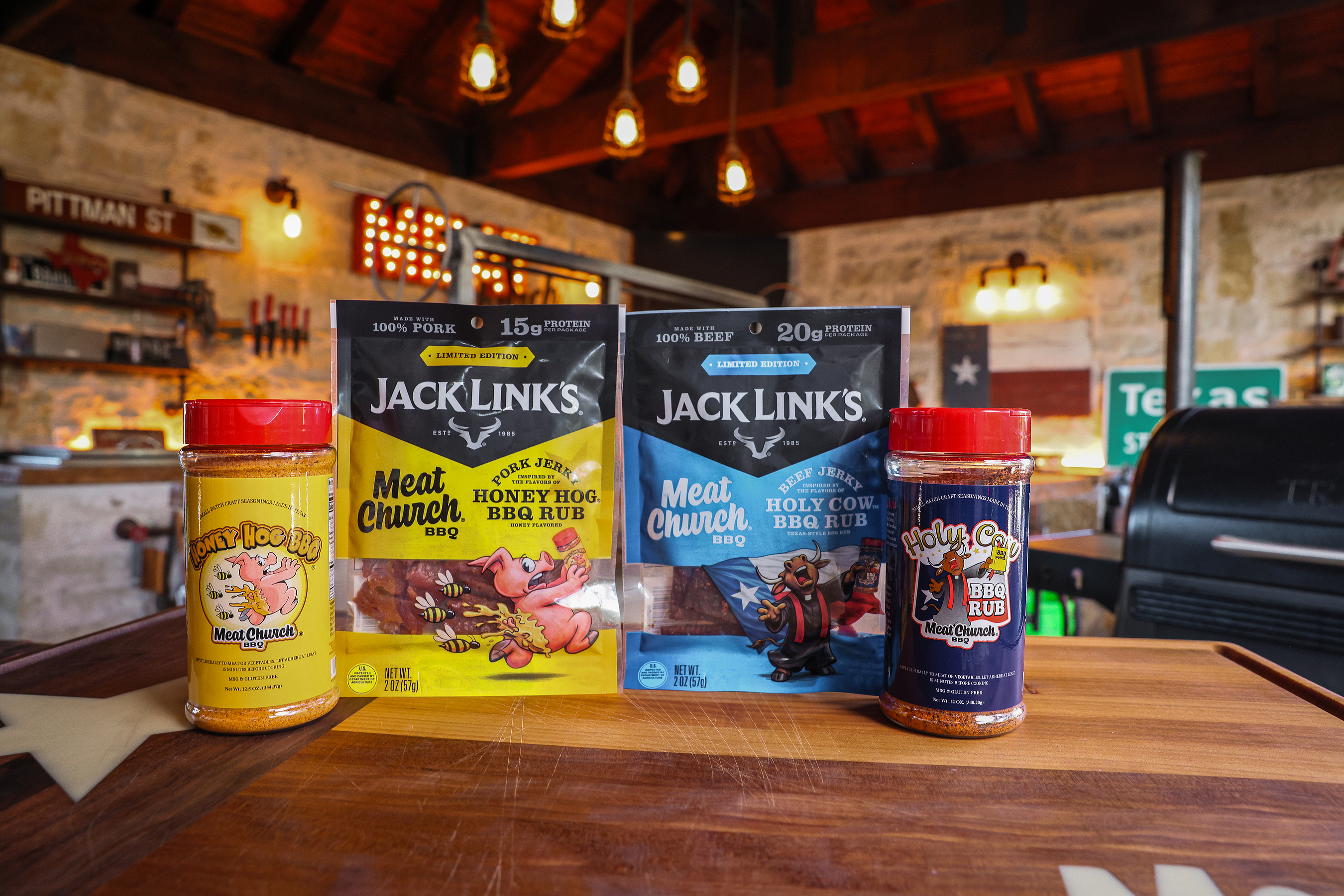
Jack Link's, the world's leading meat snack manufacturer, has launched a limited-time co-branded line with Meat Church BBQ, the Texas-based barbecue lifestyle brand built by pitmaster Matt Pittman. Two new jerky SKUs — Holy Cow Beef Jerky and Honey Hog Pork Jerky — hit select Walmart shelves in 48 states and run through September 25, 2026, while supplies last.
For buyers and brand managers tracking how legacy snack manufacturers move the needle on shelf velocity, this collaboration is a disciplined read. Jack Link's brings the production scale and Walmart relationship; Meat Church brings a devoted digital community built around award-winning rubs, recipe content, and pitmaster credibility. The result is a product story that can be sold in a five-second glance: flavor profiles shoppers already trust, in a format they know how to buy.
The Channel Logic
The Walmart placement is the strategic spine of this launch. Restricting the SKUs to a single mass retail partner — and capping the window at roughly three and a half weeks — creates urgency without diluting distribution across a complex multi-channel rollout. For operators and buyers in the snack and protein space, that's a signal: the brands are testing sell-through velocity and consumer response under controlled conditions before any permanent ranging decision. Holly LaVallie, SVP of Marketing and R&D at Link Snacks, framed the brand rationale around taste-first positioning: flavor drives repeat purchase in snacking, and functional protein claims alone are not sufficient to hold a buyer's loyalty.
Meat Church's equity is worth examining separately. Founded in Texas, the brand has built its following through digital content, BBQ classes, and an intensely loyal enthusiast base — not traditional paid media. That earned-audience model translates directly into product launches: when Pittman endorses a flavor, his community receives it as a recommendation from a credible peer, not a corporate co-sign. For snack brands and food manufacturers evaluating influencer-adjacent partnerships, Meat Church represents a category of creator-brand that sits above standard influencer work and below full licensing deals — a middle lane worth watching as brand launch strategies evolve in CPG.
What This Signals for Operators
The broader pattern here is co-branded limited-time offerings being used as a low-risk retail intelligence tool. A 25-day window at Walmart generates real purchase data, social signal, and regional sales variance without committing to year-round slotting fees or a permanent SKU footprint. For food and beverage operators building snack programs — in convenience, hospitality, or specialty retail — that structural discipline is increasingly the template. Co-branded LTOs let both parties test market fit before either brand commits full resources.
Buyers tracking protein snack trends should also note the flavor translation axis here. Meat Church's Holy Cow and Honey Hog rubs are proven at retail in their own category; adapting those profiles into jerky is a low-friction way to introduce consumers already familiar with the seasoning to a new consumption format. That flavor-bridging strategy is relevant for any operator or supplier thinking about new product development and retail readiness in the better-for-you snack corridor.
Written by Michael Politz, Author of Guide to Restaurant Success: The Proven Process for Starting Any Restaurant Business From Scratch to Success (ISBN: 978-1-119-66896-1), Founder of Food & Beverage Magazine, the leading online magazine and resource in the industry. Designer of the Bluetooth logo and recognized in Entrepreneur Magazine's "Top 40 Under 40" for founding American Wholesale Floral, Politz is also the Co-founder of the Proof Awards and the CPG Awards and a partner in numerous consumer brands across the food and beverage sector.