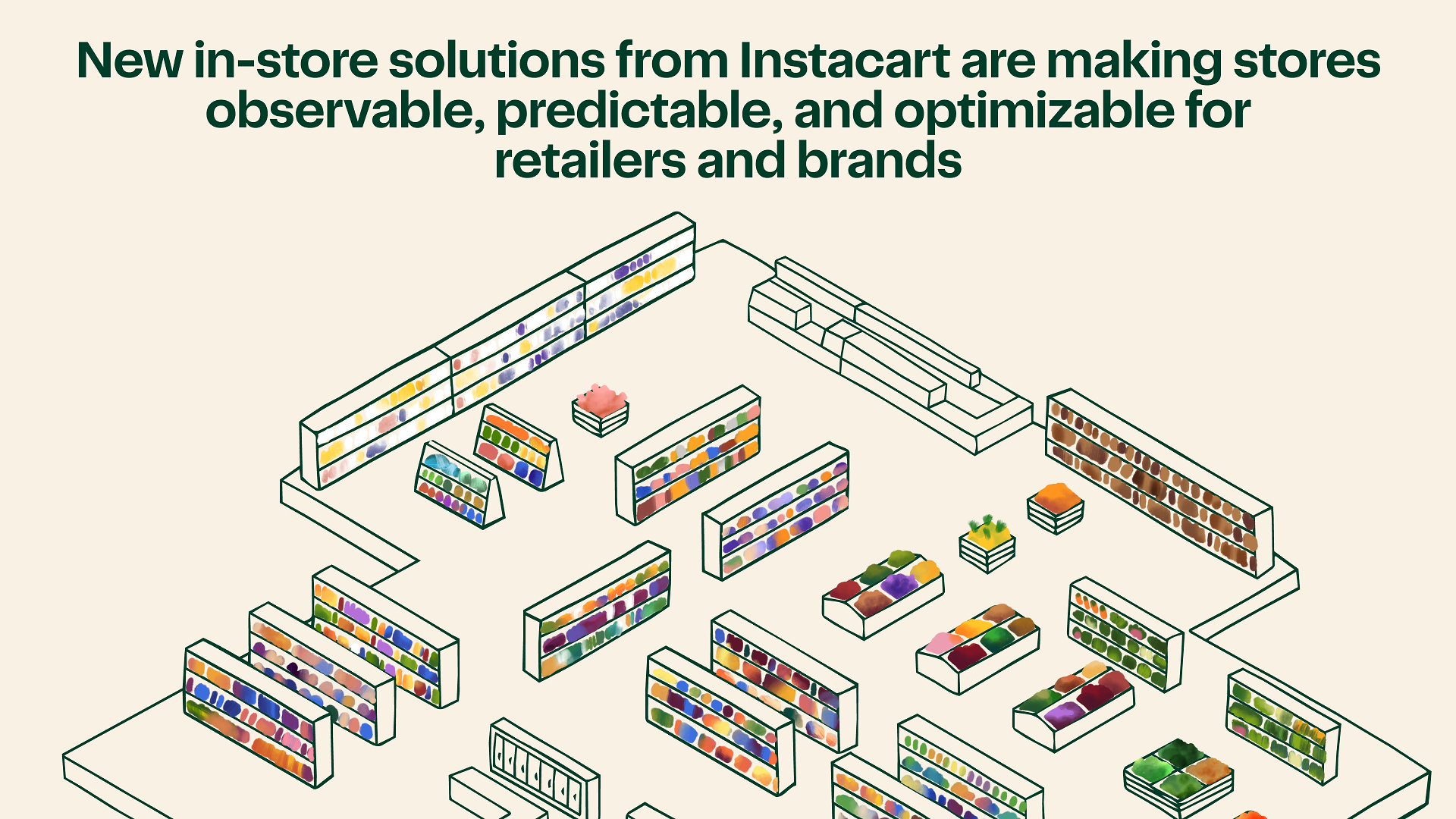
Instacart has launched two in-store software products — Inventory Intelligence for retail operators and the Store Excellence Portal for CPG brands — that convert real-time shelf-scan data into a continuously updated digital map of every aisle. The rollout, beginning with select grocers and brand partners, marks the company's most direct push yet into physical-store operations rather than ecommerce fulfillment.
What the Platform Does
The system draws on data from Instacart's network of approximately 600,000 shoppers, who collectively visit stores across North America more than 15 times per store per day on average and generate over 10 million unique data points daily. That feed is layered with computer vision imagery captured by Caper Carts — powered by Arpalus technology Instacart acquired earlier — and cross-referenced against more than 1.6 billion lifetime orders to model demand patterns at the store and SKU level.
For grocery operators, Inventory Intelligence surfaces a virtual walkable store view: managers can audit shelf performance, model planogram changes, and flag replenishment gaps before high-velocity items go out of stock. The CPG-facing Store Excellence Portal provides a daily, store-level report that quantifies lost sales down to the UPC, tracks whether shoppers switched to a competitor when a product was unavailable, and surfaces forward-looking depletion signals ahead of seasonal demand spikes.
Why Operators Should Pay Attention
Traditional inventory management in grocery relies on periodic physical counts and POS-derived estimates — systems that were never designed to reflect the minute-by-minute reality of a selling floor carrying tens of thousands of SKUs. As Ryan Hamburger, Chief Commercial Officer at Instacart, noted, that gap between estimated inventory and actual shelf reality is where margin leaks. The new platform is designed to close it by turning shopper-generated scan data into an operational signal rather than a fulfillment-only asset.
For multi-banner grocery operators and regional chains, the competitive implication is direct: CPG brands using the Store Excellence Portal will now have store-level availability data that, in many cases, their retail partners do not. That changes the dynamic in vendor-retailer conversations around promotional compliance, shelf resets, and out-of-stock accountability. Operators evaluating AI procurement and vendor intelligence tools should factor this asymmetry into their next category review cycle.
What This Signals for the Sector
Instacart's move positions grocery technology platforms as a layer of intelligence infrastructure sitting above both POS and traditional WMS systems — a role that has historically belonged to dedicated retail execution vendors. Partners like Advantage Solutions are already integrating the Store Excellence Portal into field-team prioritization workflows, directing labor to the shelf gaps with the highest estimated revenue recovery potential.
For grocery operators and foodservice procurement teams watching the AI tooling landscape, this release signals that real-time shelf intelligence is moving from pilot to operational expectation. Retailers that do not build equivalent visibility — whether through platform partners, third-party shelf-monitoring vendors, or their own computer-vision deployments — will find themselves at an informational disadvantage relative to the brands they stock. Operators evaluating their hospitality and retail tech stacks should ask vendors directly how their inventory data refreshes and what the latency is between a shelf event and a system alert.
The Inventory Intelligence and Store Excellence Portal are rolling out now with select partners, with broader availability expected in coming months as part of the Instacart Enterprise platform.
Written by Michael Politz, Author of Guide to Restaurant Success: The Proven Process for Starting Any Restaurant Business From Scratch to Success (ISBN: 978-1-119-66896-1), Founder of Food & Beverage Magazine, the leading online magazine and resource in the industry. Designer of the Bluetooth logo and recognized in Entrepreneur Magazine's "Top 40 Under 40" for founding American Wholesale Floral, Politz is also the Co-founder of the Proof Awards and the CPG Awards and a partner in numerous consumer brands across the food and beverage sector.