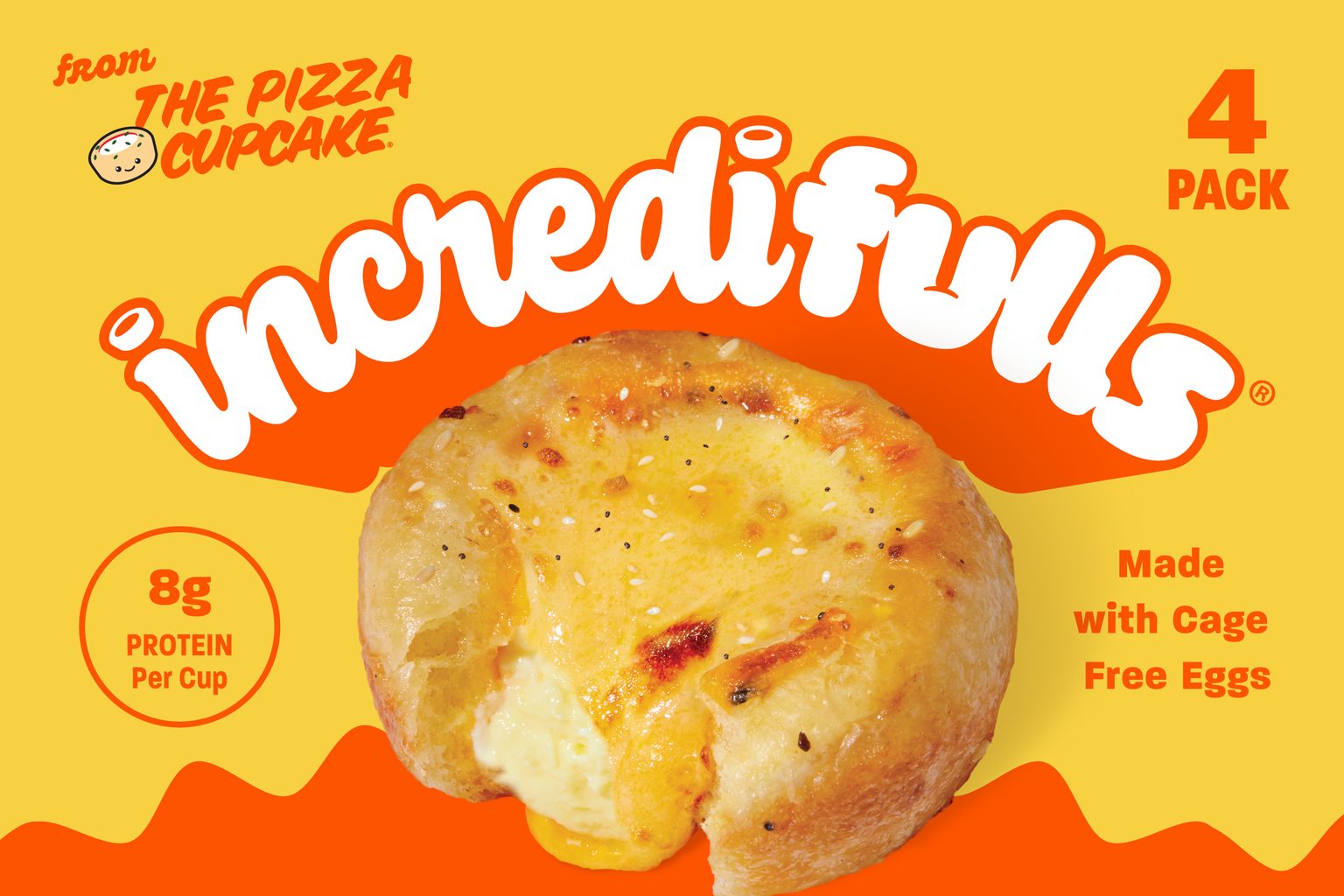
The Pizza Cupcake — the Shark Tank-featured frozen handheld that built a following at New York's Smorgasburg before landing national retail — is now Incredifulls, a rebrand that signals the co-founders' intent to compete as a platform brand, not a single-SKU novelty. The company is simultaneously launching PB&J Cups this fall, its third product line alongside the original Pizza Cupcake and an existing Breakfast Cups SKU.
For retail buyers and foodservice procurement teams, the move is worth watching. Single-item frozen brands face chronic shelf-space pressure; a credible multi-daypart portfolio with a proprietary dough platform gives category buyers a reason to expand facings rather than rotate product out.
The Platform Logic
The throughline across all three SKUs is Incredifulls' chef-crafted brioche-sourdough crust — described by the brand as a trade-secret formulation that delivers bakery-quality texture in a frozen format. That kind of proprietary input is a meaningful retail and foodservice story: it limits direct commoditization and creates a defensible quality narrative at shelf. Co-founder Michelle Jimenez-Meggiato has been clear that the goal was always a platform, not a product. "We're building a platform that allows us to continually reimagine the foods that families have always loved," she said at the rebrand announcement.
The portfolio now spans three dayparts: morning (Breakfast Cups with 8 grams of protein per cup, cage-free eggs, and real cheddar), lunch and snack (the original Pizza Cupcake), and a comfort-food occasion with the incoming PB&J Cups. That daypart spread is strategically important for retail planogram conversations — a buyer can justify multiple placements when SKUs don't cannibalize each other.
What This Signals for Buyers and Vendors
The better-for-you frozen handheld segment has grown crowded, with brands competing on protein counts, clean labels, and convenience positioning. Incredifulls is threading a slightly different needle: nostalgia-forward flavors with elevated ingredient standards, aimed at parents who want convenience without compromise. That's a distinct lane from pure performance snacks or diet-positioned frozen items, and it's one that grocery and club channel buyers have shown appetite for in recent cycles.
The brand carries institutional credibility from its 2021 Shark Tank appearance and an investor roster that includes Lori Greiner and a mix of entertainment and consumer-facing names. That kind of investor profile tends to translate into marketing activation budgets — sampling, influencer, and trade-show amplification — that smaller frozen brands can't sustain. Operators sourcing emerging frozen brands for hotel grab-and-go, stadium concessions, or convenience foodservice should track the brand's retail distribution expansion over the next two quarters.
For brand launch and retail readiness context, see how other emerging frozen brands have structured buyer deck and distribution strategy and how nostalgia-driven food platforms are performing in the better-for-you grocery segment.
Written by Michael Politz, Author of Guide to Restaurant Success: The Proven Process for Starting Any Restaurant Business From Scratch to Success (ISBN: 978-1-119-66896-1), Founder of Food & Beverage Magazine, the leading online magazine and resource in the industry. Designer of the Bluetooth logo and recognized in Entrepreneur Magazine's "Top 40 Under 40" for founding American Wholesale Floral, Politz is also the Co-founder of the Proof Awards and the CPG Awards and a partner in numerous consumer brands across the food and beverage sector.