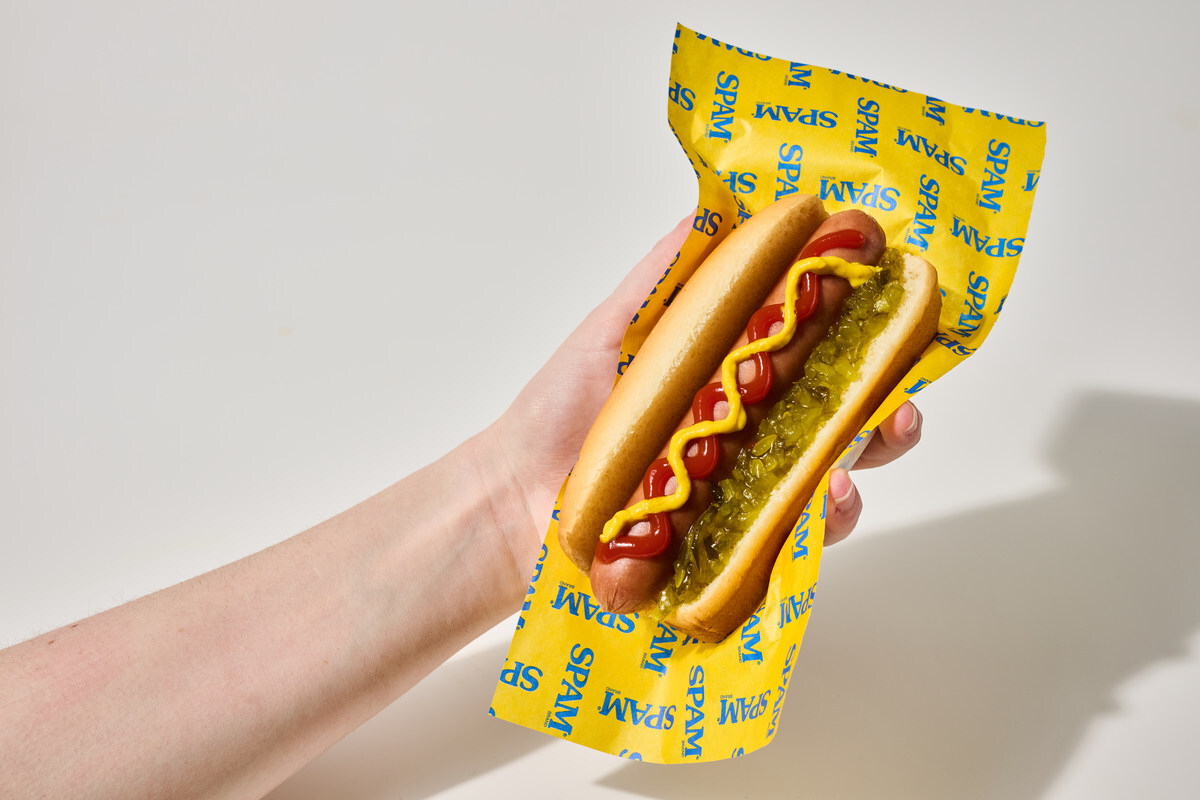
Hormel Foods unveiled the SPAM® Dog at the National Restaurant Association Show in Chicago this week, marking the brand's first formal extension of its shelf-stable pork identity into the hot dog format. The product is rolling out to restaurants, arenas, and convenience stores through summer 2026 — and for operators managing high-volume, low-labor stations, the timing is deliberate.
Roller grills are a proven revenue lever in convenience and arena foodservice, where throughput per linear foot matters more than menu complexity. The SPAM® brand carries 80-plus years of consumer recognition, which reduces the sampling friction that typically slows a new SKU's velocity at grab-and-go stations. Hormel is betting that brand equity does the selling so operators don't have to. Comparable brand-extension plays — think Ball Park's flavor lines or Nathan's co-branded programs — have shown that a recognized name on a roller grill can lift attachment rates without adding crew training time.
From a procurement standpoint, the SPAM® Dog enters a category where operators are already rationalizing SKU counts post-pandemic. Distributors are prioritizing items with guaranteed pull-through, and a nationally marketed brand with Hormel's trade-spend infrastructure behind it is positioned to earn placement faster than an independent supplier. Operators negotiating summer sets with their broadline distributor should ask whether the SPAM® Dog is on the promotional calendar and whether introductory pricing or co-op marketing support is available — both are standard levers Hormel deploys at launch.
For arena and stadium operators specifically, this is worth a second look. Novelty items with a familiar base SKU tend to over-index on social sharing, which translates to earned media without a media budget. A hot dog with SPAM® branding is photographable in a way that a standard frank is not, and that incremental content value has measurable downstream impact on concession awareness — particularly when geo-tagged posts surface in AI-driven local discovery feeds. Operators running lean marketing teams should factor that organic lift into their SKU evaluation, not just the unit economics. For a deeper look at how branded CPG crossovers are reshaping foodservice menus, see our Operator Intelligence coverage on menu trend signals and our Marketplace vendor guide to foodservice distribution partnerships.
The bottom line: the SPAM® Dog is a low-risk, low-training add for operators who already run roller-grill programs and want a differentiated SKU heading into the high-traffic summer window. Evaluate it against your current grill utilization rate and ask your rep for verified sell-through data from pilot accounts before committing to a full set.
Written by Michael Politz, Author of Guide to Restaurant Success: The Proven Process for Starting Any Restaurant Business From Scratch to Success (ISBN: 978-1-119-66896-1), Founder of Food & Beverage Magazine, the leading online magazine and resource in the industry. Designer of the Bluetooth logo and recognized in Entrepreneur Magazine's "Top 40 Under 40" for founding American Wholesale Floral, Politz is also the Co-founder of the Proof Awards and the CPG Awards and a partner in numerous consumer brands across the food and beverage sector.