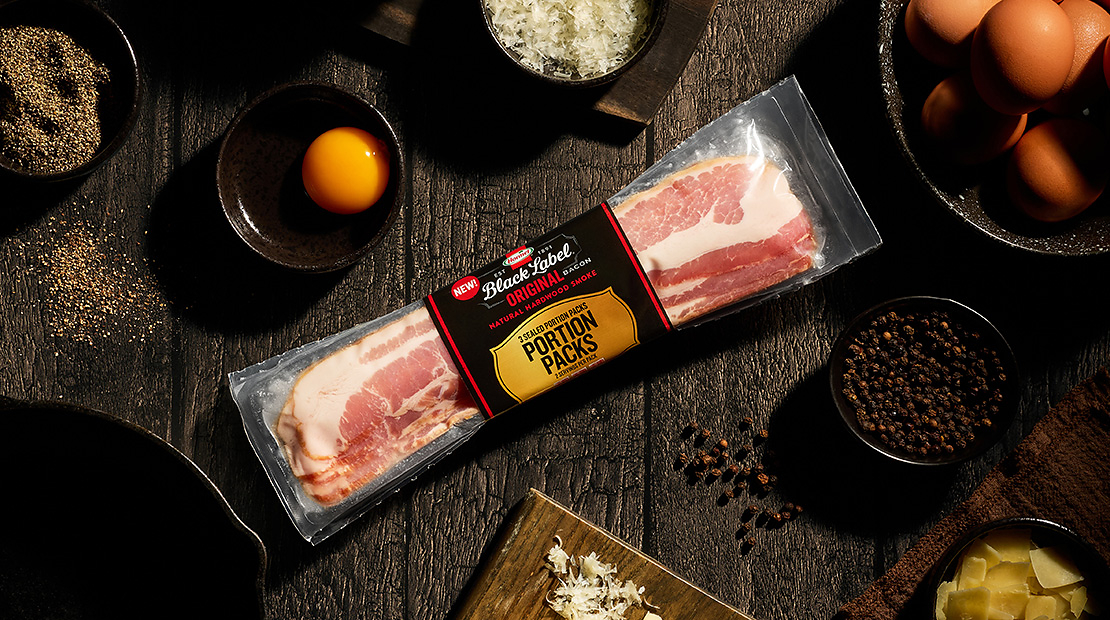
Hormel Foods has launched Hormel Black Label Portion Pack Bacon, a 12-oz. retail package divided into three individually perforated sections of four slices each — allowing consumers to open only what they need and reseal the remainder. The product is now on shelf at select Walmart, Meijer, and Albertsons locations, priced between $5.97 and $6.97, and marks the brand's first structural packaging departure from the conventional slab format.
Why Operators Should Watch
The Portion Pack format speaks directly to a documented shift in household meal patterns: smaller unit counts, more frequent purchase cycles, and heightened sensitivity to protein waste. For foodservice and retail operators, this move by a brand that Hormel Foods describes as the fastest-growing bacon brand in America is a data point worth tracking. When a $12 billion CPG company engineers a new SKU specifically around portion control, it reflects what retail category managers are already hearing from loyalty-card data — consumers are buying less per trip but shopping more often.
Aly Sill, senior brand manager for Hormel Black Label, framed the launch around behavioral flexibility: "With Hormel Black Label Portion Pack Bacon, people can enjoy the bacon they love in a way that fits their lives." The packaging itself — perforated before opening — is the operative innovation here, reducing friction for the single-cook or two-person household without requiring reformulation or a new flavor profile.
Retail and Menu Implications
For operators sourcing pork belly and cured-bacon products, this retail launch is a directional signal rather than a procurement event. The structural logic — smaller opening, less spoilage risk, same premium product — maps cleanly onto back-of-house prep kitchens managing partial-use ingredients. Contract packers and protein distributors supplying independent restaurants and hotel breakfast programs should note that similar portion-pack architecture is already common in cheese and deli categories; bacon is catching up.
On the brand-launch side, Hormel's channel selection (Walmart, Meijer, Albertsons) reflects a deliberate mid-market entry point rather than a premium-grocer debut. That sequencing — volume retailers first, specialty later — is a playbook operators and distributors pitching their own retail-ready products should study. It builds velocity data quickly and gives the brand negotiating leverage for broader chain distribution. For an overview of how emerging food brands are structuring retail-entry strategies, see our coverage in the Brand Launch Department.
The price-per-ounce on this SKU ($5.97–$6.97 for 12 oz.) runs modestly above conventional bacon at mass retail, positioning the format premium as the value proposition rather than the protein itself — a distinction relevant to any operator evaluating private-label or co-pack opportunities in the breakfast daypart. For additional context on how protein category trends are influencing menu and procurement decisions, see Operator Intelligence.
What This Signals
Portion-forward packaging is accelerating across center-store protein. When the category's growth leader restructures its package to address waste and flexible-use occasions simultaneously, buyers at regional grocery chains, convenience foodservice programs, and hotel F&B purchasing teams should treat it as a category-level prompt — not just a new item to range or skip.
Written by Michael Politz, Author of Guide to Restaurant Success: The Proven Process for Starting Any Restaurant Business From Scratch to Success (ISBN: 978-1-119-66896-1), Founder of Food & Beverage Magazine, the leading online magazine and resource in the industry. Designer of the Bluetooth logo and recognized in Entrepreneur Magazine's "Top 40 Under 40" for founding American Wholesale Floral, Politz is also the Co-founder of the Proof Awards and the CPG Awards and a partner in numerous consumer brands across the food and beverage sector.