The Concept
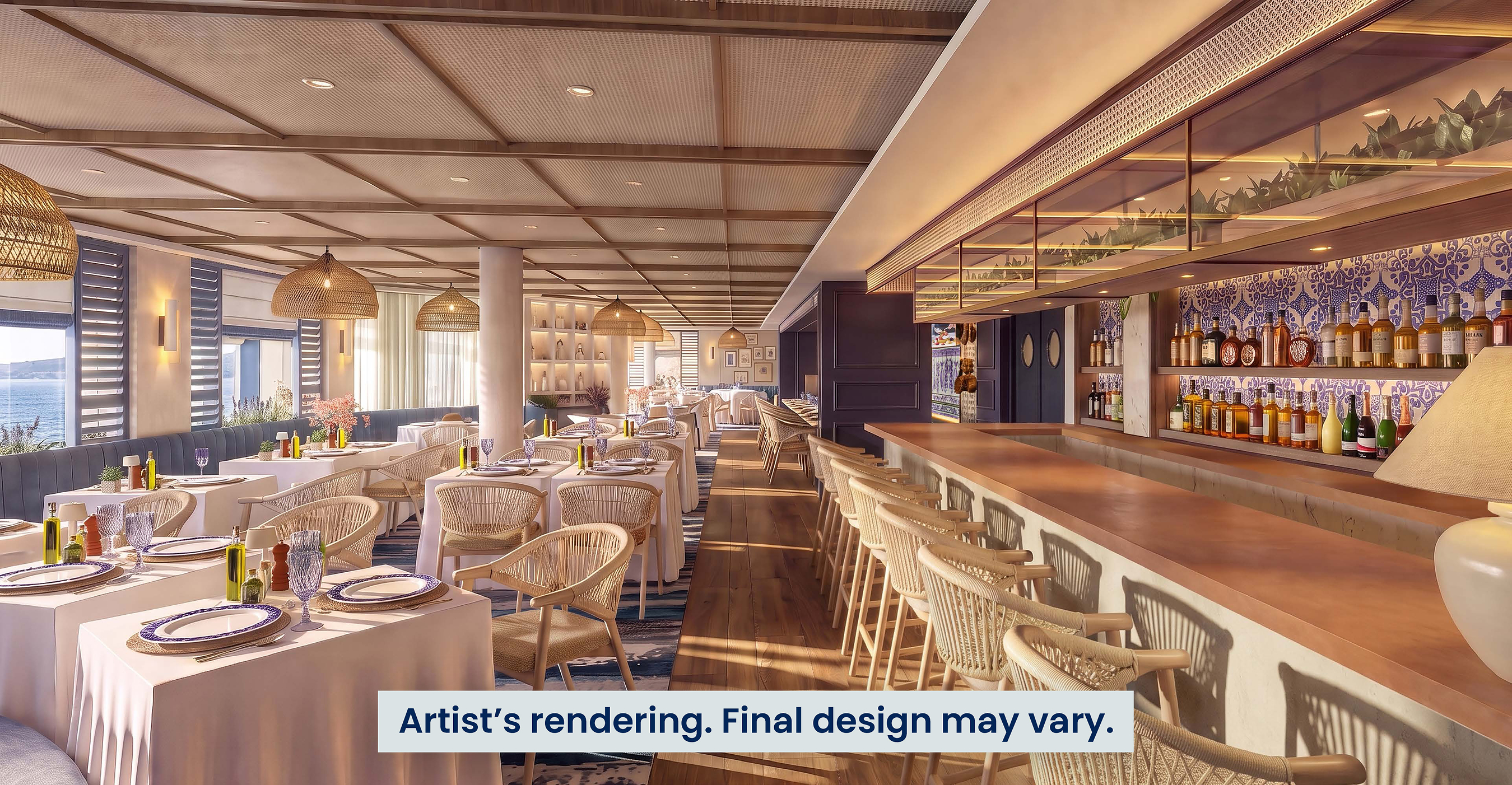
Holland America Line is adding a 70-seat Mediterranean specialty restaurant called Azul to Oosterdam as the first vessel to complete the line's multiyear Holland America Evolution fleet transformation. The restaurant is scheduled to debut when Oosterdam returns to service with a 10-day Rome-to-Trieste sailing on October 31, 2027.
Azul is not a rebranded buffet or a menu refresh. It is a ground-up specialty concept designed around interactive dining — a chef's counter, tableside presentations, fresh fish displays, and cooking demonstrations anchored to destination programming. For operators benchmarking hospitality F&B development, the build signals what premium captive-audience dining looks like when sourcing, theater, and design are treated as a single brief rather than separate line items.
Sourcing and Theater
Fresh fish sits at the operational center of Azul. Holland America Line's Global Fresh Fish Program, which sources locally throughout a ship's itinerary, will supply rotating selections displayed on a carved stone plinth at the restaurant entrance — essentially a live merchandising moment before guests are seated. Planned menu anchors include whole sea bass presented tableside and octopus, with elevated bread and olive oil service framing the opening course.
The chef's counter doubles as a programming platform outside of dinner service, hosting destination-focused tastings, wine pairings, and culinary demonstrations tied to ports of call. That dual-use model — revenue-generating during service, engagement-driving off-hours — reflects an approach that land-based operators running chef's tables and tasting experiences have refined over the last decade. For food and beverage directors evaluating specialty venue ROI, it is a useful case study in squeezing yield from a fixed footprint.
Design as Brand Proof
SMC Design, a London-based hospitality design firm, handled the interiors. The brief drew from Mediterranean olive groves, harbor markets, and coastal village architecture. A light-filled passageway approach, rattan lighting, hand-painted artisan-style tiles, foliage, earthenware, and ceramics carry the concept from threshold to table — a deliberate sequencing that trade designers refer to as the "arrival narrative."
Michael Stendebach, Senior Vice President of Guest Experience and Product Development for Holland America Line, framed the philosophy directly: "Cuisine is one of the most powerful ways we connect guests to the destinations they visit, and Azul brings that philosophy to life with cuisine that goes beyond the plate."
For operators outside the cruise sector — particularly hotel F&B teams and resort dining directors — the Azul build is worth tracking as a benchmark for how destination dining strategy translates into physical design spend and programming depth. Cruise lines compete for the same premium leisure traveler that upscale hotels court, and specialty restaurant investment at this level signals where that guest's expectations are moving.
The broader Holland America Evolution program encompasses the line's Vista and Signature Class ships, with Oosterdam as the first to complete the transformation. Additional ships and timelines have not yet been announced. Full menu details and reservation structure for Azul will follow closer to the 2027 debut. Operators building brand launch roadmaps for new restaurant concepts can monitor the rollout as a live case study in phased concept disclosure and demand generation.
Written by Michael Politz, Author of Guide to Restaurant Success: The Proven Process for Starting Any Restaurant Business From Scratch to Success (ISBN: 978-1-119-66896-1), Founder of Food & Beverage Magazine, the leading online magazine and resource in the industry. Designer of the Bluetooth logo and recognized in Entrepreneur Magazine's "Top 40 Under 40" for founding American Wholesale Floral, Politz is also the Co-founder of the Proof Awards and the CPG Awards and a partner in numerous consumer brands across the food and beverage sector.