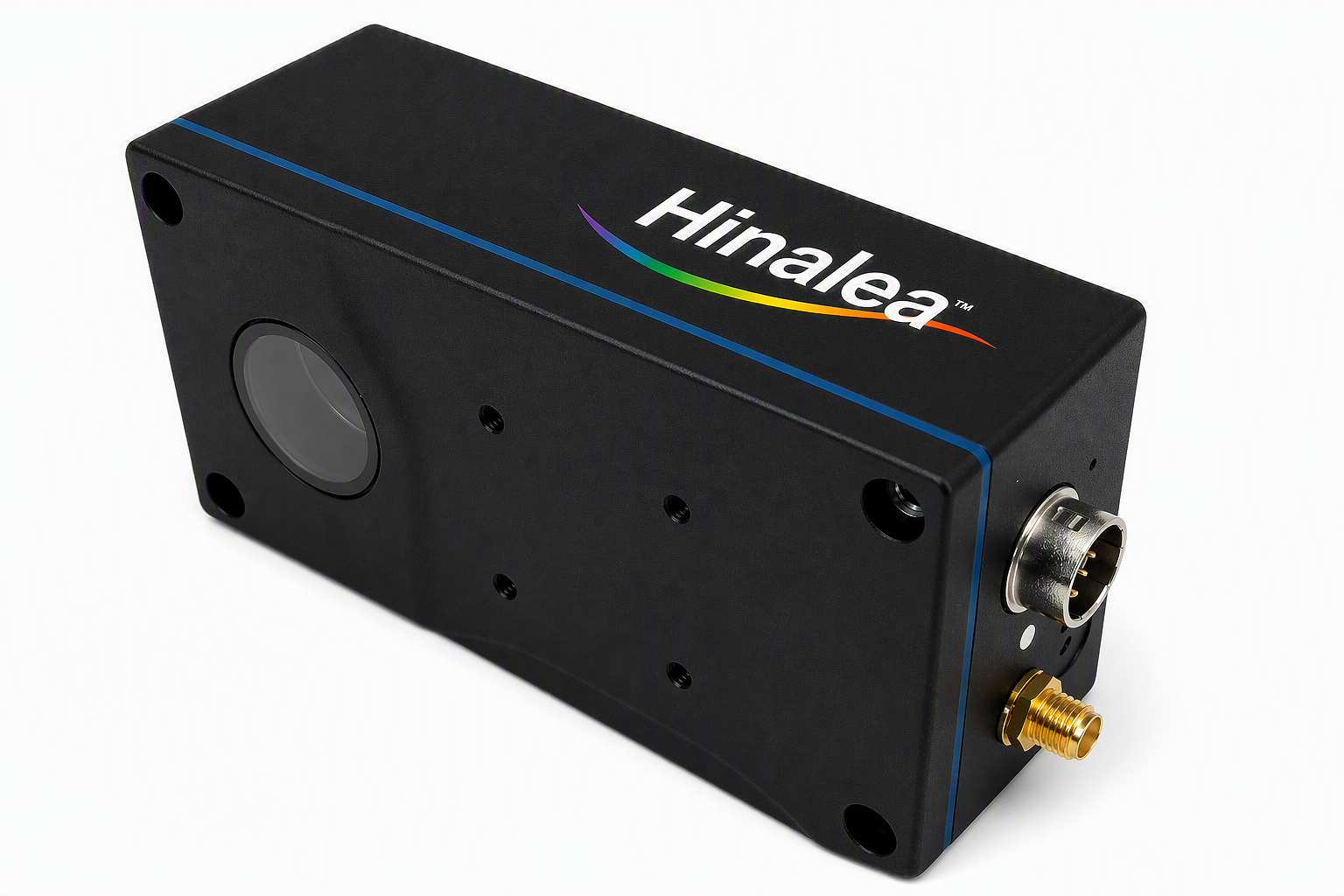
Food and beverage manufacturers running inline quality inspection just got a new hardware option worth evaluating. Hinalea Imaging Corp. launched its VNIR CORE™ system this week — a compact hyperspectral camera targeting the visible and near-infrared (VNIR) spectral range that the company says reduces hardware cost by approximately 70% compared to conventional hyperspectral systems. For operators and suppliers wrestling with contamination detection, ingredient authentication, and defect sorting, that price shift changes the procurement math substantially.
Why the Cost Drop Matters
Hyperspectral imaging (HSI) has long been capable of detecting chemical composition, microbial presence, toxins, and subtle quality defects that standard machine-vision cameras simply cannot resolve. The barrier has always been economics: conventional VNIR systems carry price points that confined the technology to research labs and large-scale processors with capital budgets to match. The VNIR CORE's MEMS-based architecture — measuring 112 × 56 × 34 mm and weighing 235 grams — is engineered to move HSI into high-volume production and inspection environments where cost-per-line and integration complexity are the deciding factors. USB 3.0 connectivity and 4.5-watt power draw also make it compatible with existing OEM machine-vision platforms without major infrastructure changes.
"For years, hyperspectral imaging has largely remained the domain of laboratory research, with the cost and complexity of sensors limiting commercial adoption," said Barry McDonogh, CEO of Hinalea Imaging. "VNIR CORE is the first in a new series of products designed to change that equation."
Signals for Food & Beverage Procurement
For food manufacturers, the intelligence angle here is less about the camera spec sheet and more about what it enables at scale. Hinalea positions VNIR CORE as a platform for AI-driven inspection — feeding spectral and spatial data into deep machine learning models to generate real-time actionable decisions on the line. Applied to food quality and safety, that means inline detection of contamination, moisture variation, protein content deviation, or spoilage indicators without pulling samples for lab analysis. Processors in poultry, produce, grain, and packaged goods have the most direct use cases, but any manufacturer managing ingredient quality or regulatory compliance should treat this as a category development worth tracking.
The system will be demonstrated at VISION 2026 in Stuttgart, Germany (October 6–8), which is the primary machine-vision trade fair for evaluating camera and sensor vendors. For procurement teams building or refreshing inspection-line vendor shortlists, that event is the logical first look. Buyers interested in how AI sensing layers integrate with existing line controls should also review how vendors like Hinalea structure their AI-as-a-service models — the recurring intelligence layer often carries more long-term cost than the hardware itself.
Operators looking for context on how AI sensing fits into broader hospitality and food-manufacturing tech stacks can find additional coverage in our AI Department and our Operator Intelligence reporting on procurement shifts in food safety technology.
What Operators Should Do Now
This launch is worth a line in your Q4 vendor-evaluation queue, not an immediate purchase order. Validate integration compatibility with your existing machine-vision infrastructure, model the full cost of ownership including the AI service layer, and benchmark against incumbent HSI vendors before committing. The 70% hardware cost reduction is meaningful — but only if the software and support ecosystem can sustain production-grade uptime.
Written by Michael Politz, Author of Guide to Restaurant Success: The Proven Process for Starting Any Restaurant Business From Scratch to Success (ISBN: 978-1-119-66896-1), Founder of Food & Beverage Magazine, the leading online magazine and resource in the industry. Designer of the Bluetooth logo and recognized in Entrepreneur Magazine's "Top 40 Under 40" for founding American Wholesale Floral, Politz is also the Co-founder of the Proof Awards and the CPG Awards and a partner in numerous consumer brands across the food and beverage sector.