The Concept
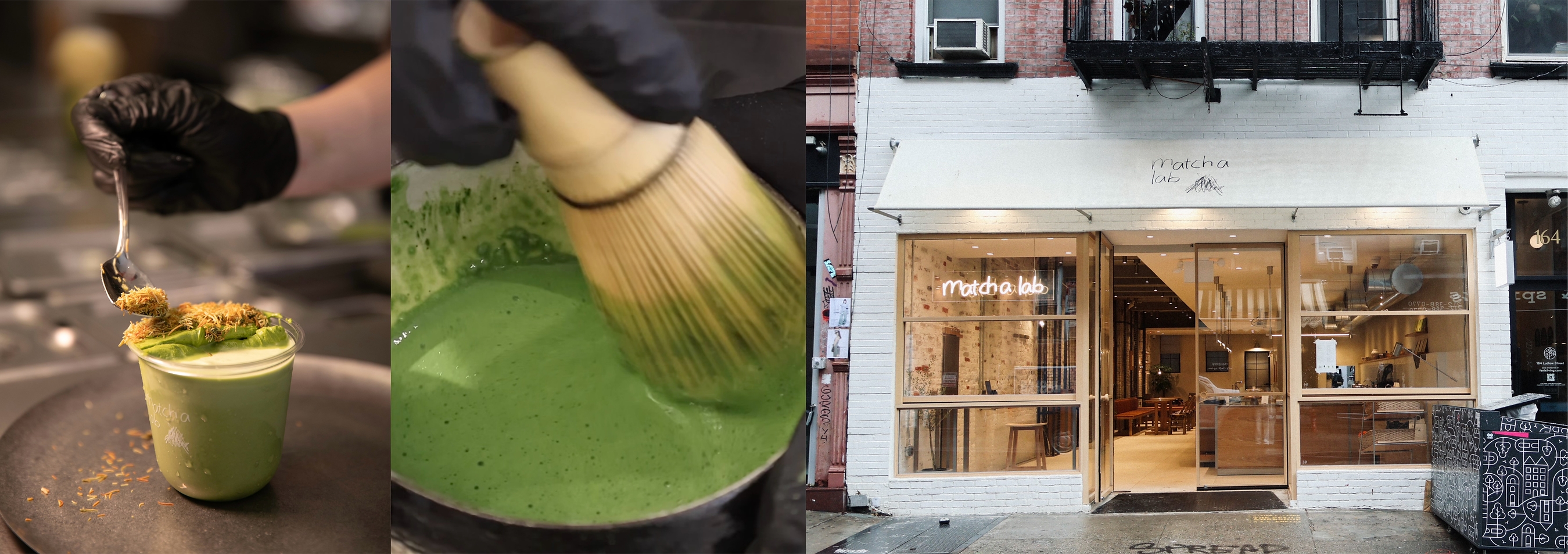
Heytea has opened its first matcha lab anywhere in its global network at 164 Ludlow Street on New York's Lower East Side — a single-ingredient retail format that strips the menu down to matcha in every form, temperature, and texture the brand can engineer. No coffee, no ube, no crossover categories. The 3,500-unit chain, which originated new-style tea in China in 2012, is using the concept to test how far one ingredient can carry an entire store experience.
For operators and brand strategists, the move is a case study in format segmentation: rather than extending a flagship menu, Heytea is spinning off standalone concept formats — heytea lab in Times Square, teabar on the Upper East Side, gelato lab+ in Union Square, now matcha lab on the Lower East Side — each designed to own a different occasion or category depth. It's a playbook more common in fast-casual and QSR than in specialty tea, and it has direct implications for how beverage brands think about real estate, SKU architecture, and consumer education.
Menu Architecture
The matcha lab menu is built around two ceremonial-grade, single-origin matcha sources: Jingshan, China, and Shizuoka, Japan. Each is whisked to order and offered at three intensity levels — M60, M100, and M150 — a numeric framework that functions as both a flavor guide and a retail education tool. Iced versions are served with a matcha ice cube to prevent dilution, a small but operationally deliberate detail that protects the product experience through consumption.
The creations menu introduces what Heytea calls a Matcha Dirty — not the espresso-spiked version now common at independent cafés, but a house-made extra-rich matcha sauce layered into a matcha latte. The Pistachio Matcha Dirty adds pistachio and crisp kataifi on top; the Matcha Latte Float layers in matcha gelato; Frozen Yuzu Matcha pours ceremonial matcha over a yuzu-and-apple sorbet. A gelato section extends the intensity tier system to four levels, topping out at M200. For operators building beverage programs, the tiered intensity framework is worth noting: it creates a legible upsell ladder without requiring staff to sell verbally.
What This Signals
Heytea's matcha lab is arriving as matcha has arguably hit peak mainstream — in everything from fast-food LTOs to grocery RTD launches. The brand is explicitly positioning against that saturation. Senior Brand Director Sisi Zhang framed the concept around the question of whether a culturally ubiquitous ingredient can still carry depth and edge. That framing is as much a retail positioning strategy as it is a culinary one.
For buyers, distributors, and beverage-program operators, the signal is clear: single-origin provenance, preparation ritual, and intensity tiering are becoming the vocabulary of premiumization in the matcha category, the same way roast profiles and brew methods did for specialty coffee. Operators who source matcha as a commodity ingredient are increasingly competing against formats that treat it as a craft. The store also includes an antique Uji stone mill for hand-grinding tencha, an educational installation that doubles as a dwell-time driver — a tactic more specialty retail operators are deploying as a hedge against delivery-first consumption.
With more than 45 U.S. locations across New York, Los Angeles, the Bay Area, Houston, Seattle, and Boston, Heytea has the footprint to replicate concept formats quickly. Whether matcha lab rolls out beyond Ludlow Street will likely depend on how the format performs against the brand's existing multi-category heytea lab flagships. That data will be worth tracking for any operator or brand considering a single-ingredient format in the beverage or dessert space.
For more on how specialty beverage brands are structuring retail formats and menu architecture, see our coverage in Brand Launch Department and Operator Intelligence.
Written by Michael Politz, Author of Guide to Restaurant Success: The Proven Process for Starting Any Restaurant Business From Scratch to Success (ISBN: 978-1-119-66896-1), Founder of Food & Beverage Magazine, the leading online magazine and resource in the industry. Designer of the Bluetooth logo and recognized in Entrepreneur Magazine's "Top 40 Under 40" for founding American Wholesale Floral, Politz is also the Co-founder of the Proof Awards and the CPG Awards and a partner in numerous consumer brands across the food and beverage sector.