The Numbers
The Hershey Company delivered consolidated net sales of $2,787.3 million in Q2 2026, a 6.6% increase over the prior-year period, and reported net income of $457.7 million — a jump of 629.0% driven in large part by favorable commodity derivative positions that swung sharply positive versus 2025. Adjusted earnings per share of $1.90 rose 57.0% on an organic constant-currency basis, providing a cleaner read on underlying operational momentum. For the first six months of 2026, Hershey has booked $5,891.5 million in net sales, up 8.7%, with organic constant-currency growth of 5.8%.
For food and beverage operators sourcing confectionery and snack categories — or benchmarking their own supplier relationships — the headline is that Hershey's pricing power is real and durable. North America Confectionery, which generated $2,173.6 million in Q2 segment sales, delivered 14 points of organic net price realization against a 10-point volume decline. The company attributes the volume softness to price elasticity and normal shipment variability, but retailer inventory replenishment partially offset the dip. U.S. candy, mint, and gum retail takeaway rose 3.7% in the 12-week period ended July 19, 2026, signaling that end-consumer demand at the shelf remains intact even at elevated price points.
Salty Snacks & Acquisition Play
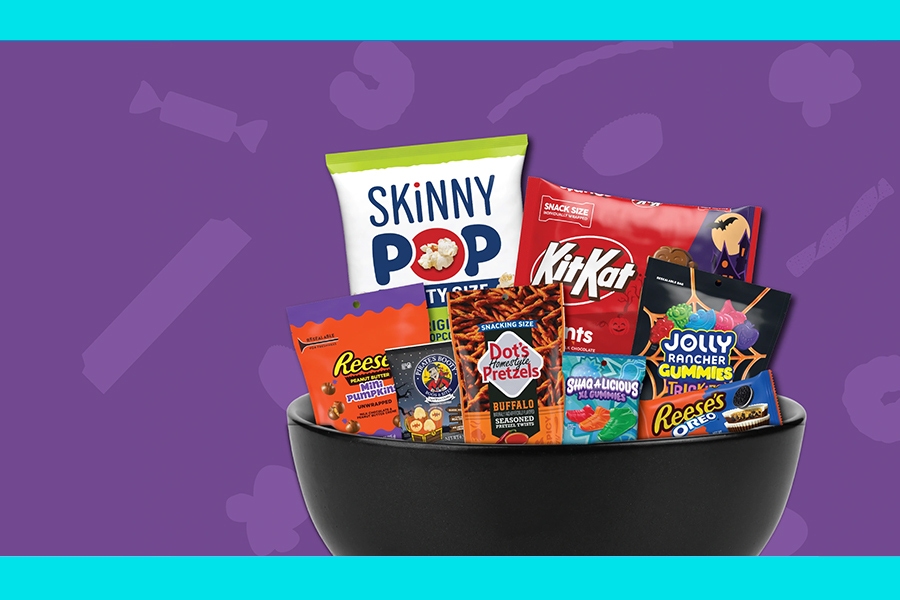
The more instructive growth story sits in North America Salty Snacks, where Q2 segment sales of $387.8 million grew 22.9% year over year. Roughly 22 percentage points of that growth came from the LesserEvil acquisition — a signal that Hershey is using M&A to buy into the premium better-for-you snack channel rather than building there organically. Organic constant-currency growth in the segment came in at just 0.6%, held back by multipack execution challenges and pricing headwinds on Dot's pretzels. Segment margin compressed 500 basis points to 16.1%, indicating integration and marketing investment costs are running ahead of the revenue ramp. Operators and buyers evaluating emerging salty snack brands should note that even at Hershey's scale, integrating acquired brands into a retail distribution network carries meaningful near-term margin drag.
The company's Advancing Agility & Automation Initiative — a supply chain restructuring program targeting approximately $100 million in savings for 2026 — is the procurement intelligence most relevant to foodservice and food-manufacturing operators. Hershey's unallocated corporate expense rose 11.2% to $199.7 million in the quarter, driven by capability and technology investments. That spend pattern mirrors what larger CPG suppliers are doing broadly: front-loading automation and systems investment now in anticipation of sustained labor and logistics cost pressure. Vendors and distributors in Hershey's supply chain should expect continued pressure on cost structures as these savings targets are pursued through the back half.
What This Signals for H2
Hershey narrowed its full-year 2026 guidance, now projecting net sales growth of 4.5% to 5.0% and adjusted EPS growth of 32.5% to 35.0%. Capital expenditures are expected in the range of $425 million to $475 million. The company explicitly excluded potential tariff rebates from its outlook — a prudent hedge that also signals ongoing uncertainty in commodity and import cost structures that will affect any operator sourcing cocoa, sugar, or packaging inputs.
International segment results add a cautionary note: a $5.1 million segment loss in Q2 versus $19.8 million income in the prior-year period, driven by higher raw material and manufacturing costs plus increased advertising investment. For operators with international supply exposure, the 10-point price realization Hershey achieved internationally — against an 8-point volume decline — underscores that global consumers are showing elasticity limits faster than domestic ones. Distribution partners and brand launch teams planning cross-border expansions should calibrate price-volume trade-offs accordingly.
Written by Michael Politz, Author of Guide to Restaurant Success: The Proven Process for Starting Any Restaurant Business From Scratch to Success (ISBN: 978-1-119-66896-1), Founder of Food & Beverage Magazine, the leading online magazine and resource in the industry. Designer of the Bluetooth logo and recognized in Entrepreneur Magazine's "Top 40 Under 40" for founding American Wholesale Floral, Politz is also the Co-founder of the Proof Awards and the CPG Awards and a partner in numerous consumer brands across the food and beverage sector.