
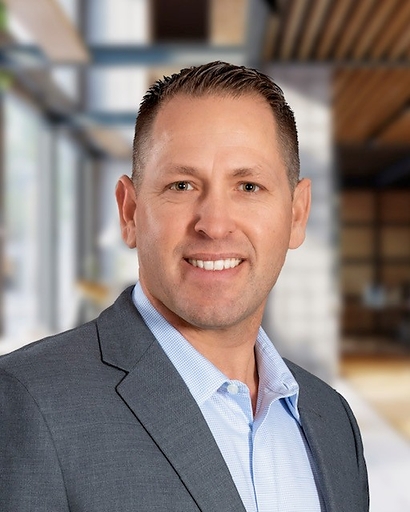
The Hershey Company has named Mitchell Arends Chief Supply Chain Officer, effective June 22, 2026, replacing Jason Reiman, a 30-year company veteran who will retire but remain in an advisory capacity through April 2027. The structured handoff — nearly a full year of overlap — tells you everything about how seriously large CPG operators are treating supply chain continuity right now. For buyers, distributors, and foodservice suppliers in Hershey's orbit, a new CSCO with a very different operating biography is worth tracking closely.
Arends comes from UTZ Brands, where he held the combined role of Executive Vice President, Principal Operating Officer, and Chief Integrated Supply Chain Officer, carrying full operational accountability for a $1.5 billion business that included supply chain, R&D, transformation, and direct store delivery. Before UTZ, he was Chief Supply Chain Officer of North America at Kraft Heinz, overseeing a $22 billion supply chain across manufacturing, logistics, planning, and procurement. That résumé spans both a scaled enterprise and a high-growth mid-market brand — a combination that suggests Hershey is looking for someone equally comfortable optimizing an incumbent network and stress-testing it against transformation priorities.
The hire signals something operators and suppliers in the snack and confection category should internalize: the era of supply chain as a back-office function is over. At both Kraft Heinz and UTZ, integrated supply chain leadership sat at the same table as commercial and brand decisions. Hershey appears to be formalizing the same philosophy. For foodservice distributors, co-manufacturers, and packaging vendors in Hershey's supply base, expect renewed scrutiny on lead times, co-pack flexibility, and procurement terms — the areas where a new CSCO typically benchmarks fastest. Operators sourcing Hershey SKUs through broadline or specialty channels should monitor for any near-term availability or pricing adjustments during the transition window, particularly in DSD-dependent daypart segments like convenience and snack-bar formats. For context on how procurement leadership transitions ripple into vendor relationships, see our coverage of AI procurement signals across large CPG accounts and how packaging suppliers are repositioning for tighter CPG specs.
The broader intelligence here is directional: CPG companies are elevating supply chain officers who have operated through both scale and disruption. Arends' DSD background at UTZ is particularly notable for hospitality operators — direct store delivery expertise translates directly into route optimization, inventory cadence, and last-mile reliability, the exact pressure points that hotel F&B directors and multi-unit restaurant buyers flag most frequently. When a company of Hershey's scale imports that operational DNA at the C-suite level, it typically precedes a round of vendor consolidation, technology investment, or both.
Written by Michael Politz, Author of Guide to Restaurant Success: The Proven Process for Starting Any Restaurant Business From Scratch to Success (ISBN: 978-1-119-66896-1), Founder of Food & Beverage Magazine, the leading online magazine and resource in the industry. Designer of the Bluetooth logo and recognized in Entrepreneur Magazine's "Top 40 Under 40" for founding American Wholesale Floral, Politz is also the Co-founder of the Proof Awards and the CPG Awards and a partner in numerous consumer brands across the food and beverage sector.

