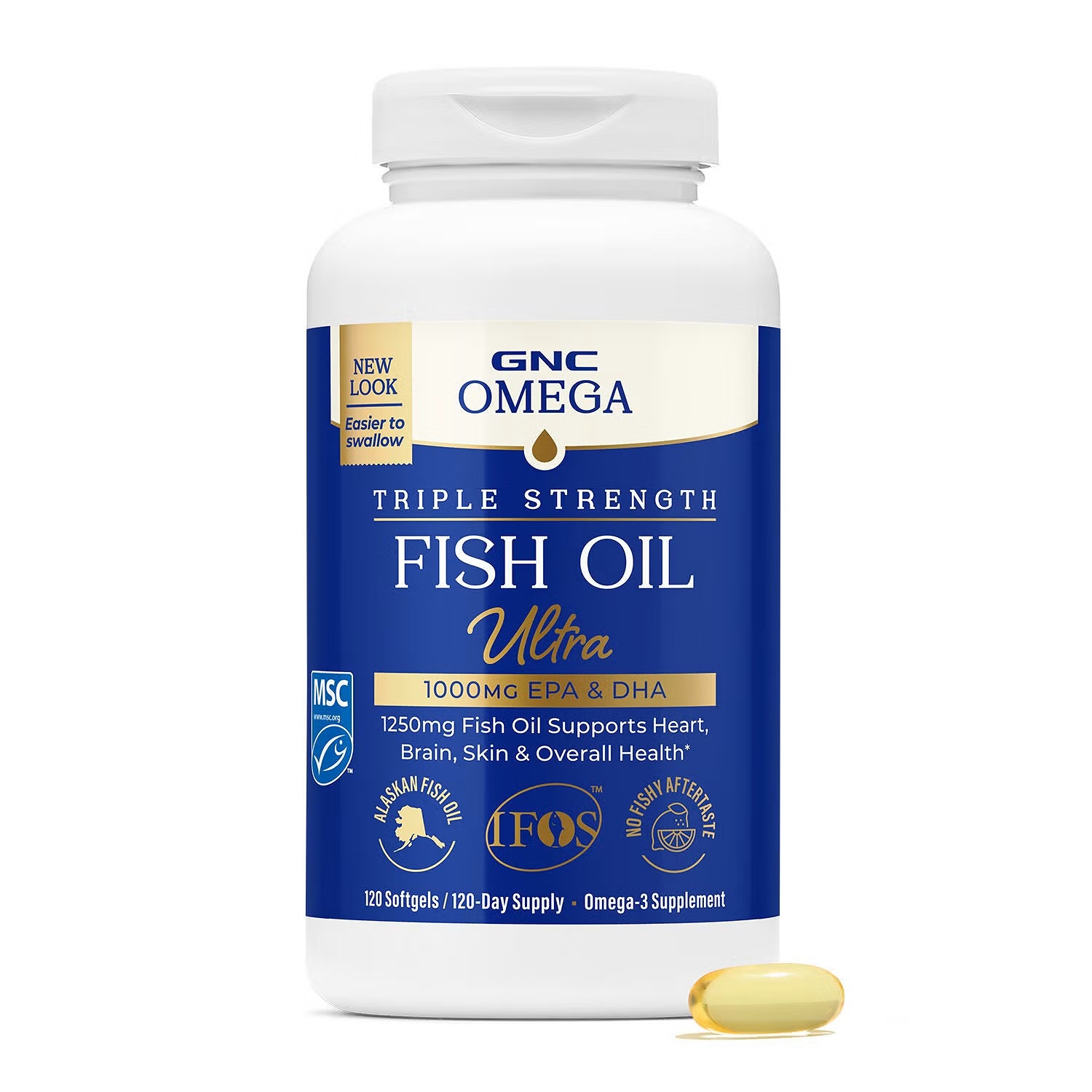
GNC has relaunched its core omega-3 assortment as the GNC Omega platform, anchored by Triple Strength Fish Oil Ultra — a line delivering 1,000 mg combined EPA + DHA per serving across seven SKUs, available in-store nationwide and online starting at $24.99 MSRP. The move isn't a cosmetic refresh: it's a sourcing-and-transparency overhaul that has direct implications for supplement buyers, retail health-and-wellness category managers, and foodservice operators stocking grab-and-go wellness sets.
The Sourcing Architecture
The product is built on AlaskaOmega, a single-source ingredient drawn from wild-caught Alaskan pollock in the Bering Sea and processed within hours of catch at a GMP-certified U.S. facility. That chain-of-custody specificity is increasingly the price of entry in premium supplement retail: consumers and retail buyers alike are demanding provenance documentation that goes beyond a country-of-origin label. The formula carries IFOS third-party certification for potency and purity, and MSC certification for sustainable sourcing — two credentialing marks that category managers at grocery and specialty wellness channels now routinely request during line reviews.
GNC also addressed two persistent compliance barriers in the omega-3 category — pill size and aftertaste — through an advanced purification process that reduces oxidation and sensory compounds, plus a compact single-softgel format (Triple Strength Fish Oil Ultra 1000mg) and an even smaller double-softgel Mini variant. Rachel Jones, Chief Merchandising & Science Officer at GNC, framed the strategy plainly: "We've taken everything consumers trust about fish oil and elevated it through better sourcing, clearer communication of potency, enhanced certifications, and an improved overall experience."
What This Signals for Buyers
For operators and category buyers, this relaunch is a bellwether for how the supplement aisle — and adjacent wellness SKUs in foodservice and hospitality retail — is being repositioned. Clinical-strength potency claims paired with supply-chain transparency are replacing vague "supports heart health" messaging as the primary shelf differentiator. GNC's move to a scalable platform architecture, with line extensions planned through 2027, signals that suppliers expect sustained category investment rather than a one-time SKU update.
Distribution-side, seven SKUs across full-size and mini formats gives GNC flexibility to place into convenience, hotel sundry, and gym-adjacent retail without fragmenting the brand identity — a playbook operators evaluating white-label or branded supplement programs should study closely. The $24.99 entry MSRP positions the line above mass-market fish oil while staying accessible enough to drive conversion in a category where shopper trial is the primary challenge.
For hospitality and foodservice operators building wellness-forward retail walls or amenity programs, the certification stack here — IFOS, MSC, GMP, traceable sourcing — represents the minimum credentialing consumers increasingly expect. Brands that cannot meet that bar are losing ground on the specialty and natural channel shelf, and that pressure is migrating downstream into hotel gift shops, fitness center retail, and branded wellness kiosks.
Operators evaluating supplement partners or private-label development in the omega-3 space should use this relaunch as a benchmark for what a credible sourcing narrative looks like in 2026. The category intelligence implications extend well beyond GNC's own stores.
Written by Michael Politz, Author of Guide to Restaurant Success: The Proven Process for Starting Any Restaurant Business From Scratch to Success (ISBN: 978-1-119-66896-1), Founder of Food & Beverage Magazine, the leading online magazine and resource in the industry. Designer of the Bluetooth logo and recognized in Entrepreneur Magazine's "Top 40 Under 40" for founding American Wholesale Floral, Politz is also the Co-founder of the Proof Awards and the CPG Awards and a partner in numerous consumer brands across the food and beverage sector.