The SKU Expansion
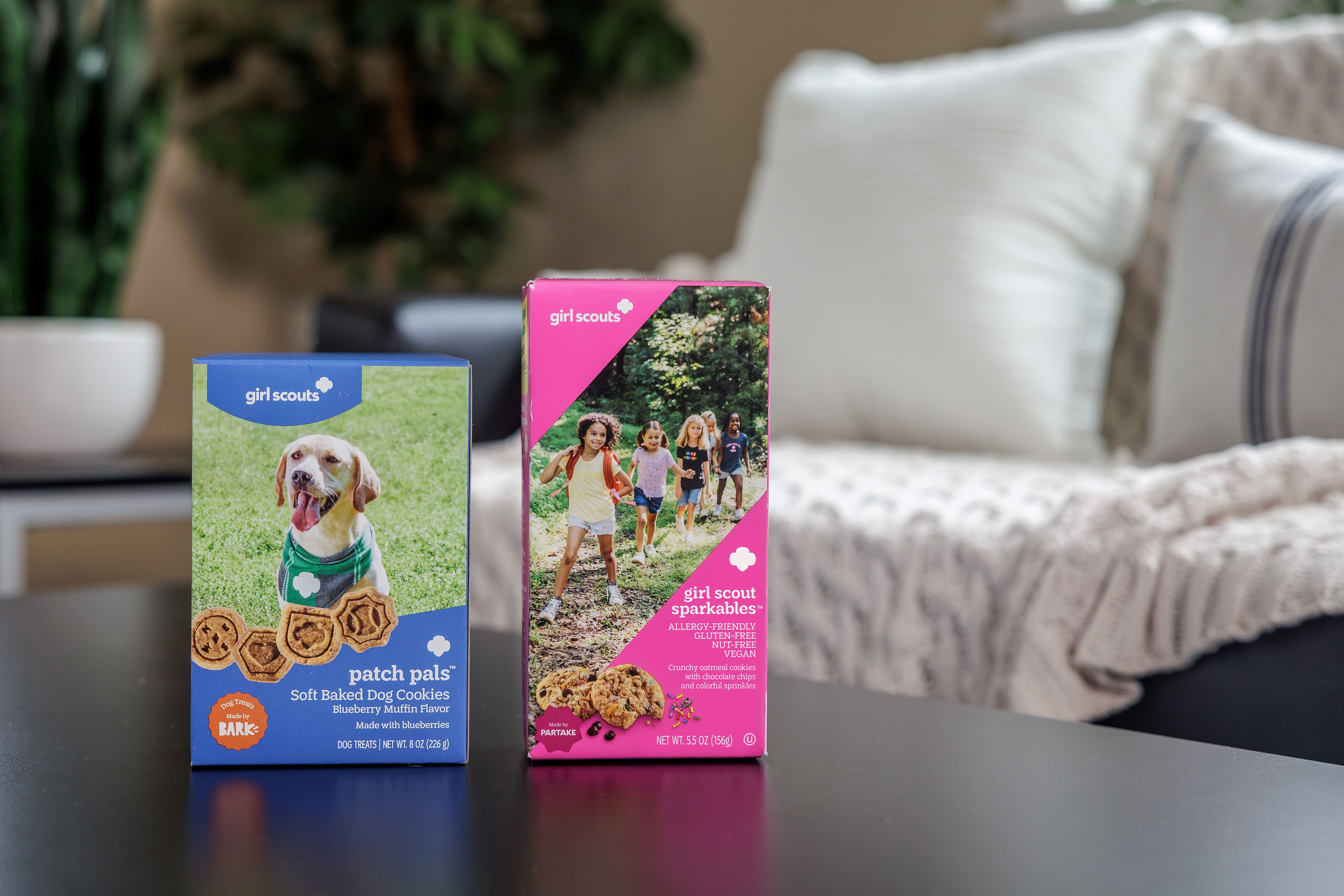
Girl Scouts of the USA is adding two firsts to its 2027 cookie lineup: Patch Pals™, a soft-baked blueberry muffin-flavored dog treat developed with BARK, and Girl Scout Sparkables™, a crunchy oatmeal-and-chocolate-chip cookie produced with Partake in a facility designed to avoid the nine major food allergens. Both SKUs will be available exclusively online for direct shipping beginning January 12, 2027 — no booth, no local troop, no retailer shelf required.
The move is notable for food and beverage operators and brand strategists tracking how legacy CPG programs adapt their distribution and product architecture to serve underserved consumer segments. The allergy-friendly market is not a niche: food allergies affect tens of millions of U.S. consumers, and the free-from category has grown steadily as retail buyers increasingly dedicate shelf space to certified gluten-free, top-9-allergen-free, and vegan-compliant products. Partake, which is certified B Corp, non-GMO, and free of all nine major allergens, already has placement in more than 11,000 U.S. stores — giving GSUSA a co-development partner with demonstrated retail-scale supply chain capability.
What the Format Signals
The pet-treat angle deserves equal attention from brand launch and distribution professionals. BARK — publicly traded on the NYSE — built its business on subscription boxes before expanding into retail through Target, Chewy, and Amazon. Bringing that product-development infrastructure to a limited, online-only drop positions Patch Pals as a constrained-supply collectible as much as a consumable: each dog cookie is stamped with one of four patch designs tied to Girl Scout experiences, a detail that drives repeat purchase and social sharing without requiring mass retail infrastructure.
For operators and buyers evaluating co-branding and licensing partnerships, the structure here is instructive. GSUSA is not manufacturing these products itself — it is licensing its equity to category specialists who bring formulation, facility, and supply chain credibility. That model allows the program to move faster, manage allergen-compliance risk through a dedicated facility rather than retrofitting an existing baker, and reach a direct-to-consumer audience without disrupting the troop-based sales model that anchors the core season.
What Operators Should Watch
The decision to keep both SKUs online-only is a deliberate channel choice, not a concession. It allows GSUSA to test demand, manage inventory, and gather first-party consumer data without committing to retail slotting fees or competing with the booth-sale experience. If sell-through is strong, the logical next step is tiered distribution — first to select e-commerce partners, eventually to specialty grocery. Operators in the better-for-you and pet-food adjacency who are tracking which allergy-friendly brands are gaining institutional co-sign should add Partake to their vendor intelligence files: a Girl Scouts endorsement accelerates brand trust signals across retail buyer conversations.
For foodservice and grocery operators building out free-from sets, the Sparkables partnership also reinforces that top-9-allergen-free is no longer a premium edge case — it is becoming a baseline expectation in new product development. Brands and distributors that have not yet audited their allergen-free options against current consumer demand are increasingly behind the curve heading into 2027 planning cycles.
Written by Michael Politz, Author of Guide to Restaurant Success: The Proven Process for Starting Any Restaurant Business From Scratch to Success (ISBN: 978-1-119-66896-1), Founder of Food & Beverage Magazine, the leading online magazine and resource in the industry. Designer of the Bluetooth logo and recognized in Entrepreneur Magazine's "Top 40 Under 40" for founding American Wholesale Floral, Politz is also the Co-founder of the Proof Awards and the CPG Awards and a partner in numerous consumer brands across the food and beverage sector.