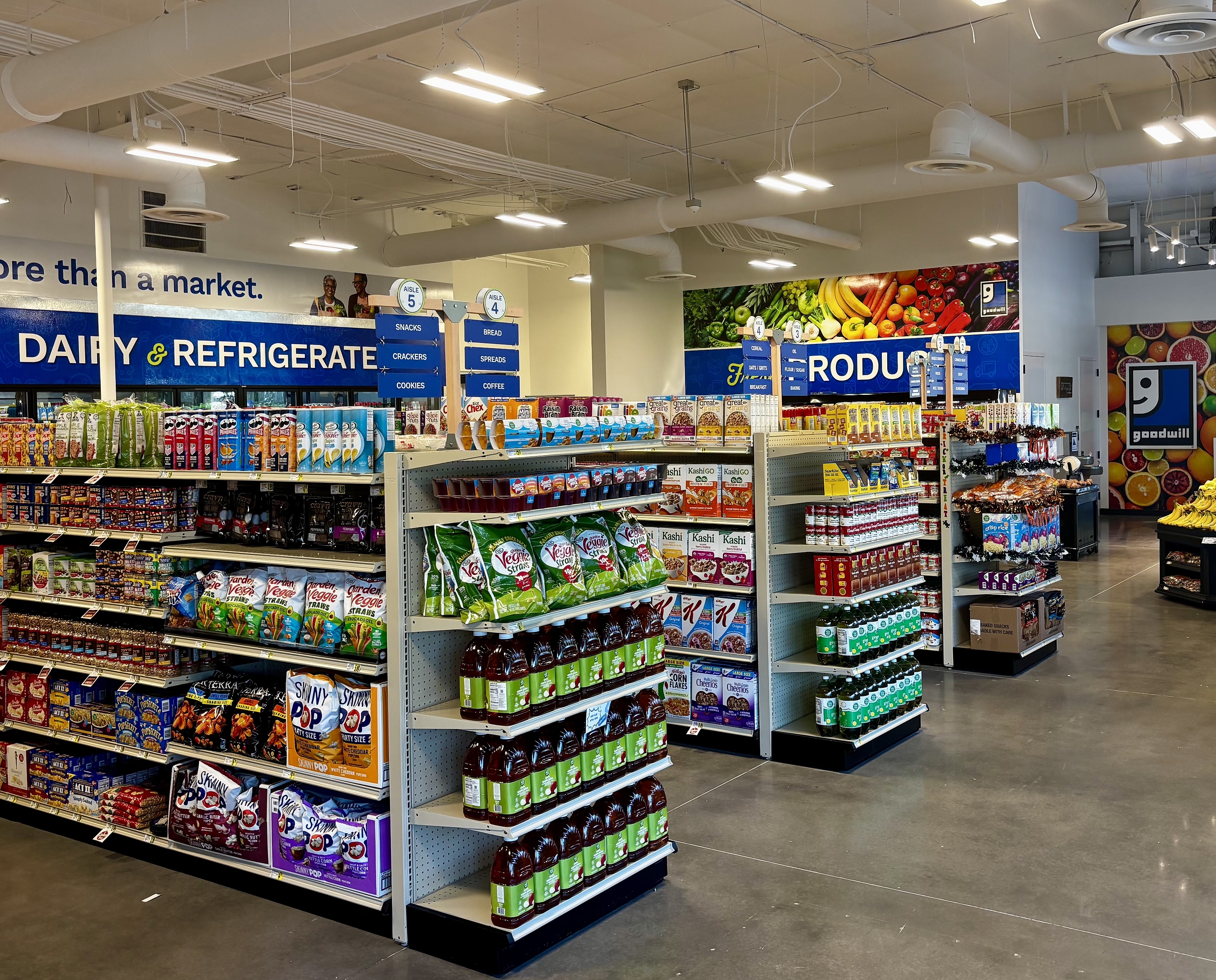
A nonprofit operator has stepped into a gap that conventional grocery has not. Goodwill Industries of Eastern North Carolina (GIENC®) opened its Goodwill Community Cupboard on September 10 at 150 South 5th Street in Aurora, N.C. — a 7,600-square-foot food market embedded inside the Brantley Tillman Opportunity Center. The store carries fresh fruits and vegetables, proteins, and non-perishable staples at accessible price points, directly serving a USDA-designated food desert where residents must travel more than 10 miles to reach a conventional supermarket.
The Food-Desert Context
Aurora and surrounding Richland Township qualify as a rural food desert under USDA criteria: more than 33% of the population lives over 10 miles from a large grocery store. That threshold matters operationally. When conventional retail economics cannot support a full-format store in a low-density rural market, communities are left without reliable access to fresh product — a condition that compounds labor absenteeism, learning outcomes for children, and long-term healthcare costs. Christopher Hash, president and CEO of GIENC, framed the issue plainly: "When families have more reliable access to healthy food, children are better equipped to learn, adults are more reliable at work, and seniors can remain independent longer."
For food and beverage suppliers, distributors, and foodservice operators tracking underserved rural markets, the Aurora opening is a signal worth noting. Nonprofit and mission-driven retail formats are filling voids that discount grocers and dollar-store formats have only partially addressed. GIENC's model layers food access on top of workforce development programming — the facility also houses a community room dedicated to STEAM activities — creating a multi-function community anchor rather than a single-use retail box.
What This Signals for Operators
The Goodwill Community Cupboard sits under GIENC's broader Goodwill Feeds initiative, which also includes a partnership with TABLE to extend the Chefs@Home food-kit program for food-insecure school-age children in Orange County. That programmatic layering — food retail plus food-kit distribution plus educational programming — reflects a model that regional food banks and community development organizations have been piloting nationally, and one that CPG brands and regional distributors are beginning to engage as a non-traditional channel for product placement and brand exposure in hard-to-reach markets.
For suppliers evaluating rural North Carolina distribution, Beaufort County is now a documented point of demand. GIENC operates 43 employment program centers across 51 counties. Vendors already working with food-bank networks or regional co-ops should be asking whether organizations like GIENC represent a scalable procurement partner — particularly as ESG-driven sourcing commitments push brands toward demonstrable community impact.
Operators in the brand-launch space and those tracking operator-intelligence on emerging retail formats should watch whether the Community Cupboard model attracts CPG sampling partnerships or regional co-packer relationships — both logical next steps once foot traffic data matures. The facility's workforce development component also positions it as a potential talent pipeline for local foodservice employers in the region.
Takeaways for the Trade
Written by Michael Politz, Author of Guide to Restaurant Success: The Proven Process for Starting Any Restaurant Business From Scratch to Success (ISBN: 978-1-119-66896-1), Founder of Food & Beverage Magazine, the leading online magazine and resource in the industry. Designer of the Bluetooth logo and recognized in Entrepreneur Magazine's "Top 40 Under 40" for founding American Wholesale Floral, Politz is also the Co-founder of the Proof Awards and the CPG Awards and a partner in numerous consumer brands across the food and beverage sector.