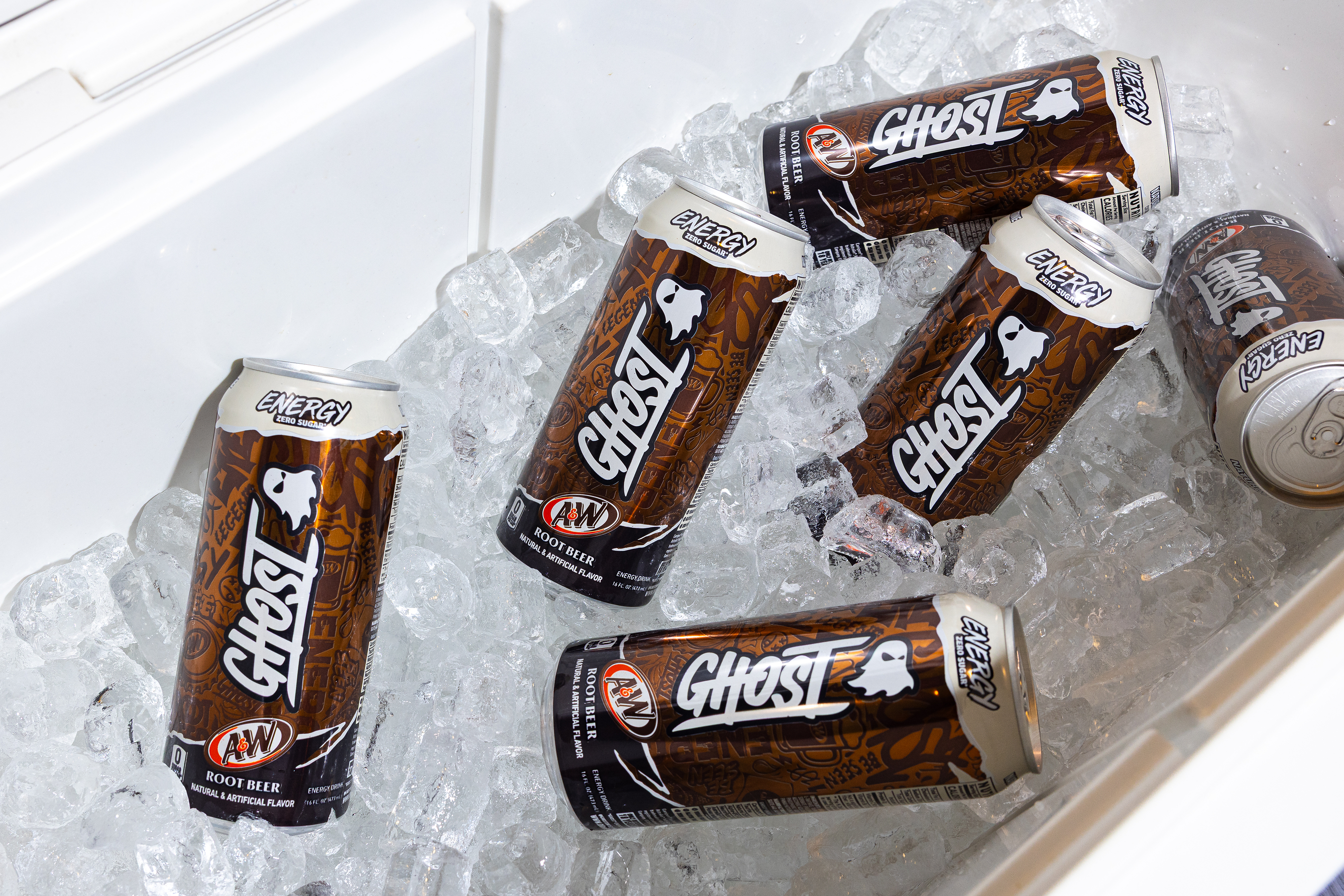
A&W Root Beer is the latest legacy brand to get the GHOST® treatment, as the Chicago-based sports nutrition and energy label launches GHOST® Energy x A&W® — a root beer float–inspired energy drink now hitting shelves at Walmart, Target, Kroger, Publix, CVS, Circle K, Casey's, and ABSCO, with DoorDash fulfillment layered in for on-demand reach. It's the second licensed energy flavor GHOST has dropped with Keurig Dr Pepper in 2026, following the GHOST® Energy x 7UP® release earlier in the year.
The Co-Brand Mechanics
The deal structure here is worth understanding. GHOST operates a licensed-flavor model — pairing its transparent, performance-forward formula with brand equity it licenses from household names. The current roster spans OREO®, Cinnabon®, Sour Patch Kids®, Warheads®, and now two Keurig Dr Pepper–owned marks in a single calendar year. For buyers and category managers, this isn't a one-off novelty launch; it's a repeatable acquisition funnel that uses brand recognition as a trial-driving mechanism at the shelf. Dan Lourenco, Founder and CEO of GHOST®, noted the brand is "staying authentic to the brands we're working with" while signaling that more surprises within the Keurig Dr Pepper portfolio are plausible.
Retail and Channel Signals
The distribution footprint for this launch is broad and deliberate. Convenience (Circle K, Casey's), drug (CVS), mass (Walmart, Target), grocery (Kroger, Publix), and third-party delivery (DoorDash) are all activated simultaneously — a pattern that reflects the energy drink category's shift away from channel-exclusive launches toward omnichannel velocity from day one. For operators managing convenience or grab-and-go beverage sets, this kind of simultaneous multi-channel saturation compresses the window for regional or independent buyers to assess demand before committing to shelf space. The practical intelligence: if a licensed GHOST flavor moves at mass, c-store velocity data will confirm or deny within 60 to 90 days, and buyers should be building that review cadence into their planogram cycle.
Justin Whitmore, President of Energy, Juice, Sauce, and Drink Mix Brands at Keurig Dr Pepper, framed the partnership as an extension of the company's strategy to move its iconic brands "into new occasions and consumer experiences." That language is worth noting — it signals Keurig Dr Pepper views the energy category as an incremental occasion rather than a cannibalization risk for its core carbonated soft drink SKUs, which matters for how distributors and category managers should position the co-branded line relative to existing Dr Pepper portfolio facings.
For brand launch teams and retail buyers evaluating where functional and energy beverages are heading, the GHOST model is an increasingly cited benchmark. The brand's collaborative approach — full formula transparency, influencer-native marketing, and recognizable licensed flavors — has allowed it to compete in a category dominated by much larger marketing budgets. Operators sourcing for beverage program development or foodservice adjacent channels should watch how the A&W flavor performs in convenience versus grocery splits, as that data will shape the next wave of licensed energy SKUs across the category.
Written by Michael Politz, Author of Guide to Restaurant Success: The Proven Process for Starting Any Restaurant Business From Scratch to Success (ISBN: 978-1-119-66896-1), Founder of Food & Beverage Magazine, the leading online magazine and resource in the industry. Designer of the Bluetooth logo and recognized in Entrepreneur Magazine's "Top 40 Under 40" for founding American Wholesale Floral, Politz is also the Co-founder of the Proof Awards and the CPG Awards and a partner in numerous consumer brands across the food and beverage sector.