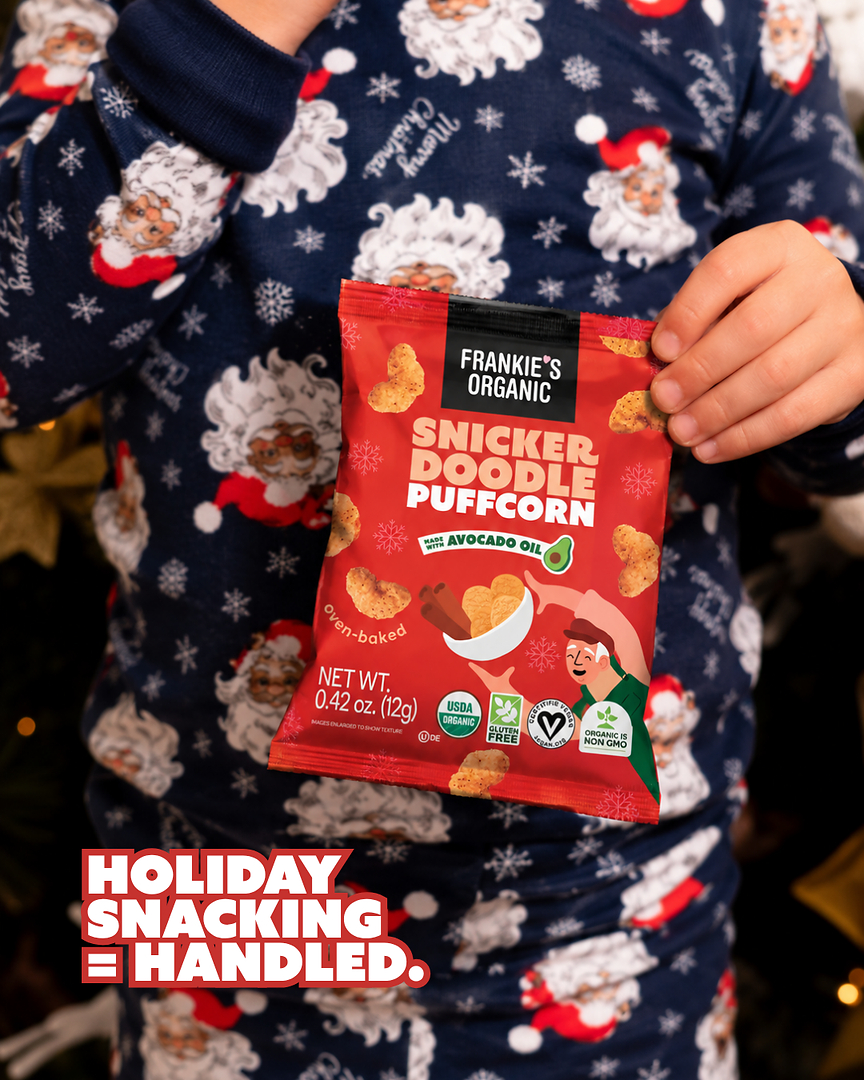
Direct-to-consumer channels are increasingly doing double duty for emerging CPG brands: fulfillment on one side, R&D on the other. Frankie's Organic Snacks, the Quebec-based family-owned brand known for its oven-baked Puffcorn line, is leaning into that model with its latest limited-edition release — a Snickerdoodle Avocado Oil Puffcorn available exclusively on Amazon in both the U.S. and Canada for the holiday season.
The SKU is baked, not fried, made with 100% organic cornmeal and avocado oil, and carries USDA Organic, Non-GMO Project Verified, and Certified Gluten-Free credentials. It retails at $14.99 USD for a 15-count box of 0.42-oz single-serve bags.
Amazon as Innovation Lab
The more operationally interesting story here is not the flavor — it is the channel logic. Matthew Bordonaro, vice president of sales at Frankie's, was direct about the platform's strategic role: "Amazon allows us to respond quickly to growing consumer demand for specialty flavors while giving us a direct view into how shoppers respond to sweet seasonal concepts. Those insights help us make smarter decisions about how we differentiate the brand and which innovations have the potential to scale across retail."
That framing — Amazon as a live consumer-insight engine ahead of retail commitments — is a playbook more emerging food brands are running. The economics favor it: limited-run SKUs avoid the slotting fees, minimum order quantities, and markdown exposure that come with pushing an unproven seasonal item into physical retail. A strong Amazon conversion rate and review velocity become the pitch deck for the next buyer meeting.
For procurement and category buyers at natural and specialty retail, this matters. Brands arriving with Amazon sales history and verified demand signals are increasingly better-prepared negotiating partners than those coming cold from trade shows. Operators and buyers sourcing emerging snack brands should expect more suppliers to arrive with platform-validated SKUs rather than untested concepts.
Retail Footprint Context
Frankie's already carries meaningful physical retail presence — Target, Erewhon, Earth Fare, MOM's Organic Market, PCC Community Markets, Central Market, and Thrive Market online, plus more than 5,000 locations across Canada. That existing network makes the Amazon-first seasonal launch a deliberate sequencing choice, not a fallback. The brand is not lacking shelf access; it is managing innovation risk.
For food and beverage operators building or curating private-label or house snack programs, the Frankie's model illustrates a broader brand-launch principle: exclusive channel debuts generate scarcity signals and consumer data simultaneously. Holiday windows are especially productive for this because purchase intent is elevated and repeat-buy behavior is easier to track within a compressed timeframe.
The Snickerdoodle Puffcorn is available while supplies last, which adds urgency and keeps the test clean — when it sells through, the brand has conversion data without an ongoing inventory commitment. Operators sourcing seasonal snack programs for hotel minibar programs, airline amenity kits, or curated café retail sets should monitor how brands like Frankie's sequence Amazon exclusives into broader availability, as that timeline often signals when a SKU is ready for wholesale conversations.
Written by Michael Politz, Author of Guide to Restaurant Success: The Proven Process for Starting Any Restaurant Business From Scratch to Success (ISBN: 978-1-119-66896-1), Founder of Food & Beverage Magazine, the leading online magazine and resource in the industry. Designer of the Bluetooth logo and recognized in Entrepreneur Magazine's "Top 40 Under 40" for founding American Wholesale Floral, Politz is also the Co-founder of the Proof Awards and the CPG Awards and a partner in numerous consumer brands across the food and beverage sector.
Frequently Asked Questions
What exactly is Frankie's testing on Amazon, and why does it matter to my sourcing decisions?
Frankie's is launching Snickerdoodle Avocado Oil Puffcorn exclusively on Amazon ($14.99 for a 15-count box) to validate demand for a sweet seasonal SKU before pitching it to traditional retail buyers. Amazon's conversion data and review velocity become proof-of-concept—brands showing strong performance there arrive at your buying meetings with validated demand signals, not just flavor hunches.
How does testing on Amazon change the financial risk profile versus a traditional retail launch?
Amazon sidesteps the slotting fees, minimum order quantities, and markdown exposure that come with pushing an unproven seasonal into physical retail. A limited-run DTC test costs Frankie's far less and gives them real sell-through data before committing inventory to your shelves.
What credentials does this Snickerdoodle SKU carry, and who's the target buyer?
It carries USDA Organic, Non-GMO Project Verified, and Certified Gluten-Free certifications—built on 100% organic cornmeal and avocado oil. That credential stack targets natural and specialty retail categories, and the Amazon test proves there's actual consumer willingness to pay $14.99 for premium holiday puffcorn.
Why is this Amazon playbook spreading across emerging CPG brands right now?
DTC channels now function as both fulfillment and R&D operations. Emerging brands get direct consumer insight, avoid traditional retail's high barriers to entry, and build sales history that strengthens their pitch to category buyers like you. It's become standard due diligence before asking for retail shelf space.
As a buyer, how should I evaluate brands using this Amazon-first strategy?
Ask for the Amazon sales data, review count, and average rating—those metrics matter more than a brand's story. Brands arriving with documented conversion rates and positive velocity have already proven consumer demand; they're lower-risk adds to your assortment than untested seasonal items pitched cold.