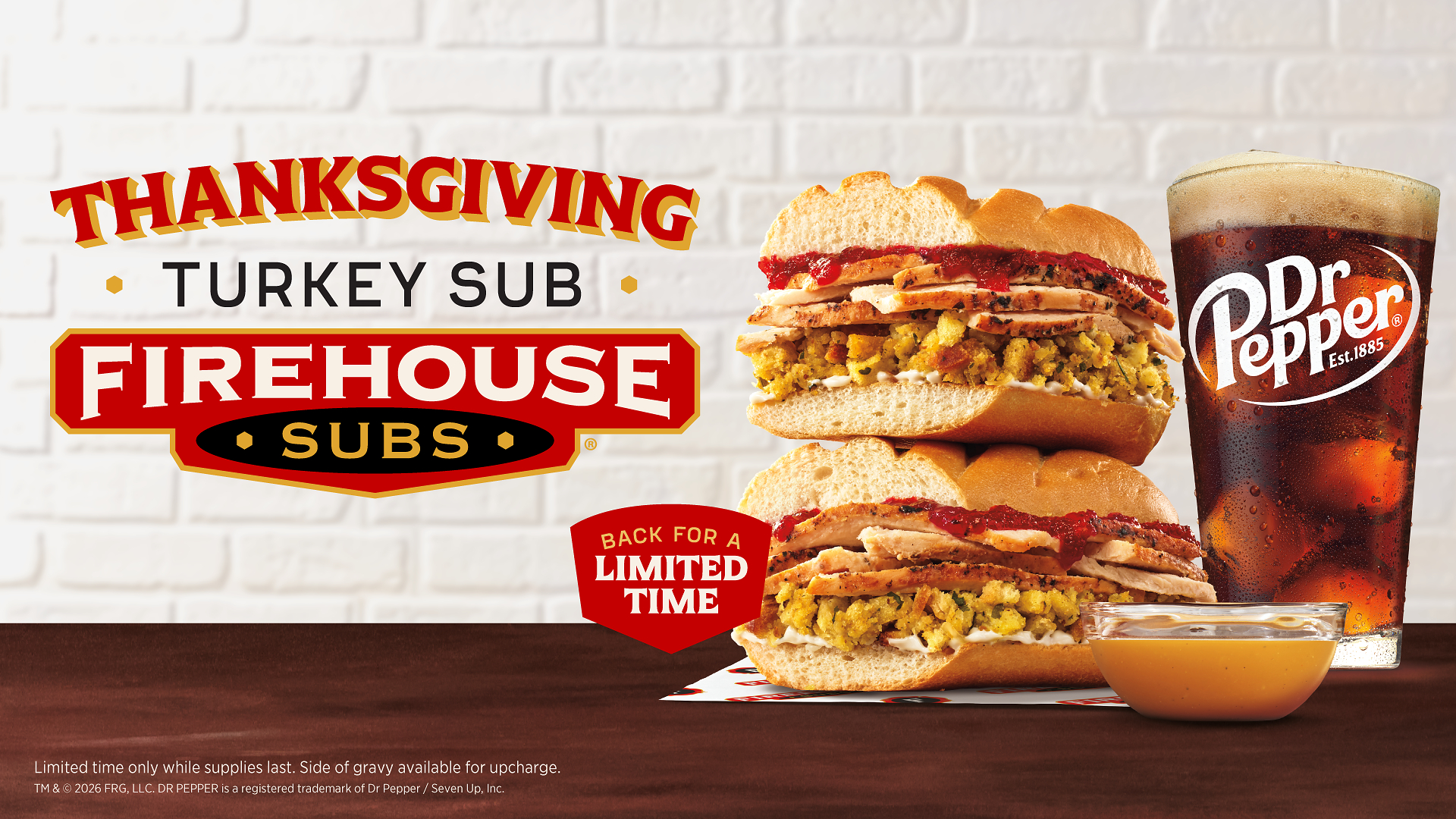
Firehouse Subs is bringing back its Thanksgiving Turkey Sub at participating locations nationwide through the end of December 2026, extending the availability window after the limited-time offer sold out across the system last year. The chain is pairing the returning item with a new in-restaurant baked Pecan Bar — a meaningful operational signal for QSR operators tracking how legacy sandwich brands are using seasonal LTOs to drive repeat traffic and basket size during the holiday stretch.
The sub itself layers carved turkey breast, warm stuffing, cranberry sauce, and mayo on a toasted white or wheat roll, with an optional turkey gravy upgrade positioned as a premium add-on. That upsell mechanic — a low-cost modifier that lifts average check without requiring kitchen complexity — is a detail worth noting for operators building holiday menus on constrained labor budgets.
The LTO Calculus
The decision to extend the window from a tighter fall run to a full October-through-December availability reflects a familiar tension in limited-time-offer strategy: scarcity drives urgency, but a documented sellout creates franchise pressure to capture demand that was left on the table. Carolina Berti, Chief Marketing Officer of Firehouse Subs, framed the return as a response to fan demand, but the operational implication is equally clear — the brand is trading some of the LTO's scarcity premium for a longer revenue window heading into a historically high-traffic quarter.
For multi-unit operators and franchise groups watching the QSR segment, this is a textbook demand-validation loop: deploy a seasonal item, let sellout data make the case for the following year, then widen distribution and extend duration. It is the same logic that has made pumpkin spice a perennial category driver and that is now pushing more sandwich and fast-casual brands toward Thanksgiving-flavored fall drops. Restaurant Brands International, which owns Firehouse Subs alongside Tim Hortons, Burger King, and Popeyes, reported nearly $47 billion in annual system-wide sales across more than 33,000 locations as of December 2025 — a scale that gives the brand meaningful data infrastructure to validate LTO performance before committing to a broader rollout.
In-Restaurant Baking as a Differentiator
The addition of the Pecan Bar, described as baked fresh in-restaurant daily, is the subtler story here. In-restaurant baking carries real labor and equipment implications — it is not a decision casual-dining or QSR operators make lightly. For the vendor and supplier community, it signals a continued appetite at Firehouse Subs for scratch-adjacent production that differentiates the brand from pure heat-and-serve competitors. Operators evaluating their own dessert and bakery programs should note how the Pecan Bar is being positioned: not as a standalone SKU but as a meal-completer bundled with the LTO sub and a Dr Pepper beverage, reinforcing a full-occasion sell rather than a single-item add.
The brand's public safety foundation tie-in — with $118 million granted to first-responder organizations to date — also gives franchise operators a community-giving narrative to activate locally, a brand-launch and local-marketing lever that corporate-backed independents rarely have access to at this scale.
For operators benchmarking their own holiday LTO strategy, the Firehouse Subs playbook this season offers a practical framework: validate with scarcity, extend on proven demand, layer in a new baked item to signal craft, and wrap it in a bundle that lifts check average without complicating kitchen operations.
Written by Michael Politz, Author of Guide to Restaurant Success: The Proven Process for Starting Any Restaurant Business From Scratch to Success (ISBN: 978-1-119-66896-1), Founder of Food & Beverage Magazine, the leading online magazine and resource in the industry. Designer of the Bluetooth logo and recognized in Entrepreneur Magazine's "Top 40 Under 40" for founding American Wholesale Floral, Politz is also the Co-founder of the Proof Awards and the CPG Awards and a partner in numerous consumer brands across the food and beverage sector.