The Product Move
Ember Technologies is shipping Mug 3, the third generation of its flagship smart mug, starting today — with brick-and-mortar placement at Target launching September 27 and Amazon distribution following in October. For operators and buyers tracking premium beverage accessory trends, the timing is deliberate: Q4 gifting windows drive a disproportionate share of smart drinkware volume, and back-to-back channel openings at two of the largest U.S. retailers signals a coordinated retail push rather than a soft rollout.
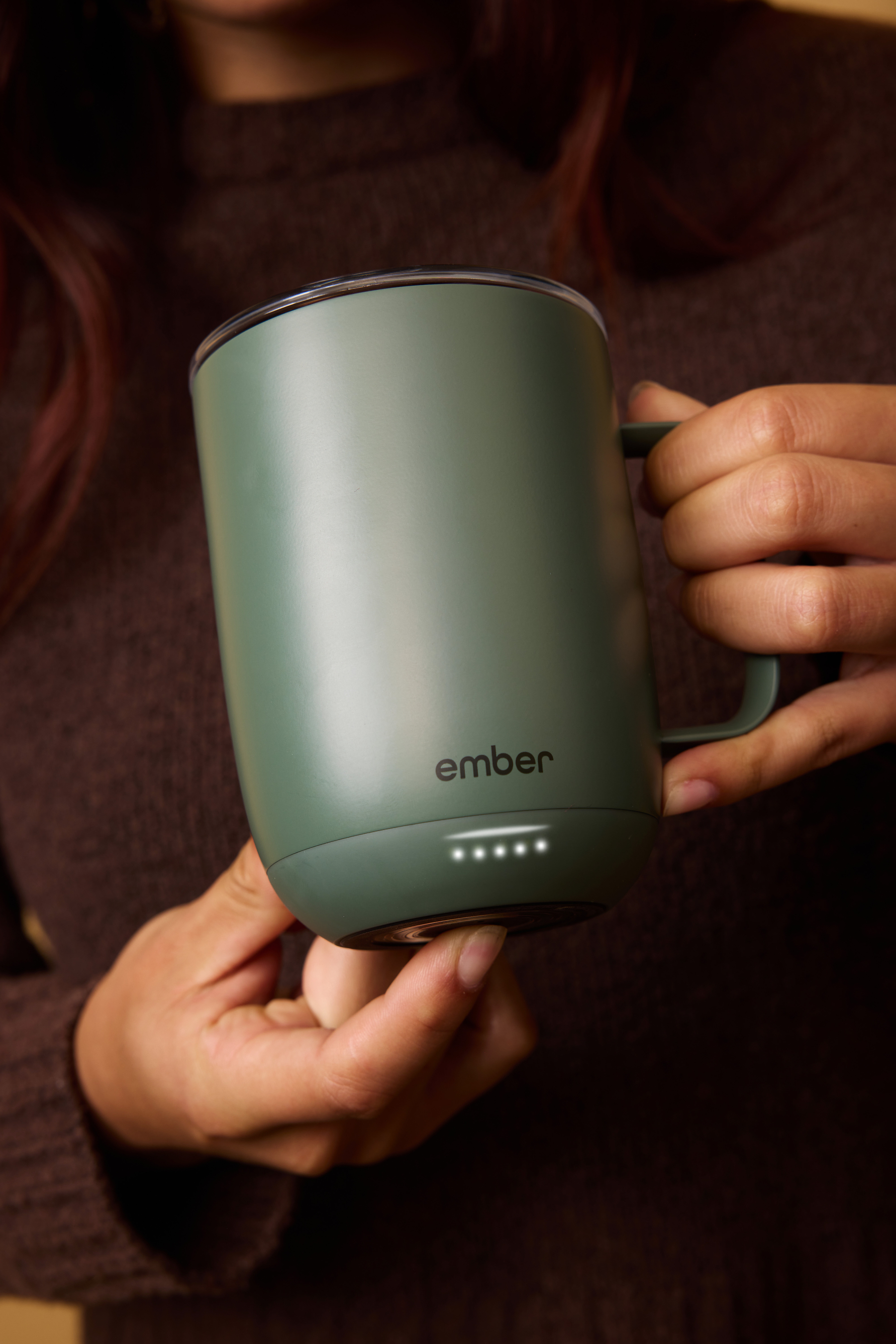
The headline feature is on-mug temperature control — a function Ember users have reportedly requested since the original launch more than a decade ago. Pressing the power button now cycles through five preset temperature settings in five-degree increments, ranging from 125 to 145 degrees Fahrenheit, without requiring the companion app. That change reduces friction at the point of use, which matters in hotel room, lounge, and office environments where guests or employees don't want to manage a smartphone to drink a hot beverage.
What Changed in Gen 3
Beyond the on-mug controls, Ember redesigned the materials and manufacturing process to achieve top-rack dishwasher compatibility — a frequently cited pain point for hospitality procurement teams considering smart drinkware at scale. The mug retains its stainless steel structure and FDA-compliant, ceramic-reinforced interior and exterior coating. Every unit now ships with a sliding sipping lid that extends battery life to three hours per charge.
Pricing runs $129 for the 10-ounce model (available in black, white, and a new stainless finish) and $149 for the 14-ounce version, which carries eight color options including sage green, lavender, powder blue, salt blue, sandstone, and matcha green. The color breadth suggests Ember is actively targeting gifting merchandising and lifestyle retail adjacency — not just the tech-accessory shelf.
Operator and Buyer Signals
For foodservice and hospitality operators, Mug 3's dishwasher-safe update is the most procurement-relevant detail. Previous Ember generations required hand-washing, which added labor cost and created breakage risk in high-volume back-of-house environments — barriers that kept the product in the amenity or gift-shop category rather than in active service programs. The Gen 3 update at least partially addresses that constraint.
The channel sequencing — direct-to-consumer at launch, Target at T+11 days, Amazon roughly six weeks out — reflects a retail strategy that prioritizes margin capture early and then opens mass reach. Operators sourcing branded amenity programs or evaluating premium beverage accessories for hotel F&B should track whether distributor or wholesale pricing tiers follow the Amazon activation. Brands that sequence DTC → big-box → marketplace often introduce B2B or bulk-order programs in the same quarter.
CEO Matt Murray described the update as a response to direct user feedback: "We listened to our user feedback when developing the new mug, and are excited to share it with the Ember community." That customer-feedback loop is worth noting for brand launch teams advising CPG clients on product iteration strategy — Ember's decade-long install base gives it a closed feedback system most emerging drinkware brands lack.
Written by Michael Politz, Author of Guide to Restaurant Success: The Proven Process for Starting Any Restaurant Business From Scratch to Success (ISBN: 978-1-119-66896-1), Founder of Food & Beverage Magazine, the leading online magazine and resource in the industry. Designer of the Bluetooth logo and recognized in Entrepreneur Magazine's "Top 40 Under 40" for founding American Wholesale Floral, Politz is also the Co-founder of the Proof Awards and the CPG Awards and a partner in numerous consumer brands across the food and beverage sector.