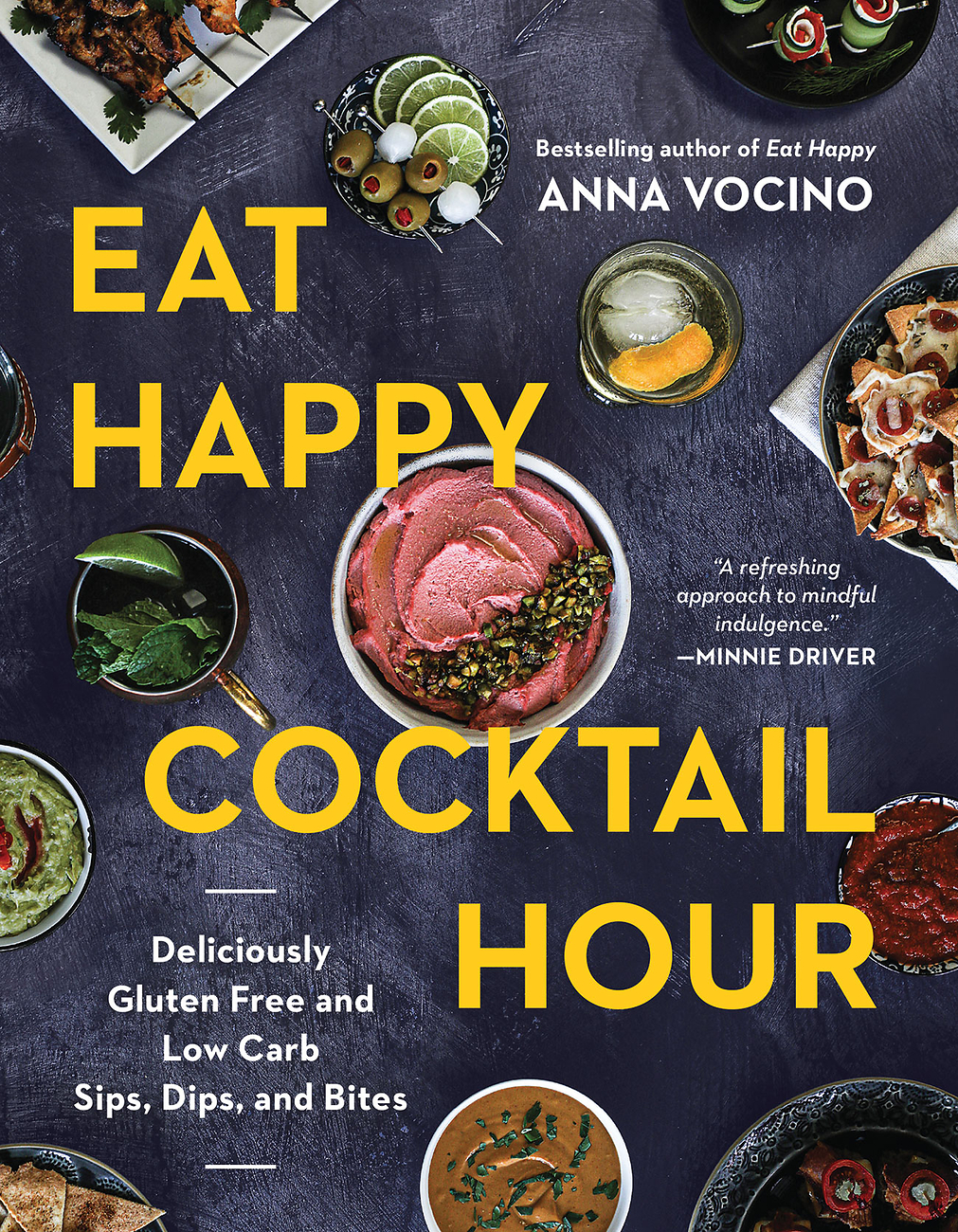
Anna Vocino, founder of Eat Happy Kitchen, released her fourth cookbook — Eat Happy Cocktail Hour: Deliciously Gluten Free and Low Carb Sips, Dips, and Bites — on October 13, 2026, published by BenBella Books and distributed through Simon & Schuster. The 72-recipe collection covers cocktails, mocktails, appetizers, dips, and shareable bites, all formulated without gluten, grains, or added sugar. For operators, the book is less about a single author's launch and more about what a mainstream publisher betting on this format confirms: low-carb entertaining is no longer a niche.
The Demand Signal
Vocino's previous three Eat Happy titles reached bestseller status, and Eat Happy Kitchen has since extended the brand into grocery — sauces, seasonings, and snacks positioned as premium and clean-label. The move into cocktail-hour content is strategically timed. Consumer interest in low-ABV and zero-sugar cocktails has been tracking upward across on-premise and retail, with mocktail menu inclusions growing at independent restaurants and hotel F&B programs alike. A cookbook that treats gluten-free and low-carb as entertaining defaults — not restrictions — reflects a shift operators have been watching at the menu-development level for two to three years.
Recipe inclusions like the Meaty Mary, Watermelon Mint Martini, Chai Spiced Whiskey, and Strawberry Hibiscus Frozé read less like diet food and more like a contemporary cocktail list. That framing matters for operators considering how to position better-for-you beverage programs to guests who don't self-identify as health-focused but increasingly expect cleaner ingredient stories.
What This Means for Operators
For food and beverage directors, bar managers, and culinary teams, Vocino's catalog functions as a consumer-facing benchmark. When a better-for-you entertaining framework reaches Simon & Schuster distribution at a $24.95 price point, the consumer appetite it reflects is already established — not emerging. Operators who haven't yet audited their cocktail and appetizer menus for low-carb and gluten-free optionality may find themselves behind where their guests' expectations already sit.
The Eat Happy Kitchen product line — sold in grocery — also hints at a cross-channel brand architecture worth watching. Cookbook authors who simultaneously operate product companies are increasingly effective at pulling consumer loyalty across retail and foodservice contexts. That model has implications for brand launch strategy in the better-for-you segment, particularly for suppliers and food brands considering how culinary personality partnerships can accelerate retail shelf placement and foodservice trial simultaneously.
For operators building out catering menus, private dining packages, or happy-hour programming with a wellness angle, this release provides a concrete content reference point. The book's structure — cocktails, mocktails, bites, dips — maps cleanly onto a private event or bar program build. Teams looking at menu and beverage trend intelligence for 2026 and into 2027 should note how mainstream the gluten-free entertaining format has become when a major distributor is backing it at scale.
Written by Michael Politz, Author of Guide to Restaurant Success: The Proven Process for Starting Any Restaurant Business From Scratch to Success (ISBN: 978-1-119-66896-1), Founder of Food & Beverage Magazine, the leading online magazine and resource in the industry. Designer of the Bluetooth logo and recognized in Entrepreneur Magazine's "Top 40 Under 40" for founding American Wholesale Floral, Politz is also the Co-founder of the Proof Awards and the CPG Awards and a partner in numerous consumer brands across the food and beverage sector.