The Placement
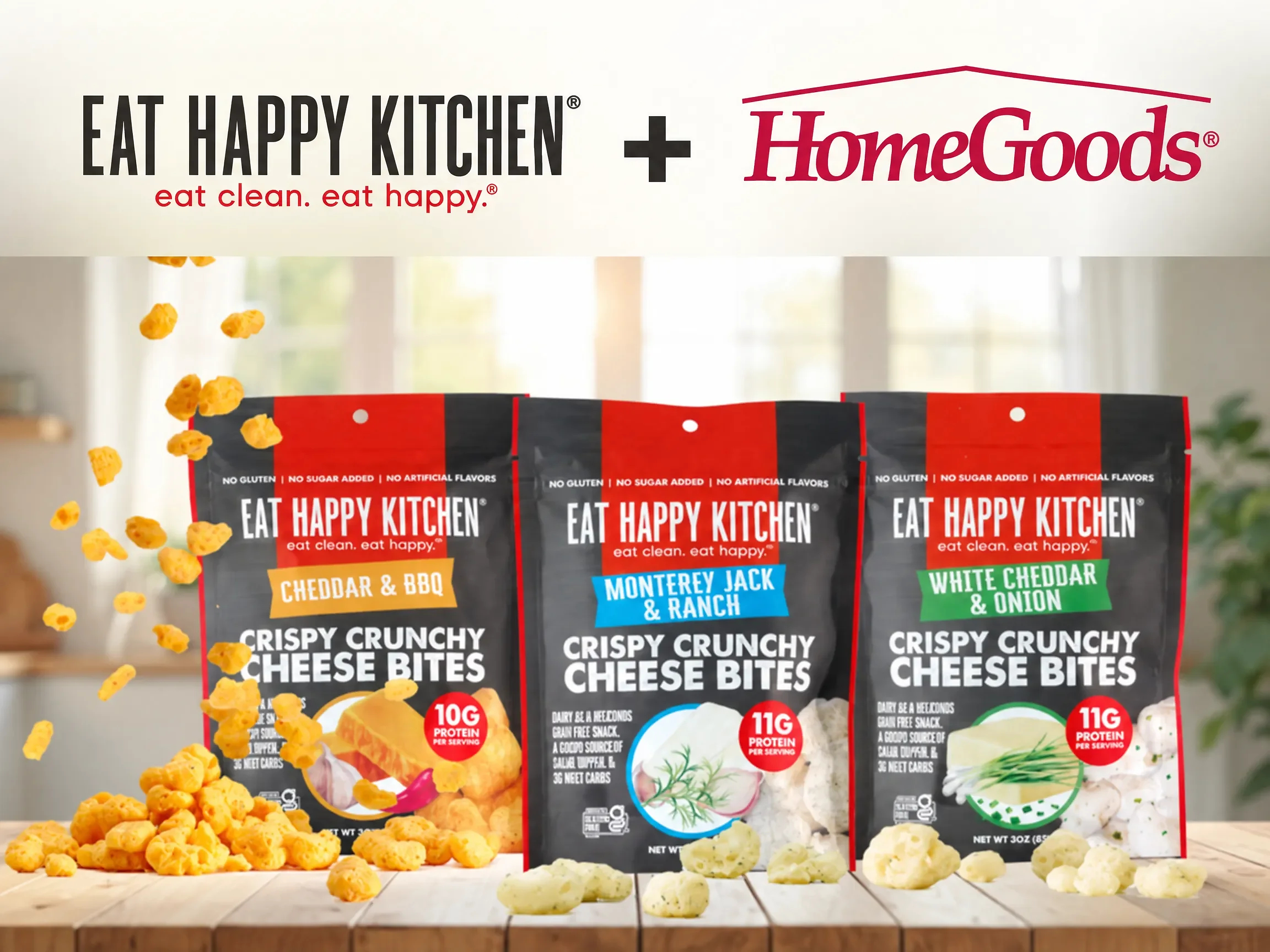
Eat Happy Kitchen, the Santa Ynez-based clean-label brand founded by Anna Vocino, has secured retail distribution across three accounts simultaneously: Cheese Bites at HomeGoods locations nationwide, pasta sauces and spice blends in 120 Hy-Vee stores (shelved in the health food section), and pasta sauces across all 114 Raley's locations in Northern California and Nevada. The triple placement is notable because it hits all three of the brand's core product categories at once — a coordination challenge that most emerging brands stagger across multiple cycles.
The HomeGoods door is the headline move. Off-price and home goods chains are not traditional grocery-aisle players, but they have become increasingly credible discovery channels for premium packaged food. Placing high-protein Cheese Bites — 10 to 11 grams of protein per serving, two-ingredient formulation, no fillers or artificial ingredients — into a national off-price footprint gives Eat Happy Kitchen exposure to a shopper demographic that may never walk a natural grocery aisle. For brands watching channel diversification, that's the strategic signal worth tracking.
Distribution at Scale
With the new accounts added, Eat Happy Kitchen's pasta sauces now have shelf presence in more than 1,000 stores. Existing grocery partners include Pavilions, Gelson's, Central Market, Fresh Thyme, Jewel Osco, Coborn's, and Albertsons United/Market Street. The 12-SKU portfolio — five pasta sauces, four spice blends, three Cheese Bites varieties — was built around seed-oil-free certification, no added sugar, and gluten-free formulation across the board. Hy-Vee's decision to slot the sauces and spice blends into its health food section rather than the general grocery set is a positioning indicator: the retailer is treating this as a wellness purchase, not a commodity one.
Vocino, a three-time bestselling cookbook author whose Eat Happy series built the brand's initial community, described the expansion as consistent with a deliberate growth philosophy. "More products in more places across America, but never compromising what goes into them," she said. For buyers and category managers, that kind of founder-led brand equity often translates into lower promotional spend requirements and stronger repeat rates among health-oriented shoppers — a dynamic worth noting when evaluating new set requests.
What Operators and Buyers Should Watch
The Eat Happy Kitchen expansion reflects a broader pattern in clean-label brand launch strategy: brands that establish credential in specialty and natural grocery are now using that proof of velocity to open doors at both conventional regional chains (Hy-Vee, Raley's) and non-traditional retail formats (HomeGoods) in the same season. The spice blend line, redesigned and relaunched in 2025 in vintage-inspired tins, shows the brand is also investing in shelf presence and packaging differentiation — not just formulation claims.
For foodservice operators sourcing premium pantry staples or evaluating branded sauce and seasoning programs, Eat Happy Kitchen's clean-label profile and growing retail credibility make it a vendor worth benchmarking. The seed-oil-free certification in particular is gaining traction as a procurement differentiator in operator intelligence circles, where ingredient-transparency demands from guests are influencing back-of-house sourcing decisions alongside front-of-house menu language.
Written by Michael Politz, Author of Guide to Restaurant Success: The Proven Process for Starting Any Restaurant Business From Scratch to Success (ISBN: 978-1-119-66896-1), Founder of Food & Beverage Magazine, the leading online magazine and resource in the industry. Designer of the Bluetooth logo and recognized in Entrepreneur Magazine's "Top 40 Under 40" for founding American Wholesale Floral, Politz is also the Co-founder of the Proof Awards and the CPG Awards and a partner in numerous consumer brands across the food and beverage sector.